
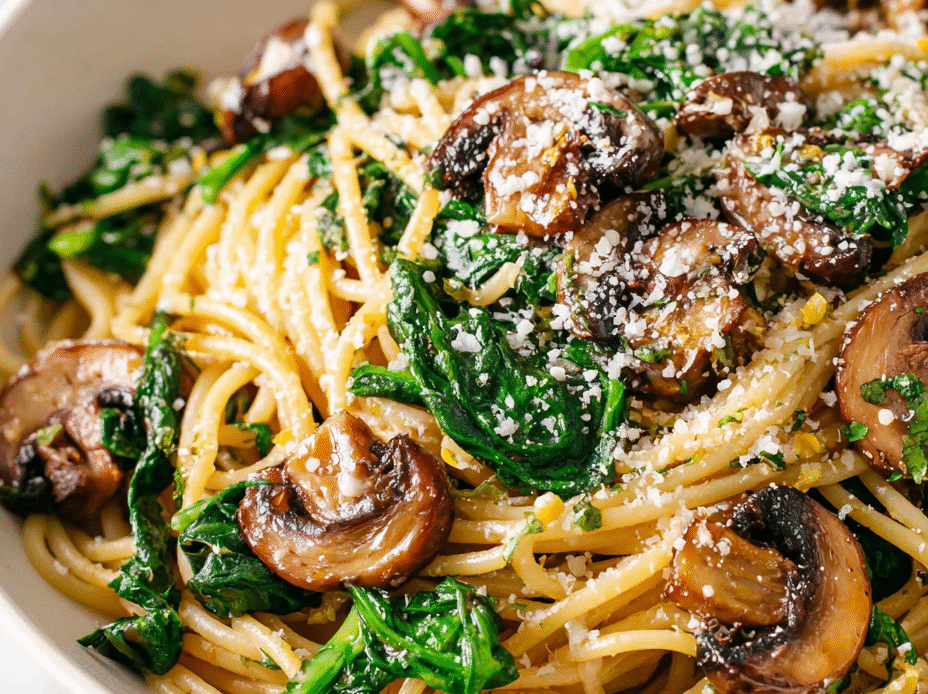
There’s something about slowly simmering spinach and mushrooms together that turns humble pasta into a warm, nostalgic dish. It’s a process I’ve come to cherish on chilly evenings, when I want something rich but simple, with deep earthy flavors that feel like a quiet hug. It’s not fancy, but it’s honest, and the way the flavors deepen as they cook makes every bite special.
This recipe isn’t about quick fixes or flashy ingredients. It’s about patience—letting the mushrooms release their smoky juices and the spinach wilt into tender, almost silky leaves. When you cook it right, the aroma alone fills the kitchen with a comforting, earthy scent that makes everyone gather around the stove, curious and hungry. It’s a dish that’s rooted in routine but feels like a small celebration of good, honest ingredients.
Focusing on how the earthy flavors of spinach and mushroom deepen when cooked slowly together, creating a comforting, almost nostalgic pasta that feels like a warm hug on a chilly night.
The story behind this recipe
This dish sprouted from a night of rummaging through the fridge, searching for something comforting but quick. I remember the earthy aroma of mushrooms mingling with the fresh, slightly bitter scent of spinach, filling the kitchen as I cooked. It’s a recipe born out of necessity and love for honest, simple flavors that somehow feel like a small, edible hug after a long day.
Key Ingredient Insights
- Spinach: I like to use fresh, vibrant leaves that still have a slight crunch—makes the dish feel lively. Wilt it down slowly to develop a tender, almost silky texture. If it turns too slimy, quicken the heat or add a splash of lemon to brighten it up.
- Mushrooms: I prefer cremini or button for their earthy flavor, but shiitake can add a smoky depth. Sear them until they’re golden and release their juices—those umami-rich drippings are what make the sauce sing. Skip this step if you want less smoky, just cook until softened.
- Garlic: I always crush and chop it finely—more surface area, more flavor. Sauté until fragrant, about 30 seconds, until it shimmers and smells like a savory hug. Burnt garlic ruins it fast, so keep an eye and stir constantly.
- Olive oil: I use good-quality extra virgin for richness and flavor. Drizzle generously, then let it heat gently before adding the garlic, so it doesn’t burn. If you prefer less oil, reduce but maintain a good flavor base.
- Pasta: I like a hearty shape—fusilli or pappardelle—to hold the earthy sauce well. Cook until just al dente, then reserve a splash of pasta water. It’s the secret to loosening the sauce if it thickens too much.
- Lemon juice: A squeeze brightens everything—adds a fresh contrast to the earthiness. Add just before serving, so the flavors stay lively and vibrant. Skip if you want a more mellow, cozy tone.
- Parmesan: I prefer aged Parmesan, grated fresh over the top. It melts into the sauce, adding umami and saltiness. If you want a dairy-free version, nutritional yeast can add a cheesy note, but won’t melt like cheese.
Spotlight on key ingredients
Spinach:
- I like to use fresh, vibrant leaves that still have a slight crunch—makes the dish feel lively. Wilt it down slowly to develop a tender, almost silky texture. If it turns too slimy, quicken the heat or add a splash of lemon to brighten it up.
- Mushrooms: I prefer cremini or button for their earthy flavor, but shiitake can add a smoky depth. Sear them until they’re golden and release their juices—those umami-rich drippings are what make the sauce sing. Skip this step if you want less smoky, just cook until softened.
Mushrooms:
- I prefer cremini or button for their earthy flavor, but shiitake can add a smoky depth. Sear them until they’re golden and release their juices—those umami-rich drippings are what make the sauce sing. Skip this step if you want less smoky, just cook until softened.
- ingredient
Notes for ingredient swaps
- Dairy-Free: Swap Parmesan for nutritional yeast—adds cheesy umami but less richness.
- Vegan: Use olive oil instead of butter or cream—keeps the earthy flavors but skips dairy.
- Gluten-Free: Replace pasta with rice noodles or gluten-free penne—maintains texture, varies in chewiness.
- Mushrooms: Try shiitake or portobello—introduces smoky or meaty notes, respectively.
- Spinach: Substitute with kale or arugula—different textures and slightly bitter or peppery flavors.
- Lemon: Use lime or vinegar—brings acidity, alters brightness slightly.
- Oil: Avocado oil works well—milder flavor, high smoke point, good for sautéing.
Equipment & Tools
- Large skillet: Sauté mushrooms, spinach, and finish the sauce.
- Saucepan: Cook pasta evenly and efficiently.
- Tongs: Toss and serve pasta without breaking it.
- Slotted spoon: Remove pasta from water, retain some for sauce.
Step-by-step guide to spinach and mushroom pasta
- Gather your equipment: a large skillet, tongs, a saucepan for pasta, and a slotted spoon. Set everything within reach.
- Bring a generous pot of salted water to a boil—about 1 liter per 100g pasta—aim for a rolling boil (~100°C / 212°F).
- Add your pasta (say, pappardelle or fusilli) and cook until just al dente—check 1 minute before package time, usually 8-10 minutes. Save a cup of pasta water.
- While pasta boils, heat the skillet over medium (~160°C / 320°F). Drizzle in about 2 tbsp olive oil until shimmering, then add 2-3 crushed garlic cloves. Sauté until fragrant—about 30 seconds—avoid burning.
- Add sliced mushrooms (about 200g) to the skillet. Cook until golden and their juices have evaporated—around 8 minutes. If they release too much water, turn up heat to brown them well.
- Stir in 200g fresh spinach, a handful at a time. Wilt slowly—about 2-3 minutes—until tender and vibrant. If it looks too soggy, turn up the heat and cook off excess moisture.
- Drain pasta, reserving a splash of pasta water. Toss the pasta into the skillet with mushrooms and spinach. Add a splash of reserved water—about 2-3 tbsp—to loosen the sauce.
- Finish with a squeeze of lemon juice, about 1 tsp, for brightness. Grate fresh Parmesan over, about 2 tbsp, and toss well to coat.
- Taste and adjust seasoning—salt, pepper, lemon. If sauce feels too thick, add a little more pasta water. Serve immediately for best flavor and texture.
Serve immediately while hot. Garnish with extra Parmesan and a lemon wedge if desired. Toss gently to coat everything evenly.
How to Know It’s Done
- Pasta is al dente, with a slight bite.
- Mushrooms are golden and slightly caramelized.
- Spinach is wilted but still vibrant green.
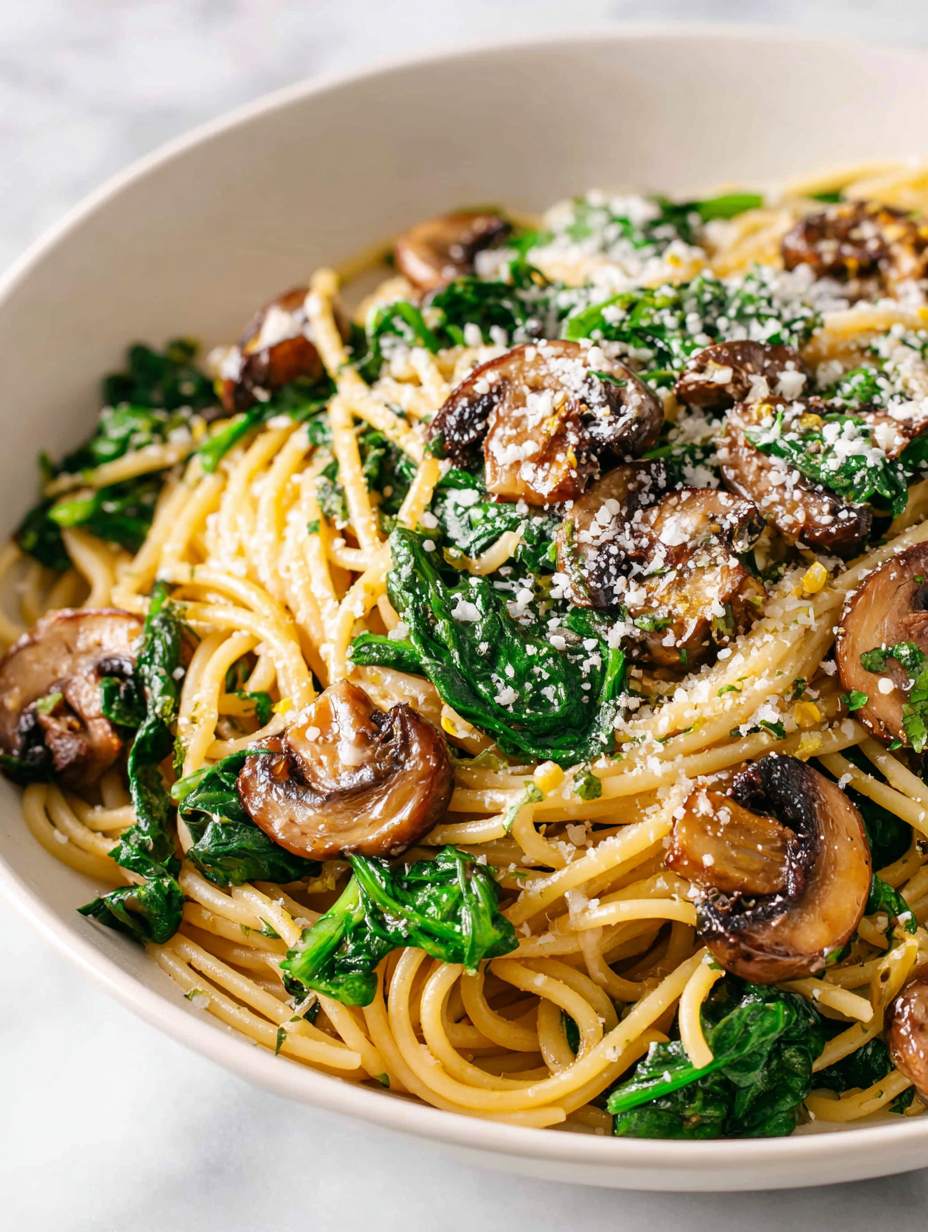
Spinach and Mushroom Pasta
Ingredients
Equipment
Method
- Bring a large pot of salted water to a rolling boil, then add your pasta and cook until just al dente—about 8 to 10 minutes. Drain, reserving a splash of pasta water, and set aside.
- While the pasta cooks, heat a large skillet over medium heat. Drizzle in the olive oil until shimmering, then add the finely chopped garlic. Sauté for about 30 seconds until fragrant—listen for a gentle sizzling and enjoy the aroma.
- Add the sliced mushrooms to the skillet. Cook, stirring occasionally, until they turn golden brown and their juices have evaporated—about 8 minutes. You should hear a gentle sizzle and see the mushrooms caramelize slightly.
- Gradually add the spinach to the skillet, a handful at a time. Wilt it down slowly—about 2 to 3 minutes—until it’s tender and vibrant green. If the mixture looks too wet, turn up the heat slightly to evaporate excess moisture.
- Once the pasta is drained, add it directly to the skillet with the cooked mushrooms and spinach. Toss everything together gently using tongs, then add a splash of the reserved pasta water to loosen the mixture and help the flavors meld.
- Squeeze in the lemon juice to brighten the earthy flavors, then sprinkle the freshly grated Parmesan over the top. Toss again until everything is well coated and fragrant, about 1 minute.
- Give the dish a final taste and adjust seasoning with salt or pepper if needed. Serve immediately while hot, garnished with extra Parmesan if desired, and enjoy the warm, silky textures and deep earthy flavors.
Pro tips for perfect pasta
- Bolded mini-head: Sear mushrooms until golden—this caramelization boosts umami and smoky aroma.
- Bolded mini-head: Wilt spinach slowly—adding it in batches helps maintain vibrant color and prevents sogginess.
- Bolded mini-head: Use reserved pasta water—its starchiness loosens the sauce and helps it cling better.
- Bolded mini-head: Add lemon juice at the end—brightens earthy flavors and balances richness.
- Bolded mini-head: Keep heat moderate during sauté—avoids burning garlic and keeps mushrooms tender without drying out.
- Bolded mini-head: Grate cheese fresh—melts better and enhances the savory depth of the dish.
- Bolded mini-head: Taste and adjust seasoning—balance salt, acidity, and pepper before serving for perfect flavor.
Common mistakes and how to fix them
- FORGOT to drain pasta properly → Drain thoroughly to prevent soggy sauce.
- DUMPED in too much oil → Use moderate oil; too much makes the dish greasy.
- OVER-TORCHED mushrooms → Cook on medium heat; burnished mushrooms taste bitter.
- MISSED seasoning adjustments → Taste and adjust salt and acidity before serving.
Quick fixes and pantry swaps
- When sauce is too thick, splash in hot pasta water and stir vigorously.
- If mushrooms release too much water, increase heat to brown and evaporate excess moisture.
- Splash lemon juice on wilted spinach to brighten and revive color when it looks dull.
- Patch over-salted sauce with a pinch of sugar or a splash of water to balance flavors.
- Shield overcooked pasta with a quick rinse in cold water to stop the cooking immediately.
Prep, store, and reheat tips
- Prep the spinach and mushrooms ahead—clean and slice the mushrooms, wash and dry the spinach—store in airtight containers for up to 24 hours. The earthy aroma will be fresh and vibrant when cooked.
- Cook the pasta in advance until just al dente, then drain and toss with a little olive oil. Store in a sealed container in the fridge for up to 24 hours. Reheat in boiling water for a minute to bring back some of the freshness.
- The sautéed mushrooms and wilted spinach can be made a day ahead. Chill in an airtight container, then gently reheat in a skillet over low heat, until warmed through and fragrant again—watch for moisture, it might need a splash of water.
- Refrigerated leftovers will keep for up to 2 days. The flavors deepen over time, especially if you add a squeeze of lemon or a bit more Parmesan during reheating. Expect a softer, more mellow earthy profile when reheated.
Top questions about spinach and mushroom pasta
1. How do I keep spinach from becoming slimy?
Fresh spinach wilts quickly, so add it in batches and cook until just tender, about 2-3 minutes. If it looks too soggy, turn up the heat to evaporate excess moisture.
2. Should I wash the mushrooms before cooking?
Cooking mushrooms until they’re golden and slightly crispy brings out their earthy flavor. If they release too much water, increase the heat to help brown them better.
3. Why add pasta water to the dish?
Reserve some pasta water before draining. Its starchy quality helps loosen the sauce and helps it cling better to the pasta.
4. How do I prevent garlic from burning?
Use a gentle heat when sautéing garlic—around 160°C/320°F—so it releases aroma without burning, which can make it bitter.
5. How do I know when the pasta is perfect?
Cook the pasta until just al dente, usually 8-10 minutes, then drain promptly. Reheat gently if needed, but fresh is best.
6. Can I skip the lemon?
Add a squeeze of lemon juice at the end to brighten earthy flavors. It balances richness and adds a fresh note.
7. Which mushrooms work best?
Choose cremini or button mushrooms for a milder, earthy flavor. Shiitake adds smoky depth but can be overpowering if overused.
8. Should I buy pre-grated cheese?
Grate Parmesan fresh over the dish just before serving for best flavor and meltability. Nutritional yeast can be used for a dairy-free option.
9. What if my sauce is too stiff?
If the sauce gets too thick, splash in some reserved pasta water and stir until loosened. It also helps the sauce stick better.
10. Can I make this ahead?
Serve immediately while hot. If reheating, warm gently in a skillet with a splash of water to restore moisture.
This pasta isn’t just about earthy flavors; it’s about the quiet pleasure of slow cooking and layered aromas. Each bite offers a gentle reminder that simple ingredients, treated with patience, can create something truly comforting. It’s a dish that’s easy to love, especially on nights when you need a little warmth and familiarity.
In a world full of fast fixes, this recipe slows things down just enough to feel like a small, meaningful ritual. It’s a reminder to enjoy the process, to savor each step, and to trust that honest ingredients will always shine through. Sometimes, the simplest meals leave the biggest impression.

Hi, I’m Jonny Andrew Miller, the cook, taster, and slightly messy mind behind Bite & Boom. I live in Austin, Texas, a city that smells like barbecue smoke, fresh tortillas, and late-night tacos if you wander long enough. It suits me.