
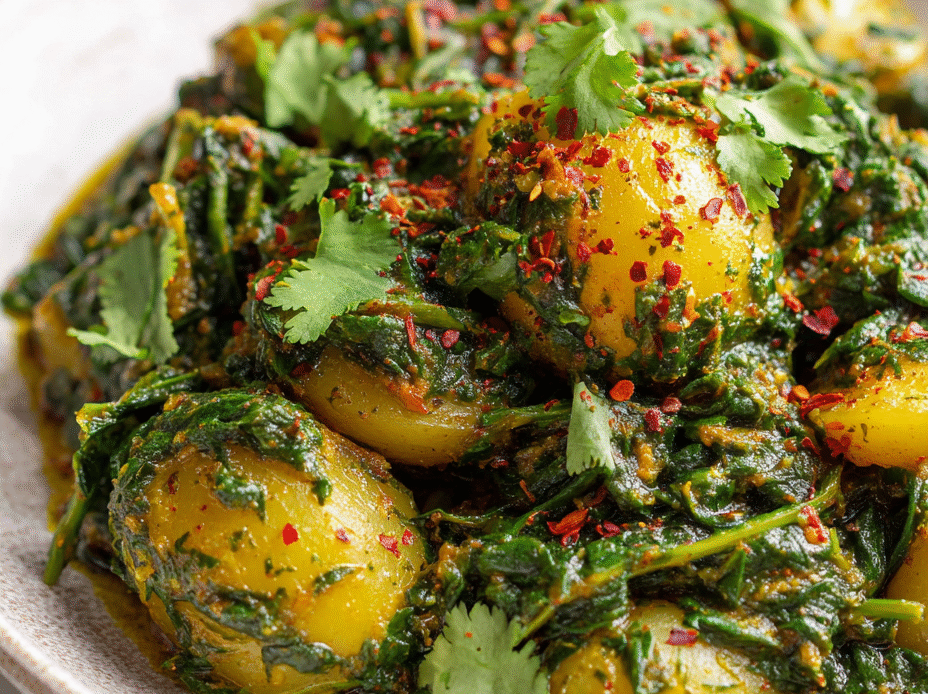
This spinach potato curry is one of those dishes that sneaks up on you with its simplicity. The earthy bitterness of the spinach balances perfectly with the creamy, soft potatoes, making every bite feel both nourishing and bright. It’s a recipe I turn to when I want something quick but deeply satisfying, especially after a busy day.
What I love about this curry is how versatile it feels—throw in a few spices, a splash of coconut milk, and you get something that’s comforting yet lively. The spinach adds a fresh, slightly bitter note that cuts through the richness of the potatoes, creating a harmony that feels like a warm hug on a hectic weeknight. Plus, it’s a dish that’s easy to tweak to your taste, whether you like it spicy or mild.
Choosing to focus on how the earthy, slightly bitter spinach balances the creamy, starchy potatoes, creating a comforting yet vibrant curry that feels like a warm hug on a busy weeknight.
The story behind this recipe
- This dish was born out of a lazy Sunday afternoon in my childhood kitchen. My mom would toss together whatever was fresh in the garden—mostly spinach and potatoes—turning it into something simple yet deeply satisfying. That moment of chopping green leaves and softening potatoes in a fragrant pan always felt like a small celebration amidst the chaos.
- I remember how the earthy aroma of cooked spinach would mingle with the buttery scent of potatoes, filling the whole house with a comforting warmth. It’s a recipe that’s stayed with me, always ready to come together when I need something fast, honest, and nourishing. Over the years, I’ve tweaked it, adding a splash of spice or coconut milk, but the core remains just as humble and true.
- heading
Ingredient breakdown
- Spinach: I love using fresh, vibrant leaves that have a slight earthy aroma. If yours are wilted, give them a quick rinse and a gentle spin. The bright green color really pops once cooked and adds a fresh, slightly bitter counterpoint.
- Potatoes: I prefer starchy, floury potatoes for their creamy texture when cooked. Russets or Yukon Golds work well. If you want a lighter feel, you can swap for sweet potatoes, but expect a sweeter, less neutral flavor.
- Onions: I use yellow onions for their mellow sweetness that deepens as they caramelize. If you only have red onions, they’ll add a sharper note—just cook them longer until soft and golden.
- Garlic: I love crushing garlic cloves to release a pungent, fragrant oil that infuses the curry. If you’re pressed for time, minced garlic from a jar works fine, but fresh gives a brighter, more complex aroma.
- Spices: I keep my spice blend simple—cumin, coriander, and a touch of turmeric. The smoky warmth of cumin makes the curry feel cozy, but if you want it brighter, add a pinch of paprika or lemon zest at the end.
- Coconut milk: I use full-fat coconut milk for richness and a hint of sweetness. If you prefer a lighter dish, swap half for vegetable broth, but the curry will lose some of its lush, velvety texture.
- Oil: I reach for neutral oils like sunflower or canola, which won’t compete with the spices. If you want a nuttier flavor, a splash of sesame oil at the end can add depth and aroma.
Spotlight on key ingredients
Spinach:
- I love using fresh, vibrant leaves that have a slight earthy aroma. If yours are wilted, give them a quick rinse and a gentle spin. The bright green color really pops once cooked and adds a fresh, slightly bitter counterpoint.
- Potatoes: I prefer starchy, floury potatoes for their creamy texture when cooked. Russets or Yukon Golds work well. If you want a lighter feel, you can swap for sweet potatoes, but expect a sweeter, less neutral flavor.
Potatoes:
- I love choosing starchy, neutral potatoes that break down slightly as they cook, creating that creamy texture. Russets or Yukon Golds are my go-tos. If you’re after a slightly sweeter note, sweet potatoes work but change the flavor profile quite a bit.
- Spinach: Fresh, tender leaves that wilt quickly and turn a vivid green. If your spinach is tough or old, it won’t wilt as nicely and might add a bitter note instead of balancing the curry.
Notes for ingredient swaps
- Dairy-Free: Swap coconut milk for almond or cashew milk. Expect a lighter, less creamy texture with a nuttier flavor.
- Potatoes: Use sweet potatoes for a sweeter, more vibrant curry. They soften differently and add a slight caramel note.
- Spinach: Kale or Swiss chard can stand in for spinach. They’re a bit sturdier and need a longer cook, but hold flavor well.
- Oil: Olive oil can replace neutral oils. It adds a fruitier note but can be a bit more pungent when cooked at high heat.
- Spices: Fresh ground coriander or cumin seeds can replace pre-ground spices. They’ll give a fresher, more aromatic punch.
- Garlic: Roasted garlic adds a mellow, caramelized sweetness. Use less to avoid overpowering the subtle greens.
- Herbs: Fresh cilantro or parsley can brighten the dish at the end. Dried herbs lose potency, so use sparingly.
Equipment & Tools
- Large skillet or heavy-bottomed pan: For even heat and good searing of potatoes and cooking the curry.
- Spatula: To stir and combine ingredients comfortably.
- Knife and cutting board: For chopping potatoes, onions, garlic, and spinach.
Step-by-step guide to spinach potato curry
- Gather your equipment: a large skillet or heavy-bottomed pan, a spatula, a knife, and a cutting board. Heat the pan over medium heat (~160°C / 320°F).
- Peel and dice 2 medium potatoes into 1-inch cubes. Set aside. Rinse and roughly chop 4 cups of fresh spinach. Set aside.
- Finely chop 1 large onion and 3 garlic cloves. Measure 1 teaspoon cumin, 1 teaspoon coriander, and ½ teaspoon turmeric. Have coconut milk ready (about ¾ cup).
- Add 1-2 tablespoons oil to the pan. When shimmering, add the chopped onion. Cook for 5-7 minutes until translucent and fragrant, stirring occasionally.
- Stir in garlic and spices. Cook for 30 seconds until aromatic. The mixture should smell warm, earthy, and slightly toasty. If it burns, lower the heat.
- Add the diced potatoes. Stir well to coat with spices. Cook for 5 minutes, letting the potatoes start to soften and turn slightly golden.
- Pour in the coconut milk. Bring to a gentle simmer (~85°C / 185°F). Cover and cook for 15-20 minutes, stirring occasionally, until potatoes are tender and sauce thickens.
- In the last 2 minutes, stir in the spinach. Cover and let wilt, about 2-3 minutes. The spinach should turn bright green and reduce in volume.
- Uncover and check the curry. It should be creamy, potatoes soft, and spinach vibrant. Adjust seasoning with salt or a squeeze of lemon if needed.
- Remove from heat. Let it rest for 3 minutes. Serve hot, garnished with a drizzle of oil or a sprinkle of fresh herbs if desired.
Let the curry sit off heat for 3 minutes to settle flavors. Serve with rice or flatbread, garnished as desired. Enjoy the warmth and earthy aroma.
How to Know It’s Done
- Potatoes are fully tender and easily mashable with a fork.
- Coconut milk has thickened slightly, coating the potatoes and spinach.
- Spinach is wilted, vibrant, and evenly distributed throughout the curry.
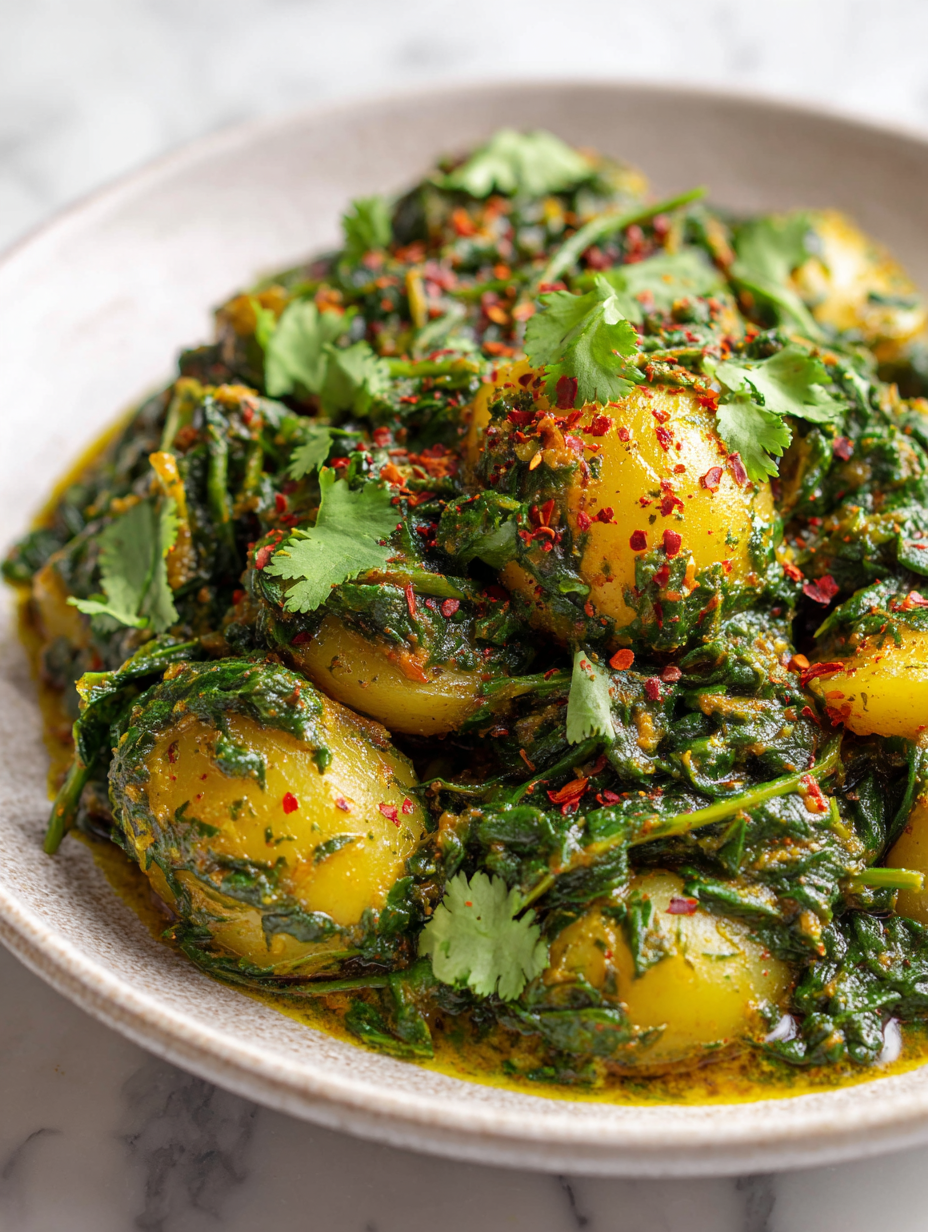
Spinach Potato Curry
Ingredients
Equipment
Method
- Gather your equipment: a large skillet, a spatula, a knife, and a cutting board. Heat the skillet over medium heat until shimmering.
- Add the diced potatoes to the hot skillet with a tablespoon of oil. Cook for about 5 minutes, stirring occasionally, until they start to turn golden and soften slightly.
- Meanwhile, finely chop the onion and crush the garlic. When the potatoes are lightly golden, push them to one side of the pan and add the onion to the empty space.
- Sauté the onion for 5-7 minutes until translucent and fragrant, stirring frequently to prevent sticking.
- Add the crushed garlic along with ground cumin, coriander, and turmeric to the pan. Cook for 30 seconds until the spices release their aroma, stirring constantly.
- Stir in the partially cooked potatoes, coating them evenly with the spice mixture. Let them cook together for about 5 minutes, stirring gently.
- Pour in the coconut milk, stirring to combine. Bring the mixture to a gentle simmer, then cover and cook for 15-20 minutes, stirring occasionally, until the potatoes are tender and the sauce has thickened slightly.
- In the last 2-3 minutes of cooking, add the chopped spinach to the skillet. Cover and let it wilt, turning bright green and reducing in volume.
- Uncover the skillet, stir gently to distribute the spinach evenly, and cook for another minute to meld the flavors. Taste and adjust seasoning with salt or a squeeze of lemon if desired.
- Remove from heat and let sit for 3 minutes. Serve hot, garnished with herbs or a drizzle of oil if you like. Enjoy the vibrant, creamy curry with rice or flatbread!
Pro tips for perfect curry
- Bolded mini-head: Use fresh spinach for vibrant color and flavor; wilt quickly and retain a slight earthy aroma.
- Bolded mini-head: Dice potatoes uniformly to ensure even cooking; smaller pieces soften faster and absorb flavors better.
- Bolded mini-head: Toast spices briefly in oil until fragrant, about 30 seconds, to unlock their full aroma.
- Bolded mini-head: Add coconut milk gradually, stirring constantly, to prevent curdling and achieve a silky sauce.
- Bolded mini-head: Wilt spinach in the last 2 minutes for maximum color and freshness—avoid overcooking to prevent bitterness.
- Bolded mini-head: Adjust heat carefully when cooking spices—too high and they burn, too low and they won’t release aroma.
- Bolded mini-head: Let the curry rest for 3 minutes after cooking; flavors meld better and sauce thickens slightly.
Common mistakes and how to fix them
- FORGOT to drain spinach thoroughly → Leaves release excess water, dilute curry flavor.
- DUMPED potatoes too early → Stir more often to prevent sticking and ensure even cooking.
- OVER-TORCHED spice mix → Reduce heat or add a splash of water to prevent burning.
- MISSED resting time → Let curry sit off heat for better flavor melding and sauce thickening.
Quick fixes for common curry issues
- When spinach wilts too much → Splash in a squeeze of lemon for brightness.
- If potatoes stick or burn → DUMP a splash of water and stir gently.
- When curry is too thick → Patch with a little warm broth to loosen it up.
- Splash with oil or lemon if flavors seem dull after reheating.
- When in a pinch → Pantry swap canned coconut milk for a splash of cream, for richness.
Prep, store, and reheat tips
- Prepare all ingredients in advance: peel and dice potatoes, wash and chop spinach, and measure spices. Keep separately to save time during cooking.
- Store chopped vegetables in airtight containers in the fridge for up to 1 day to keep freshness and vibrant color.
- Cooked curry can be refrigerated for 2–3 days; reheat gently on the stove over low heat, stirring occasionally until steaming and fragrant.
- The flavors deepen after a day in the fridge, making leftovers even more comforting; expect a slightly thicker sauce and more melded spices.
- Reheat until the curry is hot and bubbling, around 75°C / 165°F, and watch the spinach to prevent overcooking, which can turn it mushy.
Top questions about spinach potato curry
1. Can I use frozen spinach?
Use fresh, vibrant spinach leaves for the best flavor and color. Wilt in the last few minutes of cooking to keep it bright and tender.
2. How do I prevent the curry from becoming watery?
Yes, but thaw and drain it thoroughly to remove excess water. Frozen spinach can sometimes make the curry watery if not drained.
3. How do I know when the potatoes are cooked?
Cook the potatoes until they are easily mashable but still hold their shape. About 15-20 minutes on simmer, depending on size.
4. Can I make it milder or spicier?
Adjust spices to taste. If it’s too mild, add a pinch more cumin or a squeeze of lemon at the end for brightness.
5. Can I substitute coconut milk?
Use full-fat coconut milk for richness. Light coconut milk or almond milk can work but will result in a less creamy texture.
6. What other greens can I use?
Yes, you can add other greens like kale or Swiss chard. They need a slightly longer cooking time but add a hearty flavor.
7. What if I burn the spices?
Stir the curry gently and keep the heat moderate. Over-torched spices or ingredients can turn bitter or burn, so watch closely.
8. How do I reheat without losing flavor?
Reheat leftovers gently on the stove over low heat. Add a splash of water or broth if it thickens too much during reheating.
9. Can I make this in advance?
You can prep all ingredients ahead, store separately in the fridge for up to a day, then cook fresh when ready.
10. My curry is too thick—what do I do?
If the curry gets too thick, splash in a little warm water or broth to loosen it up without diluting flavors.
This spinach potato curry feels like a little ritual—something honest and straightforward that still surprises me with its depth. The earthy spinach and creamy potatoes come together in a way that’s both familiar and oddly refreshing, especially on busy weeknights when I need something quick but meaningful.
It’s a dish I keep coming back to, not just for the taste but for the quiet satisfaction of knowing I can toss it together with pantry staples and fresh greens. Sometimes, I add a squeeze of lemon or a handful of herbs at the end, and it’s like rediscovering the simple joy of cooking. No fuss, just real, honest flavors.

Hi, I’m Jonny Andrew Miller, the cook, taster, and slightly messy mind behind Bite & Boom. I live in Austin, Texas, a city that smells like barbecue smoke, fresh tortillas, and late-night tacos if you wander long enough. It suits me.