
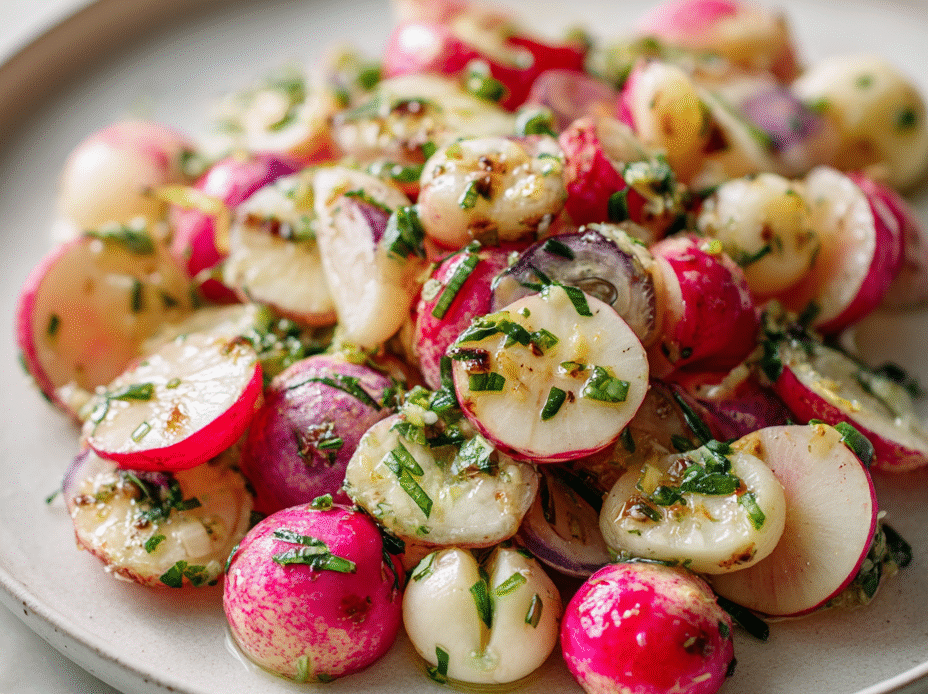
Radishes are often dismissed as a crunchy, peppery snack, but they hold a quiet versatility that’s easy to overlook. When cooked gently in butter, their bite softens into a tender, subtly sweet flavor that’s surprisingly comforting. It’s a simple transformation that makes you look at these humble roots in a whole new way.
I first stumbled on this idea during a rushed spring dinner, when I needed something quick and fresh. Sautéing radishes became my secret to adding brightness without the fuss of a salad. Now, it’s a go-to side that brings a touch of elegance and a lot of nostalgia to my table.
This recipe explores radishes beyond their usual crunch — transforming their sharp bite into a tender, buttery delight that surprises even seasoned cooks.
The story behind this recipe
One afternoon, I was rummaging through my grandmother’s old recipe box and found a faded note about sautéed radishes. It struck me how such a simple, overlooked vegetable could carry so many memories of family dinners and springtime markets. Inspired, I started experimenting, and that tender, buttery transformation became a way to reconnect with the seasons and my roots. Now, it’s a dish I turn to whenever I want a moment of honest, unpretentious comfort in the kitchen.
Key ingredients and tips
- Radishes: I love their crispness and peppery bite, but roasting or sautéing softens that sharpness—try slicing thin for even cooking, and look for firm, shiny radishes with vibrant color.
- Butter: It’s the flavor backbone here—rich and velvety. Use good-quality unsalted butter for that nutty aroma; if you want a dairy-free twist, try coconut oil for a subtle sweetness.
- Salt: I prefer flaky sea salt to enhance sweetness and balance the peppery radishes—don’t skimp, but keep in mind a pinch goes a long way, especially if your butter is salted.
- Pepper: Freshly ground black pepper adds a gentle kick—use sparingly at first, then adjust to taste. A tiny bit of crushed red pepper can add a smoky warmth, if you like that.
- Optional herbs: Chopped chives or parsley brighten up the dish—add just before serving to keep their freshness; dried herbs tend to lose their punch in cooking.
- Lemon juice (if using): A squeeze right at the end brightens the entire dish—use fresh lemon for that zing and a burst of citrus aroma. Skip if you prefer milder flavors.
- Cooking oil (if needed): If your pan tends to stick, a splash of neutral oil like grapeseed or vegetable can help prevent burning and give a more even sauté.
Spotlight on Key Ingredients
Radishes:
- I love their crispness and peppery bite, but roasting or sautéing softens that sharpness—try slicing thin for even cooking, and look for firm, shiny radishes with vibrant color.
- Butter: It’s the flavor backbone here—rich and velvety. Use good-quality unsalted butter for that nutty aroma; if you want a dairy-free twist, try coconut oil for a subtle sweetness.
Butter:
- It’s the flavor backbone here—rich and velvety. Use good-quality unsalted butter for that nutty aroma; if you want a dairy-free twist, try coconut oil for a subtle sweetness.
- Salt: I prefer flaky sea salt to enhance sweetness and balance the peppery radishes—don’t skimp, but keep in mind a pinch goes a long way, especially if your butter is salted.
Notes for ingredient swaps
- Dairy-Free: Coconut oil can replace butter, lending a subtle sweetness and richer aroma but less nutty flavor.
- Vinegar: A splash of apple cider vinegar adds brightness—use sparingly to avoid overpowering the radish’s natural sharpness.
- Herbs: Fresh dill or tarragon can substitute chives or parsley—each brings a unique, fragrant note to the dish.
- Salt: Sea salt flakes give a crunch and burst of flavor; table salt works fine but may be less crunchy.
- Pepper: White pepper offers a milder heat and less visual contrast—great if you prefer a subtler peppery kick.
- Oil: Grape seed or vegetable oil can be used if butter isn’t available—less flavor, but still good for sautéing.
- Radishes: If radishes are unavailable, thinly sliced turnips or kohlrabi can work—still tender and slightly peppery, with a different but interesting flavor.
Equipment & Tools
- Cast iron skillet: Provides even heat and helps develop a nice caramelized exterior.
- Sharp knife: For thin, even slicing of radishes.
- Spatula or tongs: For gentle stirring and turning radishes during cooking.
- Measuring spoons: To measure butter and any added liquids accurately.
Step-by-step guide to sautéed radishes
- Gather a 10-inch skillet, preferably cast iron, for even heat and better caramelization. Have a sharp knife ready for slicing radishes thinly, about 2mm thick.
- Wash and dry your radishes thoroughly. Trim off the greens if attached, then slice into thin rounds. This ensures quick, even cooking and tender bites.
- Heat the skillet over medium heat, about 160°C (320°F). Add 1-2 tablespoons of butter and let it melt until it begins to shimmer, releasing a nutty aroma.
- Add the sliced radishes in a single layer. Cook without stirring for 2-3 minutes until edges start to turn golden. Then, stir gently to coat all slices with butter.
- Cook for another 4-6 minutes, stirring occasionally. The radishes should soften, their color deepening, and the butter will turn slightly foamy. Keep an eye for a gentle crackle as they cook.
- If the pan gets too dry or radishes start to stick, add a splash of water or a drizzle more butter. If they brown too fast, lower the heat slightly.
- Taste a radish for tenderness. It should be tender but still hold shape, with a mellow, sweetened flavor and a slightly translucent appearance.
- Remove from heat. Optional: squeeze a little lemon juice or sprinkle chopped herbs for brightness. Let rest for 1-2 minutes to let flavors settle before serving.
- Plate the radishes, drizzled with any remaining buttery pan juices. Serve warm, enjoying the tender, buttery, subtly sweet bites.
Once cooked, transfer radishes to a plate, drizzle with pan juices, and sprinkle with fresh herbs if desired. Let sit for 1-2 minutes to allow flavors to meld before serving.
How to Know It’s Done
- Radishes are tender when pierced with a fork, with a slight softness and no crunch.
- Edges are golden and slightly caramelized, with a fragrant butter aroma filling the air.
- Radishes are uniformly cooked, with no raw or overly mushy parts.
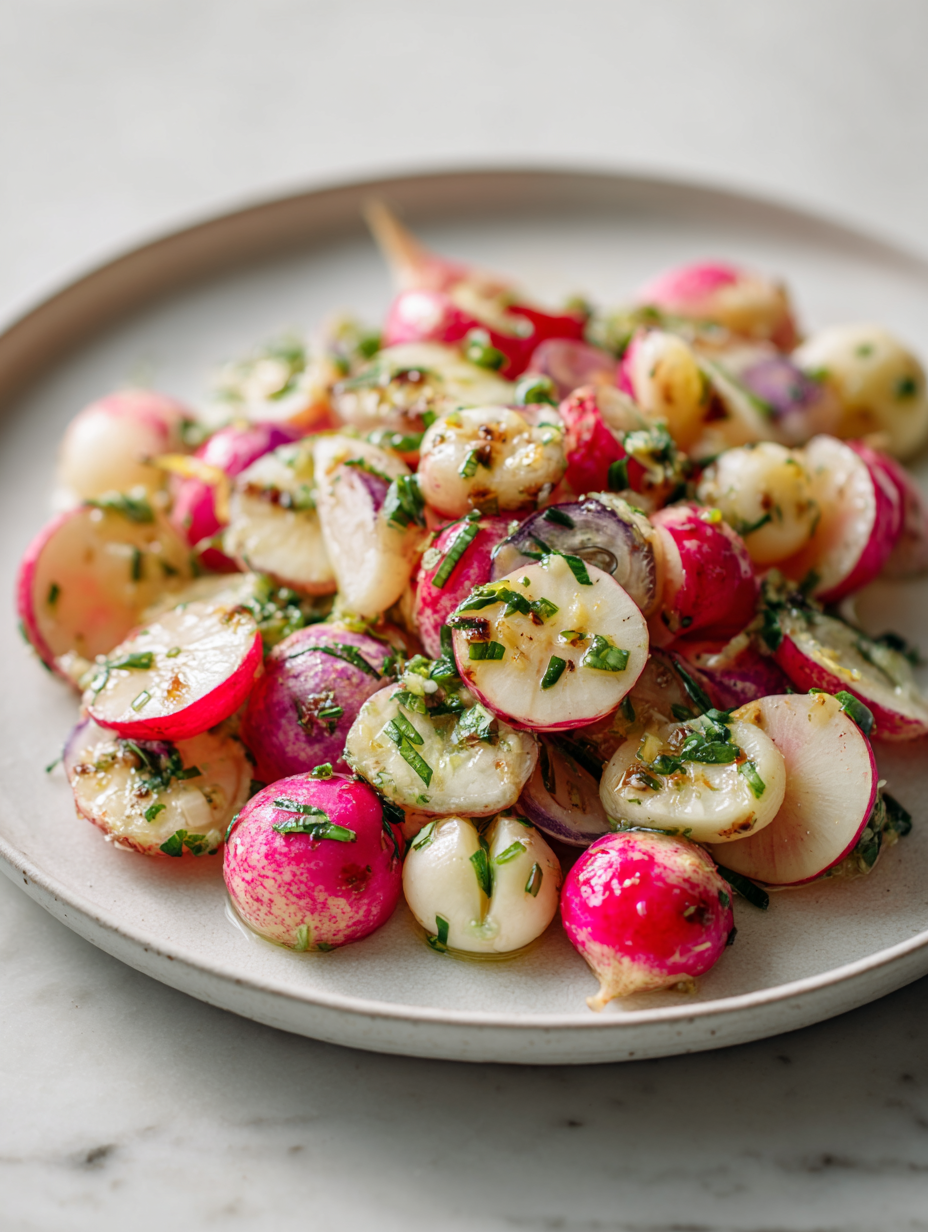
Sautéed Butter-Radishes
Ingredients
Equipment
Method
- Begin by washing and thoroughly drying the radishes. Trim off any greens if attached, then slice them into thin, even rounds about 2mm thick. This will help them cook quickly and evenly.
- Place your cast iron skillet over medium heat and add the butter. Let it melt completely, releasing a rich, nutty aroma and shimmering softly, signaling it's ready for the radishes.
- Carefully add the sliced radishes into the skillet in a single layer. Hear a gentle sizzle as they hit the hot butter, and watch for the edges to begin turning golden after about 2-3 minutes.
- Stir the radishes gently with a spatula or tongs to coat them evenly in butter. Continue cooking for about 4-6 minutes, stirring every so often, until they soften and their color deepens to a translucent, tender appearance.
- If the pan begins to look dry or the radishes start to stick, add a splash of water or a little more butter to keep things moist and prevent burning. Adjust the heat as needed to maintain a gentle sizzle.
- Check the tenderness of a radish slice by piercing it with a fork; it should be soft yet still hold its shape, with a subtle sweetness and silky texture. Once ready, remove the skillet from heat.
- Squeeze fresh lemon juice over the radishes for a bright, citrusy contrast, then sprinkle with chopped herbs and a pinch of flaky sea salt. Gently toss everything together to distribute the flavors evenly.
- Transfer the radishes to a serving plate, drizzle with any remaining buttery pan juices, and serve warm. Enjoy the tender, buttery bites that offer a surprisingly comforting twist on this humble root vegetable.
Pro tips for perfect sautéed radishes
- Boldly: Use high heat initially to develop a quick, golden sear and prevent sticking.
- Gentle: Stir the radishes often after the first few minutes to promote even cooking and prevent burning.
- Sensory cue: Look for a slight translucence and caramelized edges as signs of perfect tenderness.
- Fix: If radishes start to burn, lower the heat and add a splash of water to steam gently.
- Technique: Slicing thin ensures quick, uniform cooking and a tender bite with a delicate bite of pepper.
- Finish: Add a squeeze of lemon or herbs right at the end for a fresh burst that brightens the dish.
- Tip: Keep butter at a medium to high heat until it foams and releases a nutty aroma for maximum flavor.
Common mistakes and how to fix them
- FORGOT to monitor heat — radishes burn quickly if pan is too hot.
- DUMPED too much butter — keep it moderate for tender, not greasy, results.
- OVER-TORCHED radishes — lower heat if they start to blacken or smell burnt.
- MISSED stir timing — stir early if radishes stick or brown unevenly.
Quick fixes and pantry swaps
- If radishes are too peppery, splash with vinegar to mellow the bite.
- When butter smokes or burns, turn down heat immediately and add a splash of water.
- Splash cold water if radishes stick, to loosen and cool the pan quickly.
- Patch over dull flavor with a squeeze of lemon and a pinch of salt for brightness.
- Shield from heat if radishes start to blacken—reduce flame and stir constantly.
Prep, store, and reheat tips
- Prep the radishes: wash, trim greens, and slice thinly up to a day ahead—keep them in an airtight container in the fridge for crispness.
- Store cooked radishes: once cooled, keep leftovers in a sealed container for up to 2 days; reheating will soften texture but retain flavor.
- Reheat gently: warm in a skillet over low heat, adding a touch of butter or water to revive tenderness and bring back aroma.
- Flavor shift: reheated radishes may lose some of their fresh brightness; add a squeeze of lemon or fresh herbs after reheating to brighten again.
Top questions about sautéed radishes
1. What does sautéed radishes taste like?
Sautéed radishes develop a tender, slightly caramelized flavor with a subtle sweetness, losing their usual peppery bite.
2. How do I choose good radishes for sautéing?
Use firm, shiny radishes with vibrant color for the best texture and flavor after cooking.
3. Why cook radishes in butter?
Cooking radishes in butter softens their sharpness, revealing a mild, nutty flavor with a silky texture.
4. How should I prepare radishes before sautéing?
Thin slices, about 2mm thick, cook evenly and quickly, ensuring tenderness without mushiness.
5. What temperature should I cook radishes at?
Cook over medium heat (~160°C/320°F) until edges are golden and radishes are tender when pierced.
6. Should I add lemon to sautéed radishes?
Adding a squeeze of lemon brightens the dish, balancing the richness of butter and the earthiness of radishes.
7. What if my radishes stick or burn?
If radishes stick or burn, lower the heat and add a splash of water or more butter to loosen them.
8. How often should I stir radishes while cooking?
Stir frequently after initial sear to promote even cooking and prevent sticking or burning.
9. Can I reheat sautéed radishes?
Reheat leftovers gently in a skillet over low heat, adding a bit of butter or water to restore tenderness.
10. How do I know when radishes are cooked enough?
Radishes become softer and milder with cooking, but overcooking can make them mushy. Keep an eye on color and texture.
Sautéed radishes might seem humble, but they bring a quiet complexity that’s hard to beat. The tender, buttery bites are a reminder that simple ingredients can surprise you with their versatility.
Whenever I cook this dish, I feel a little more grounded—like rediscovering a childhood garden or a spring morning. It’s not flashy, but it’s honest, and sometimes that’s exactly what you need.

Hi, I’m Jonny Andrew Miller, the cook, taster, and slightly messy mind behind Bite & Boom. I live in Austin, Texas, a city that smells like barbecue smoke, fresh tortillas, and late-night tacos if you wander long enough. It suits me.