
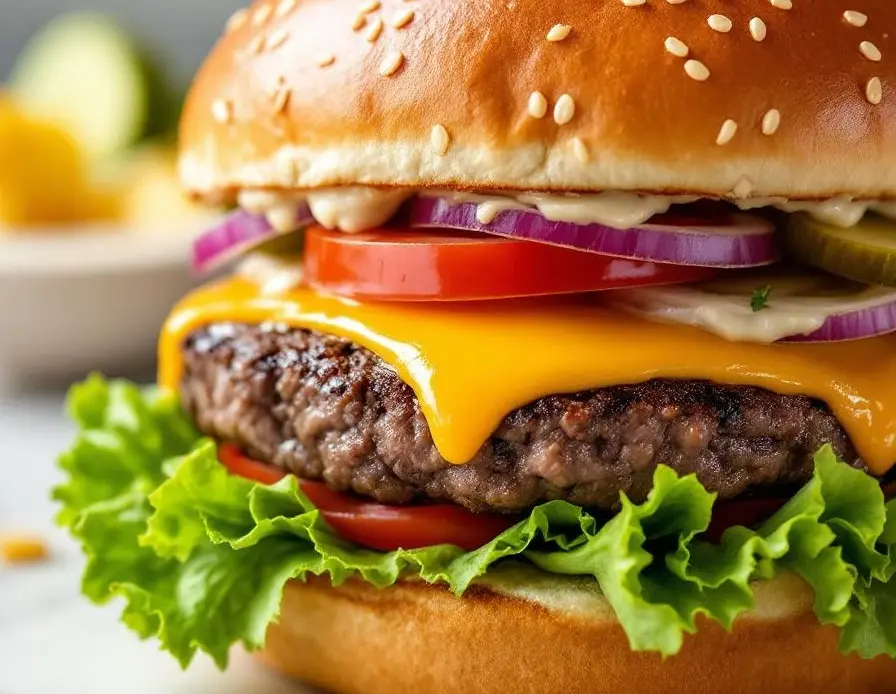
Making a smash burger means standing close to the stovetop, hearing that sharp sizzle as a thin patty hits the hot skillet. You push it down flat with a spatula, feeling the immediate resistance give way to a crackling, crispy crust.
The mess of pressing, flipping, and scraping the crispy edges off the pan is part of the process—no finesse, just raw, noisy kitchen work that rewards with a perfectly textured bite.
The satisfying, almost deafening sizzle and crackle as the smash burger hits the hot skillet, the sound of the thin patty instantly crisping and releasing its juices.
Key Ingredients and Substitutions
- Ground beef: I prefer 80/20 for flavor and juiciness, but leaner if you want less shrinkage—just be ready for a drier bite and adjust seasoning accordingly.
- Salt: Generous pinches right before smashing help form that crispy crust, so don’t skip it—skip if you’re watching sodium or seasoning already in the beef.
- Cheese slices: American or cheddar melt fast and add that gooey, salty hit—swap for pepper jack if you want a spicy kick that still melts smooth.
- Buns: Soft potato rolls or burger buns toasted lightly in butter hold up well and soak up juices—skip if you prefer a sturdier, crustier bread or gluten-free option.
- Pickles: Thin-sliced dill pickles cut through the richness with bright, vinegary crunch—skip if you prefer a milder flavor or want to focus on smoky toppings.
- Onions: Thinly sliced and cooked until caramelized or raw for bite—skip if you dislike raw onion or want a milder, sweeter note.
- Condiments: Ketchup, mustard, and a smear of mayo—layer them thick for flavor, but feel free to swap in aioli or hot sauce for extra zing.
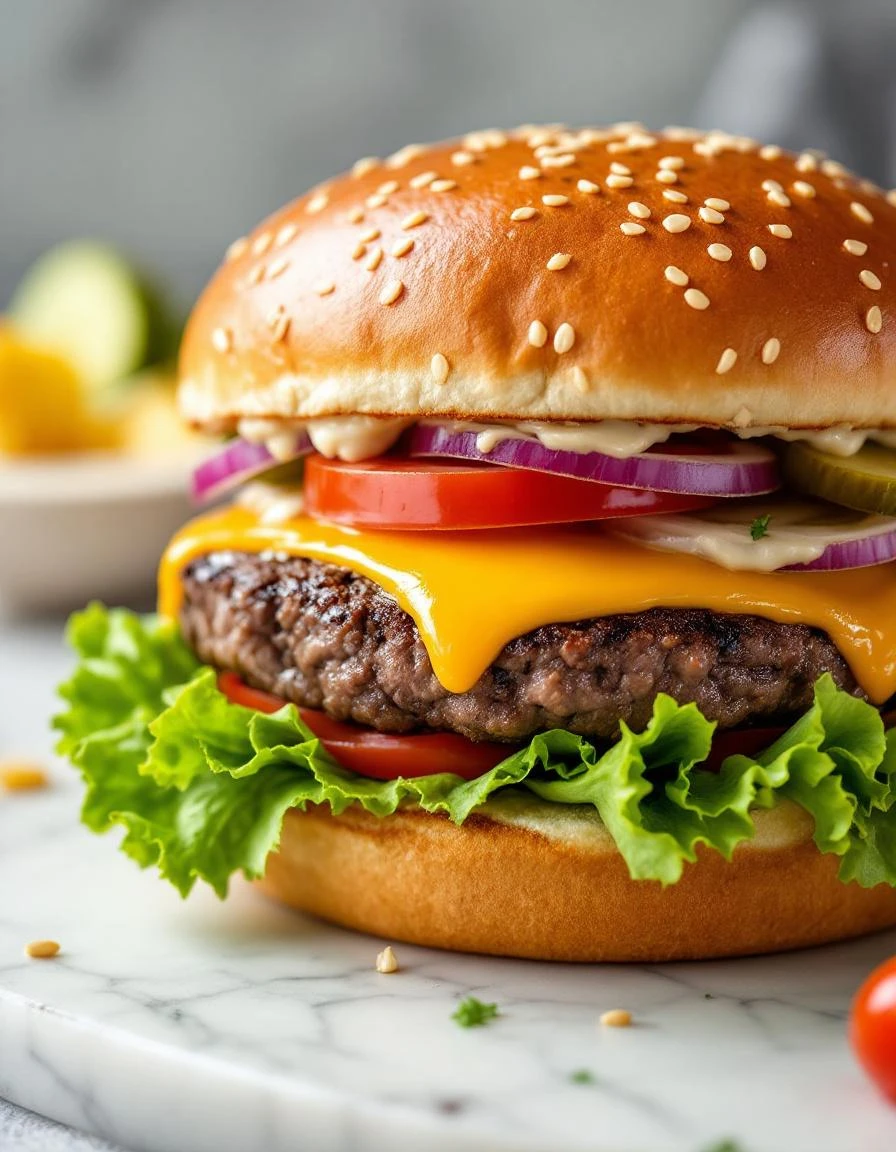
Classic Smash Burger
Ingredients
Equipment
Method
- Divide the ground beef into two equal portions and gently form into loose balls, avoiding overworking so the meat stays tender.
- Preheat your skillet over high heat until just smoking, then add a small amount of oil to coat the surface.
- Place each beef ball onto the hot skillet and immediately press down firmly with a spatula until each patty is very thin, about 1/4 inch thick.
- Sprinkle a generous pinch of salt over each patty right after smashing; listen for the sizzle as the crust begins to form.
- Cook the patties for about 2-3 minutes until the edges are deep golden brown and crispy, then flip carefully with a spatula.
- Immediately top each patty with a slice of cheese, pressing it gently into the hot meat so it melts quickly.
- While the cheese melts, toast the buns in a separate pan or in butter until golden and crispy, about 1-2 minutes.
- Remove the cheese-topped patties from the skillet once the cheese is melted and the crust is crispy; let them rest for a minute.
- Assemble the burger by spreading condiments on the toasted buns, then layering pickles, sliced onions, and the crispy beef patty with melted cheese.
- Top with the other half of the bun, give it a gentle press, and serve immediately while hot and crispy.
Common Mistakes and How to Fix Them
- FORGOT to preheat skillet: Heat until just smoking, then add oil for crisp crusts.
- DUMPED too much beef: Keep patties thin for better crunch and quicker cooking.
- OVER-TORCHED the burger: Adjust heat and flip sooner to avoid burnt edges.
- MISSED salt before smashing: Salt generously right as the patty hits the pan for flavor and crust.
Make-Ahead and Storage Tips
- Form the beef patties a few hours ahead; keep them chilled in an airtight container to retain freshness.
- Toast buns and prepare toppings a day in advance—store separately in the fridge to keep them crisp.
- Freeze extra patties for up to a month; thaw in the fridge overnight before cooking for best crust and juiciness.
- Reheat cooked patties in a hot skillet or oven, watching for that crispy exterior to re-emerge—avoid microwave to keep texture.
- Flavor might mellow slightly after refrigeration; add a pinch of salt or fresh toppings after reheating for maximum punch.
FAQs
1. How do I know when the burger is crispy enough?
The crispy crust is the key, so listen for that sharp crackle and brown color. It should sound like rice krispies in a pan, and the edges will be dark golden but not burnt.
2. How much pressure should I apply when smashing?
Use a thin, hot spatula to press the patty flat—really push down until you hear that sizzle. It’s the sound of juices escaping and crust forming.
3. What’s the best heat level for cooking?
Cooking at high heat is crucial. If the pan isn’t hot enough, you’ll get a pale, floppy burger. Wait until it just starts to smoke before adding the beef.
4. Can I cook multiple burgers at once?
Don’t overcrowd the pan. Cook in batches if needed, so each patty gets direct contact with the hot surface for that satisfying crunch.
5. Should I let the burger rest before eating?
Let the cooked burger rest for a minute after flipping. It helps the juices redistribute and keeps that crispy crust intact when you bite in.

Hi, I’m Jonny Andrew Miller, the cook, taster, and slightly messy mind behind Bite & Boom. I live in Austin, Texas, a city that smells like barbecue smoke, fresh tortillas, and late-night tacos if you wander long enough. It suits me.