
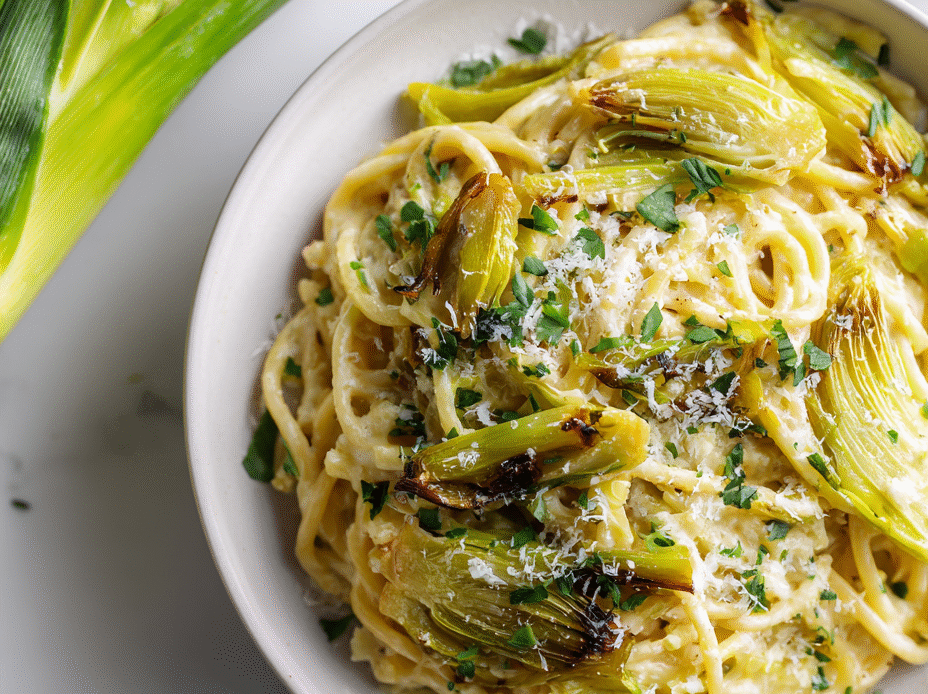
Leeks often get overshadowed by their more glamorous vegetable cousins, but when cooked slowly, they develop a sweet, caramelized richness that’s hard to beat. I love how this recipe turns a humble ingredient into the star of a creamy pasta, almost like a whisper of spring on your plate. It’s honest, simple, and surprisingly comforting, especially on those days when you want something cozy without fuss.
This dish is about embracing the overlooked, giving leeks the chance to shine in a way that’s both subtle and deeply satisfying. The slow-cooked leeks add a gentle sweetness that balances beautifully with the richness of cream and the bite of pasta. It’s a reminder that sometimes, the simplest ingredients cooked with care can create something truly memorable.
Focusing on the overlooked sweetness of leeks and how their gentle, caramelized flavor elevates a simple pasta into something unexpectedly rich and comforting, almost like a whisper of spring in every bite.
The story behind this recipe
I first stumbled upon this recipe during a quiet weekend, when I was digging through my old cookbooks for something different. I was drawn to the idea of leeks—so often sidelined—and decided to let them take center stage. The slow caramelization process transformed their mild, onion-like bite into a whisper-soft sweetness, which made me think of spring mornings and lazy afternoons. It’s funny how a simple vegetable can evoke such nostalgia and comfort all at once.
Key Ingredients and Their Roles
- Leeks: I love how slowly caramelizing the leeks transforms their mild, oniony flavor into a sweet, velvety base. Skip the slow cook if you’re in a rush, but you’ll miss that depth of flavor.
- Heavy Cream: The richness of heavy cream makes this dish luxuriously smooth. For a lighter twist, try crème fraîche or coconut cream, but expect a different texture and flavor punch.
- Pasta: I prefer a sturdy shape like pappardelle or bucatini that holds onto the sauce. Use whatever you have, but don’t skimp on the salt in the cooking water to keep it flavorful.
- Butter: A splash of good butter at the end adds a nutty aroma and silky finish. Skip it if you’re dairy-free, but consider olive oil for some richness.
- Parmesan: Freshly grated Parmesan adds a salty, umami kick and a bit of grit that makes the sauce cling. Pecorino Romano works well too for a sharper note.
- Lemon Juice: A squeeze brightens everything up and cuts through the richness. Don’t skip it—just a touch can make a big difference in freshness.
- Salt & Pepper: Seasoning is everything. I tend to be generous with salt during cooking and finish with freshly cracked pepper for a little heat and contrast.
Spotlight on Key Ingredients
Leeks:
- I love how slowly caramelizing the leeks transforms their mild, oniony flavor into a sweet, velvety base. Skip the slow cook if you’re in a rush, but you’ll miss that depth of flavor.
- During cooking, they become silky and sweet, releasing a subtle aroma that hints at spring. Their gentle, melt-in-your-mouth texture is what makes this dish special.
Heavy Cream:
- The richness of heavy cream makes this dish luxuriously smooth. For a lighter twist, try crème fraîche or coconut cream, but expect a different texture and flavor punch.
- It thickens beautifully and clings to the pasta, giving that velvety feel. When it starts to bubble and coat your spoon, you know it’s ready.
Notes for ingredient swaps
- Dairy-Free: Swap heavy cream for coconut cream or cashew cream. Expect a slightly different texture but still rich and smooth.
- Vegan: Use vegan butter or olive oil instead of butter, and nutritional yeast or vegan Parmesan for a cheesy note.
- Gluten-Free: Replace regular pasta with your favorite gluten-free variety. Choose one with a sturdy texture to hold the sauce.
- Lemon Variations: Lime juice can brighten the dish similarly, or skip citrus altogether for a milder flavor.
- Cheese Options: Pecorino Romano or Grana Padano can replace Parmesan for a slightly sharper, saltier kick.
- Leeks Alternative: Shallots or green onions can work in a pinch, but won’t develop the same sweet, caramelized depth.
- Herb Enhancements: Add fresh thyme or basil at the end for extra aroma—just a small handful for a fresh herbal lift.
Equipment & Tools
- Large skillet: Cook leeks and sauce evenly without splattering.
- Sharp knife: Slice leeks thinly and uniformly.
- Wooden spoon: Gently stir leeks and sauce, avoiding scratching the skillet.
- Measuring cup: Accurately measure liquids like cream and lemon juice.
- Large pot: Cook pasta to the right texture.
Step-by-step guide to creamy leek pasta
- Equipment & Tools: Gather a large, deep skillet for even heat, a sharp knife for slicing leeks, a wooden spoon for gentle stirring, and a measuring cup for liquids.
- Slice the leeks thinly, discarding the tough green tops. Rinse thoroughly in cold water to remove grit. Set aside.
- Melt a generous knob of butter (about 2 tbsp) over medium-low heat (about 150°C / 300°F). Add leeks and a pinch of salt.
- Cook leeks slowly, stirring occasionally, for 20-25 minutes. They should turn a soft, golden caramel color and smell sweet.
- Meanwhile, bring a large pot of salted water to a boil (about 100°C / 212°F). Cook pasta until al dente, 8-10 minutes.
- Drain pasta, reserving a cup of pasta water. Add pasta directly to the skillet with leeks.
- Pour in 1 cup heavy cream, stirring to coat everything evenly. Simmer for 2-3 minutes until warmed through.
- Add grated Parmesan (about 1/2 cup), stirring until melted and sauce thickens slightly. If too thick, loosen with reserved pasta water.
- Finish with a squeeze of lemon juice (about 1 tsp), freshly cracked pepper, and a pinch more salt to taste.
- Remove from heat, let sit for 1 minute to meld flavors. Taste and adjust seasoning if needed.
- Plate the pasta, garnish with extra Parmesan and a drizzle of olive oil if desired. Serve hot.
Let the pasta rest for a minute after plating to allow flavors to settle. Finish with additional Parmesan and a drizzle of olive oil for shine. Serve immediately while warm and fragrant.
How to Know It’s Done
- Leeks are golden and sweet-smelling, not burnt or raw.
- Pasta is cooked to al dente, with a slight bite.
- Sauce is creamy, coats pasta smoothly, with no separation.
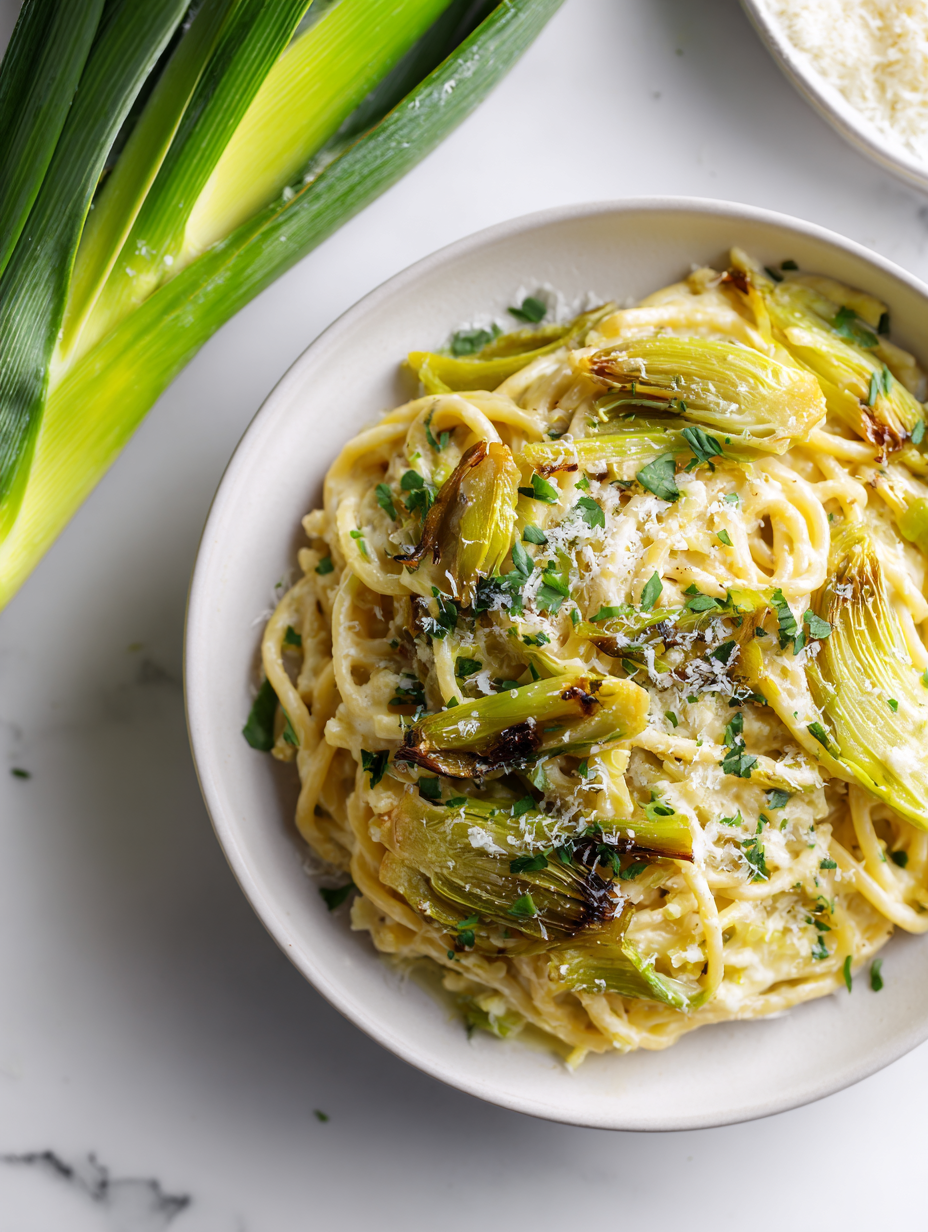
Creamy Caramelized Leek Pasta
Ingredients
Equipment
Method
- Begin by slicing the leeks thinly, discarding the tough green tops, then rinse them thoroughly under cold water to remove any dirt trapped between layers.
- Heat the large skillet over medium-low heat and add the butter. Once melted, add the sliced leeks along with a pinch of salt.
- Cook the leeks slowly, stirring gently every few minutes, until they turn a beautiful golden caramel color and smell sweet, about 20-25 minutes.
- While the leeks cook, bring a large pot of salted water to a boil. Add your pasta and cook until al dente, about 8-10 minutes.
- Drain the pasta, reserving about a cup of the pasta water, then add the cooked pasta directly into the skillet with the caramelized leeks.
- Pour in the heavy cream and stir gently to coat the pasta and leeks evenly. Let it simmer for 2-3 minutes until warmed through.
- Stir in the grated Parmesan cheese until melted and the sauce slightly thickens. If the sauce feels too thick, loosen it with a splash of the reserved pasta water.
- Add a teaspoon of lemon juice and season generously with salt and freshly cracked pepper, then stir to combine.
- Remove the skillet from heat and let the dish rest for a minute to allow flavors to meld. Taste and adjust the seasoning if needed.
- Serve the pasta hot, garnished with extra Parmesan and a drizzle of olive oil if desired. Enjoy the rich, silky texture and the subtle sweetness of the caramelized leeks.
Pro tips for perfect creamy leek pasta
- Use a wide skillet → More surface area for even caramelization of leeks.
- Low and slow heat → Develops natural sweetness and prevents burning.
- Stir gently but frequently → Prevent sticking and promote even coloring.
- Reserve pasta water → Loosen sauce if it thickens or becomes too gloopy.
- Finish with lemon → Brightens the dish and cuts through the richness.
- Grate cheese finely → Melts faster and evenly, creating a smoother sauce.
- Rest briefly before serving → Ensures flavors meld and sauce thickens slightly.
Common mistakes and how to fix them
- FORGOT to stir leeks often → Stir gently every 5 minutes to prevent sticking.
- DUMPED all liquid at once → Add liquids gradually, allowing flavors to deepen.
- OVER-TORCHED the leeks → Cook on low, slow heat until they are golden and sweet.
- USED cold cream directly in hot pan → Temper cream by adding a splash of hot liquid first.
Quick fixes and pantry swaps
- When sauce splits, splash in a bit more cream and stir gently to re-emulsify.
- If leeks catch on the pan, add a splash of water to loosen and prevent burning.
- Splash some lemon juice if the sauce feels dull or flat to brighten the flavors.
- Patch over-salted pasta water by rinsing pasta briefly before adding to the sauce.
- Shield your leeks from high heat; low and slow brings out their natural sweetness in five seconds.
Prep, store, and reheat tips
- You can prep the sliced leeks and measure out your cream and cheese a day ahead. Keep them refrigerated in airtight containers; leeks will stay fresh for up to 24 hours, and dairy for 2-3 days.
- Cook the pasta ahead of time, drain, toss lightly with olive oil to prevent sticking, and store in a sealed container in the fridge. Reheat in boiling water for 30 seconds or until hot to refresh texture.
- This dish is best eaten fresh, but leftovers can last up to 2 days in the fridge. The sauce may thicken slightly—stir in a splash of hot pasta water or cream during reheating to restore creaminess.
- Reheat gently on the stovetop over low heat, stirring often. Watch for bubbling and a silky sheen returning to the sauce. Avoid microwave reheating, as it can cause separation or overcooking.
Top questions about creamy leek pasta
1. How do I clean leeks properly?
Leeks can be a bit gritty; slice them thinly and rinse well under cold water to remove dirt trapped between layers.
2. Can I skip slow cooking the leeks?
Slow caramelizing leeks develops their natural sweetness; rushing this step results in a milder, less rich flavor.
3. When should I add lemon juice?
Adding a splash of lemon juice brightens the dish, balancing the richness of the cream and enhancing the leek sweetness.
4. How do I fix a thick or clumpy sauce?
Use a starchy pasta water to loosen the sauce if it thickens or clumps; it adds flavor and helps the sauce cling.
5. What if my sauce splits?
If the sauce separates, stir in a little more cream or hot pasta water to re-emulsify it smoothly.
6. Can I make this dish dairy-free?
For a dairy-free version, coconut cream gives a rich, velvety texture, but the flavor will be subtly different.
7. How should I combine the pasta and sauce?
Stir the cooked pasta into the leek and cream mixture gently, and don’t overmix to keep the sauce creamy and avoid breaking the pasta.
8. Which pasta shape works best?
Choose a pasta shape like pappardelle or bucatini that holds onto the sauce well and adds texture to each bite.
9. How do I reheat this dish without losing texture?
Reheat leftovers gently on the stove with a splash of cream or water to restore creaminess and prevent drying out.
10. Can I substitute the cheese?
Using freshly grated Parmesan adds a sharp, salty kick, but Pecorino Romano offers a more pungent, tangy flavor.
This dish is a quiet reminder that sometimes, the simplest ingredients—like leeks—can turn into something unexpectedly rich and comforting. It’s perfect for those days when you want to keep things honest but still crave a touch of indulgence. The gentle sweetness and velvety sauce make each bite feel like a small, satisfying escape.
In the end, it’s about appreciating how slow, careful cooking reveals the true character of humble vegetables. No fuss, no fussiness—just a warm bowl of pasta that tastes like a little bit of spring in every bite.

Hi, I’m Jonny Andrew Miller, the cook, taster, and slightly messy mind behind Bite & Boom. I live in Austin, Texas, a city that smells like barbecue smoke, fresh tortillas, and late-night tacos if you wander long enough. It suits me.