

This crockpot vegetable stew is my go-to for experimenting with spice blends that surprise me—think smoky paprika with a hint of cinnamon or a splash of harissa. It’s like a blank canvas, ready for whatever seasonal vegetables I have on hand, turning everyday produce into a layered, flavor-packed dish.
What I love most is how this stew becomes a cozy, slow-cooked experiment. I toss in root vegetables, leafy greens, maybe some chickpeas or beans, and let the spices do their thing while I forget about it. It’s a simple way to turn a humble pot of vegetables into something that feels like a personal culinary adventure.
Focusing on how this slow-cooked veggie stew becomes a canvas for experimenting with unexpected spice blends and seasonal vegetables, turning a simple comfort dish into a personalized flavor journey.
The story behind this recipe
- This recipe came about during one of those lazy weekends when I had a fridge full of odds and ends—half a squash, some wilted greens, a lonely carrot. I wanted something warm, nourishing, but also flexible enough to adjust to what I had. The crockpot was perfect for that, turning a mishmash into something comforting.
- I remember the first time I threw everything in and forgot about it for a few hours. The smell that filled the kitchen—soft, smoky, with a hint of sweetness from caramelized onions—made me realize how much flavor you can coax out of simple vegetables with patience and a slow simmer. It became my go-to for those days when I needed a cozy, unpretentious meal that I could assemble in moments and forget about.
- heading”: “The story behind this recipe”
Ingredient breakdown: key components
- Carrots: I prefer slicing them thick, so they hold a bit of bite and offer a sweet, earthy contrast to the stew’s richness. Feel free to dice smaller if you want them to melt into the broth.
- Onions: Sautéed until translucent, they add a foundational sweetness and depth. Use yellow onions for warmth or red for a touch of brightness, but don’t skip this step—it’s the flavor base.
- Celery: Fresh and crisp when raw, but during cooking, they soften and release a subtle, aromatic bitterness that balances the sweetness of carrots. Chop to your preferred size—smaller for a more integrated flavor.
- Tomatoes: Canned diced or fresh—either works, but I love the concentrated umami of canned. Add early to let their acidity mellow into a smoky, savory undertone.
- Vegetable broth: I go for low-sodium so I can control the salt, but a good-quality store-bought version adds richness. If you’re feeling adventurous, a splash of mushroom or miso broth can deepen the umami.
- Seasonings: A mix of thyme, bay leaf, and a pinch of smoked paprika makes the flavors pop. Adjust the salt and pepper at the end—taste for that perfect cozy balance.
- Greens (spinach or kale): Add near the end for a fresh, slightly bitter contrast. Wilted greens add a burst of color and a lively texture, especially if you love a bit of bite.
Spotlight on key ingredients
Celery:
- Carrots: I prefer slicing them thick, so they hold a bit of bite and offer a sweet, earthy contrast to the stew’s richness. Feel free to dice smaller if you want them to melt into the broth.
- Onions: Sautéed until translucent, they add a foundational sweetness and depth. Use yellow onions for warmth or red for a touch of brightness, but don’t skip this step—it’s the flavor base.
- Fresh and crisp when raw, but during cooking, they soften and release a subtle, aromatic bitterness that balances the sweetness of carrots. Chop to your preferred size—smaller for a more integrated flavor.
Tomatoes:
- Canned diced or fresh—either works, but I love the concentrated umami of canned. Add early to let their acidity mellow into a smoky, savory undertone.
- Vegetable broth: I go for low-sodium so I can control the salt, but a good-quality store-bought version adds richness. If you’re feeling adventurous, a splash of mushroom or miso broth can deepen the umami.
Notes for ingredient swaps
- Dairy-Free: Use coconut milk instead of cream for a rich, slightly sweet flavor that pairs well with the vegetables.
- Vegetarian Protein: Swap in chickpeas or lentils for added heartiness without meat, maintaining a creamy texture.
- Low-Sodium: Choose no-salt-added broth or make your own to control salt levels and deepen the natural flavors.
- Spice Variations: Replace smoked paprika with turmeric for earthiness or cayenne for heat—adjust to taste.
- Fresh Herbs: Use parsley or cilantro instead of dried thyme for a vibrant, fresh herbal note that brightens the stew.
- Root Vegetables: Turnip or parsnips can stand in for potatoes, offering a different sweetness and texture.
- Tomatoes: Opt for roasted red peppers or a splash of tomato paste to intensify umami without the acidity of canned tomatoes.
Equipment & Tools
- Slow cooker: To cook the stew slowly and evenly over several hours.
- Sharp knife: For chopping vegetables precisely and safely.
- Cutting board: Provides a stable surface for prepping ingredients.
- Wooden spoon: For stirring and mixing ingredients during cooking.
- Measuring cups: To accurately measure liquids and spices.
Step-by-step guide to vegetable stew
- Gather all equipment: slow cooker, sharp knife, cutting board, wooden spoon, measuring cups, and a large mixing bowl.
- Prep vegetables: peel and chop carrots and potatoes into 1-inch chunks; dice onions and celery finely.
- Heat a skillet over medium and add a splash of oil. Sauté onions and celery until translucent, about 5 minutes. The smell should be sweet and slightly smoky.
- Transfer sautéed vegetables to the slow cooker. Add carrots, potatoes, canned tomatoes (with juices), and any additional root vegetables.
- Pour in vegetable broth—enough to cover the ingredients by about an inch. Stir in your chosen spices: thyme, smoked paprika, bay leaf, and salt.
- Set the slow cooker to low and cook for 6-8 hours. During cooking, the kitchen will fill with a fragrant, savory aroma, and the vegetables will soften gently.
- Halfway through, taste and adjust seasoning if needed. If the stew looks dry, add a splash more broth and stir.
- Check for doneness near the end: vegetables should be tender and easily pierced with a fork, and the broth should be thickened slightly.
- Once cooked, turn off the slow cooker and let it sit for 10 minutes. Remove the bay leaf and stir in chopped greens if using; they should wilt quickly.
- Serve hot, garnished with fresh herbs if desired. The stew should be rich, with a comforting, smoky aroma and a hearty texture.
Once cooked, turn off the slow cooker and let the stew rest for about 10 minutes. Remove the bay leaf, stir in fresh greens if using, and serve hot straight from the pot or transfer to bowls for a cozy presentation.
How to Know It’s Done
- Vegetables are tender and easily pierced with a fork.
- Broth has thickened slightly, coating the vegetables.
- A fragrant, smoky aroma fills the kitchen, indicating flavors are developed.
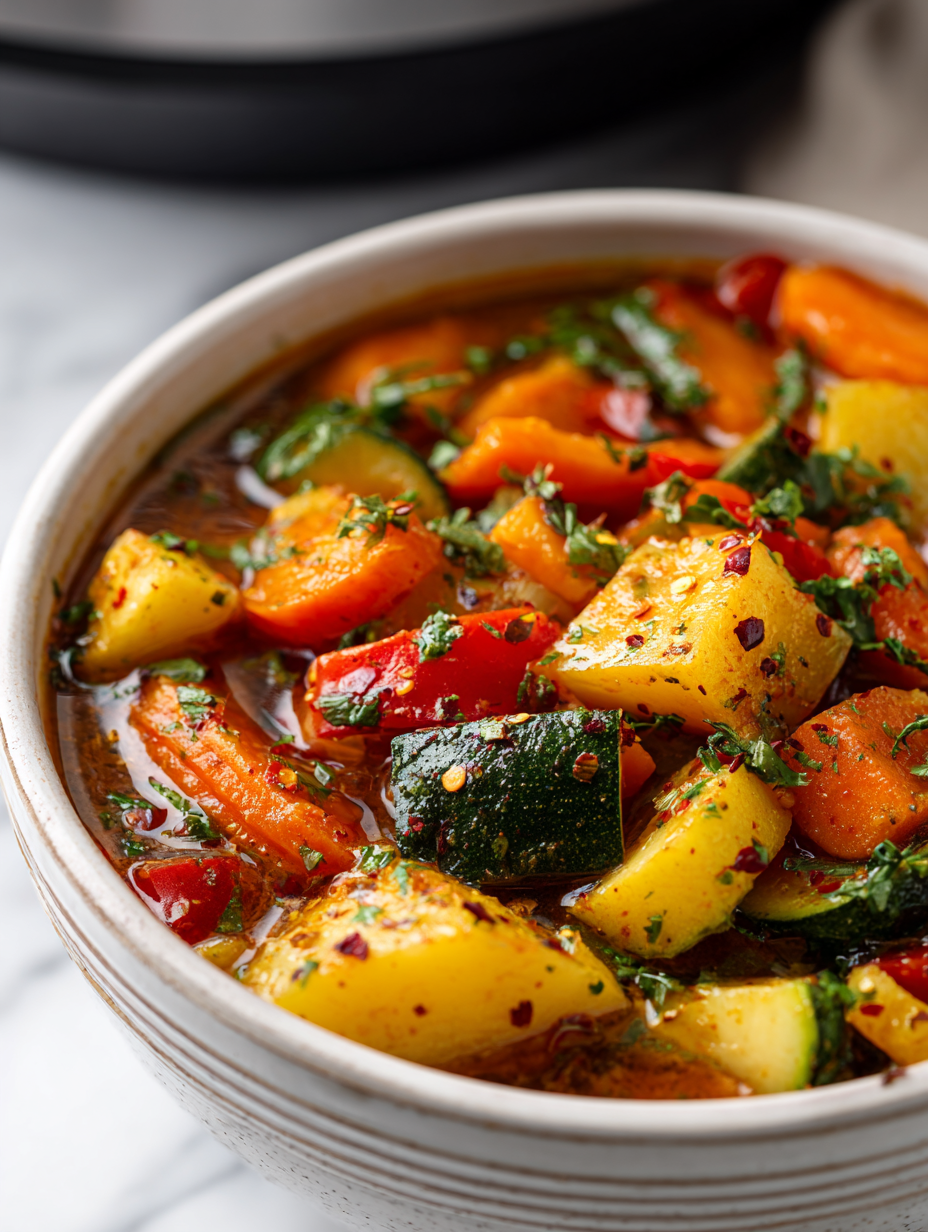
Crockpot Vegetable Stew with Spicy Blends
Ingredients
Equipment
Method
- Peel and dice the onions, then chop the celery into small pieces. Slice the carrots into thick rounds for texture. Prepare all your vegetables and set aside.
- Heat a small amount of oil in a skillet over medium heat. Sauté the diced onions and chopped celery until they become translucent and fragrant, about 5 minutes. The smell should be sweet and slightly smoky, signaling they’re ready.
- Transfer the sautéed vegetables to the slow cooker. Add the sliced carrots, canned diced tomatoes with their juices, and pour in the vegetable broth. Stir gently to combine.
- Sprinkle in the dried thyme and smoked paprika, then add the bay leaf. Stir briefly so the spices coat all the ingredients evenly.
- Set the slow cooker to low and cook for 6 to 8 hours. During this time, the vegetables will soften, and the flavors will meld, filling your kitchen with a savory, smoky aroma.
- About 10 minutes before the cooking time ends, stir in the chopped leafy greens. Cover and let them wilt into the stew for a vibrant, fresh contrast.
- Remove the bay leaf, then taste the stew and adjust seasoning with salt and pepper. If it’s too thick, stir in a splash more broth to loosen it slightly.
- Once the vegetables are tender and the broth has thickened slightly, turn off the slow cooker. Let the stew sit for a few minutes to settle the flavors.
- Scoop the hearty, smoky vegetable stew into bowls. Garnish with fresh herbs if desired, and enjoy the rich, layered flavors with a warm crusty bread on the side.
Notes
Pro tips for vegetable stew
- Bolded mini-head: Use fresh herbs at the end to preserve their vibrant flavor and aroma.
- Bolded mini-head: Sauté onions and celery until translucent — this deepens sweetness and builds flavor.
- Bolded mini-head: Layer spices early for a mellow, integrated heat, but taste and adjust salt near the end.
- Bolded mini-head: Cut vegetables into uniform pieces for even cooking and consistent texture.
- Bolded mini-head: If stew looks too thick, stir in a splash of hot broth to loosen it without diluting flavor.
- Bolded mini-head: For a smoky undertone, add a pinch of smoked paprika early in the cooking process.
- Bolded mini-head: Let the stew rest off heat for 10 minutes—this helps flavors settle and thickens the broth.
Common mistakes and how to fix them
- TOO MUCH: Overloading the crockpot can hinder even cooking. Fill only halfway for best results.
- DUMPED: Dropping vegetables in without prep leads to uneven textures. Chop everything uniformly for consistency.
- OVER-TORCHED: Cooking on high too long burns the edges. Stick to low for gentle, even simmering.
- SKIMPED: Not tasting and adjusting seasoning at the end leaves bland stew. Always do a final taste test.
Quick fixes and pantry swaps
- If stew looks too thick, splash in hot broth and stir gently for a shimmer of looseness.
- When vegetables are undercooked, extend cooking time by 30 minutes for tender bites.
- Splash a bit of lemon juice if the stew feels dull or flat in flavor.
- Patch over-salted stew with a peeled potato; remove after 15 minutes for a quick salt draw.
- Shield delicate greens with a lid or foil when reheating to preserve their bright color and fresh flavor.
Prep, store, and reheat tips
- Chop vegetables a day in advance; keep in airtight container in the fridge for up to 24 hours. They stay fresh but may lose a slight crunch.
- Store the cooked stew in an airtight container in the fridge for up to 3 days; reheat gently on the stove until bubbling and hot to the touch.
- For longer storage, freeze in portions for up to 3 months. Expect some texture change, as veggies soften more upon thawing.
- Reheat directly from the fridge or freezer, adding a splash of broth or water. Warm slowly, stirring often, until fragrant and steaming hot—look for a shimmer on the surface and a fragrant aroma.
Top questions about crockpot vegetable stew
1. How do I prevent the vegetables from turning to mush?
Use fresh, firm vegetables to prevent mushiness after slow cooking. Soft veggies can turn to mush when overcooked.
2. When do I add greens to the stew?
Add leafy greens like spinach or kale in the last 10 minutes of cooking. They wilt quickly and retain color and flavor.
3. How can I thicken the stew if it’s too watery?
If the stew is too thin, remove the lid and cook on high for 20-30 minutes or stir in a slurry of cornstarch and water.
4. Can I use low-sodium broth?
Use low-sodium broth to control salt. Taste and adjust seasoning at the end to avoid oversalting.
5. How should I chop the vegetables?
Chop vegetables into uniform pieces so they cook evenly. Larger chunks hold shape, smaller ones melt into the broth.
6. Should I cook this on low or high?
Cook on low for 6-8 hours for tender vegetables and deep flavor. High heat can overcook delicate ingredients.
7. When do I add herbs?
Add fresh herbs like parsley or cilantro at the end for brightness. Dried herbs should go in early for flavor infusion.
8. How long does leftovers last?
Store leftovers in an airtight container in the fridge for up to 3 days. Reheat gently on the stove until steaming hot.
9. Can I freeze this stew?
For freezing, portion out and store in airtight containers for up to 3 months. Expect some softening upon thawing.
10. What do I do if it’s too salty?
If the stew is over-salted, add a peeled potato and simmer for 15 minutes; remove the potato afterward.
This vegetable stew is more than just a humble meal; it’s a canvas for me to experiment with flavors I wouldn’t often reach for. The slow cooker turns simple vegetables into something nuanced, smoky, and deeply comforting, especially on chilly days or when I need a little culinary therapy.
In the end, it’s a dish that reminds me how a few good ingredients and patience can transform a basic idea into something truly satisfying. Plus, it makes the kitchen smell like a cozy, seasoned embrace—perfect for those quiet, reflective evenings.

Hi, I’m Jonny Andrew Miller, the cook, taster, and slightly messy mind behind Bite & Boom. I live in Austin, Texas, a city that smells like barbecue smoke, fresh tortillas, and late-night tacos if you wander long enough. It suits me.