
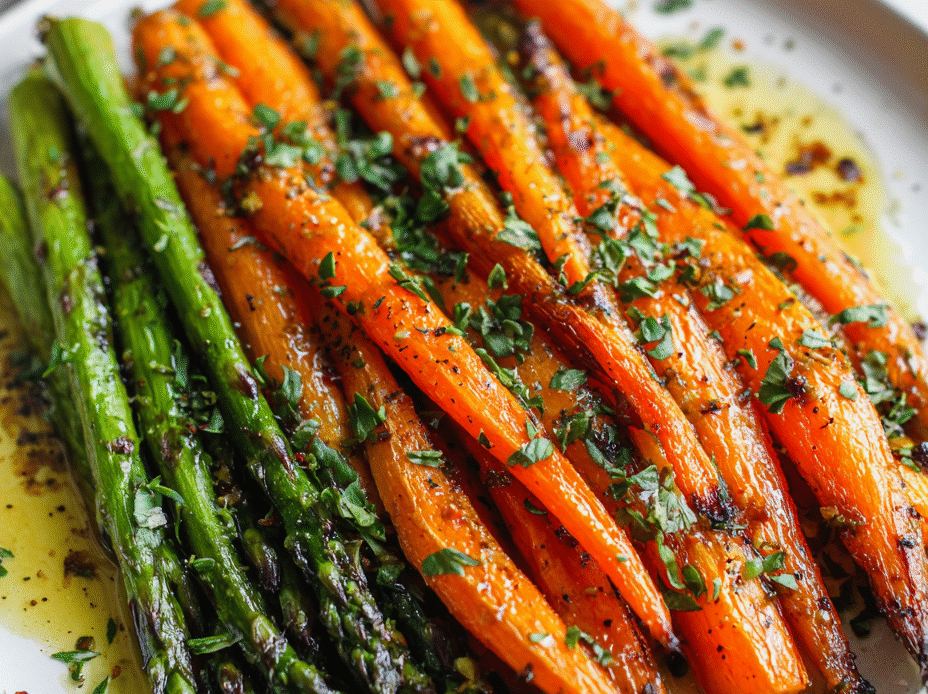
Roasting vegetables is my go-to move when I want that deep, smoky flavor without much fuss. Carrots and asparagus might seem simple, but when they hit the oven, they become something else — sweet, tender, with a touch of char that makes everything taste more alive. It’s a straightforward way to elevate a humble veggie side into a highlight of the meal.
I love how roasting transforms the natural sugars in carrots and the bright snap of asparagus into a caramelized, smoky bite. It’s a technique I keep coming back to, especially when I need a quick dish that feels special without extra fuss. Plus, the smell of roasting vegetables filling the kitchen is a comfort I didn’t realize I needed.
This recipe is about celebrating the magic of heat — how simple ingredients can turn into something warm and inviting with just a little oven time. It’s perfect for busy weeknights or when you want to serve something wholesome and vibrant, no complicated steps involved. Sometimes, the best meals are the ones that remind you how little it takes to make vegetables sing.
This recipe focuses on how roasting transforms humble vegetables into a caramelized, smoky side, emphasizing the magic of simple heat on everyday ingredients.
The story behind this recipe
- I first made this combo on a chilly spring evening, craving something warm but still fresh and green. The way the carrots caramelized and the asparagus kept its bright snap felt like a little win after a long day. That smell—sweet, smoky, with a hint of char—stayed with me for days, inspiring me to keep that oven warm more often.
- It’s a simple dish, but it reminds me how much joy can come from honest, imperfect roasting. I remember a dinner with friends where we kept coming back to the tray, tearing off bits of charred carrot, laughing about how the oven did all the work. Sometimes, I think the best recipes are the ones born out of those little moments—casual, inviting, real.
- heading
- story_type
Key Ingredients Breakdown
- Carrots: I love how their natural sweetness intensifies when they caramelize, becoming tender and smoky. If yours are thick, cut them thinner for quicker, more even roasting.
- Asparagus: The bright green color deepens, and they develop a slight char. For a crisp-tender bite, keep an eye on the timing—about 10-12 minutes at 220°C/430°F is ideal.
- Olive oil: I always use good-quality extra virgin—it’s the base for that rich, roasted flavor. If you want a lighter touch, reduce the oil slightly, but don’t skip it, or they might stick.
- Salt: I prefer flaky sea salt for that crunchy burst with each bite. Be generous but balanced—too much can overpower the gentle sweetness of the vegetables.
- Black pepper: Freshly cracked adds a slight pungency that balances the sweetness. Sprinkle it toward the end to keep its aroma lively and fresh.
- Lemon: A squeeze after roasting brightens everything up. If lemons aren’t handy, a splash of vinegar can also give that tangy lift.
- Herbs (like thyme or rosemary): I toss a few sprigs in early for earthy aromatics. If you’re not a fan, fresh parsley added after roasting keeps it light and fresh.
Spotlight on key ingredients
Carrots:
- Their natural sweetness intensifies and develops a deep, smoky caramelization during roasting, becoming tender and oozy inside. Use thick carrots for more even cooking or thin for quicker caramelization.
- Asparagus: The bright green turns lush and slightly crispy at the tips, with a smoky char that adds depth. Keep an eye on timing—around 10-12 minutes at 220°C/430°F is perfect for tender yet crisp spears.
Olive oil:
- It coats the vegetables with a rich, luscious layer that promotes caramelization and adds a smoky depth. Use high-quality extra virgin for best flavor—less oil can still work but may reduce richness.
- Salt: Flaky sea salt enhances sweetness and adds a satisfying crunch with each bite. Be generous but balanced; it’s key to bringing out the natural flavors without overpowering.
Notes for ingredient swaps
- Dairy-Free: Skip butter and use a splash of olive oil for roasting. It won’t add creaminess, but it’ll still boost flavor.
- Vegan: Replace honey with maple syrup to add a hint of sweetness without animal products.
- Herb Variations: Swap thyme or rosemary for basil or oregano for a different aromatic punch.
- Acid Boost: If lemon isn’t available, a splash of apple cider vinegar brightens the dish similarly.
- Oil Options: Use avocado oil for a neutral, high-smoke point alternative that’s great for roasting.
- Sweetener: Maple syrup or agave nectar can replace honey, adding a subtle caramel note.
- Salt Type: Flaky sea salt is ideal, but kosher salt works too—just adjust quantity for saltiness.
Equipment & Tools
- Baking sheet: To hold and roast the vegetables evenly.
- Parchment paper: For easy cleanup and prevent sticking.
- Mixing bowl: To toss vegetables with oil and seasonings.
- Tongs or spatula: To spread and turn vegetables during roasting.
- Lemon or vinegar: To brighten the finished dish.
Step-by-step roasting guide
- Preheat your oven to 220°C (430°F). Line a baking sheet with parchment paper for easy cleanup.
- Prepare the vegetables: peel carrots if they’re thick, then cut into 2-inch sticks. Trim the woody ends of the asparagus, leaving whole.
- In a large bowl, toss carrots and asparagus with 2-3 tablespoons of good olive oil, ensuring even coating. Season generously with flaky sea salt and freshly cracked black pepper.
- Spread vegetables in a single layer on the prepared baking sheet. Avoid overcrowding to promote caramelization.
- Roast in the oven for 20-25 minutes. Shake the tray halfway through. Look for a deep golden color on carrots and slight char on the asparagus.
- Check for doneness: carrots should be tender when pierced with a fork, asparagus slightly crisp at the tips, with a smoky aroma filling the kitchen.
- Remove from oven. Toss with a squeeze of fresh lemon or a splash of vinegar while still hot for brightness.
- Let rest for 2 minutes. Serve warm, garnished with fresh herbs if desired. For a more rustic look, leave some charred bits for extra flavor.
Let the vegetables rest for 2 minutes to settle the flavors. Finish with a squeeze of lemon or vinegar, then serve directly from the tray or transfer to a platter. For best flavor, serve while still warm and slightly caramelized.
How to Know It’s Done
- Carrots are caramelized and tender when pierced.
- Asparagus tips are slightly crispy and vibrant green with a light char.
- The vegetables emit a smoky, sweet aroma and look evenly roasted.
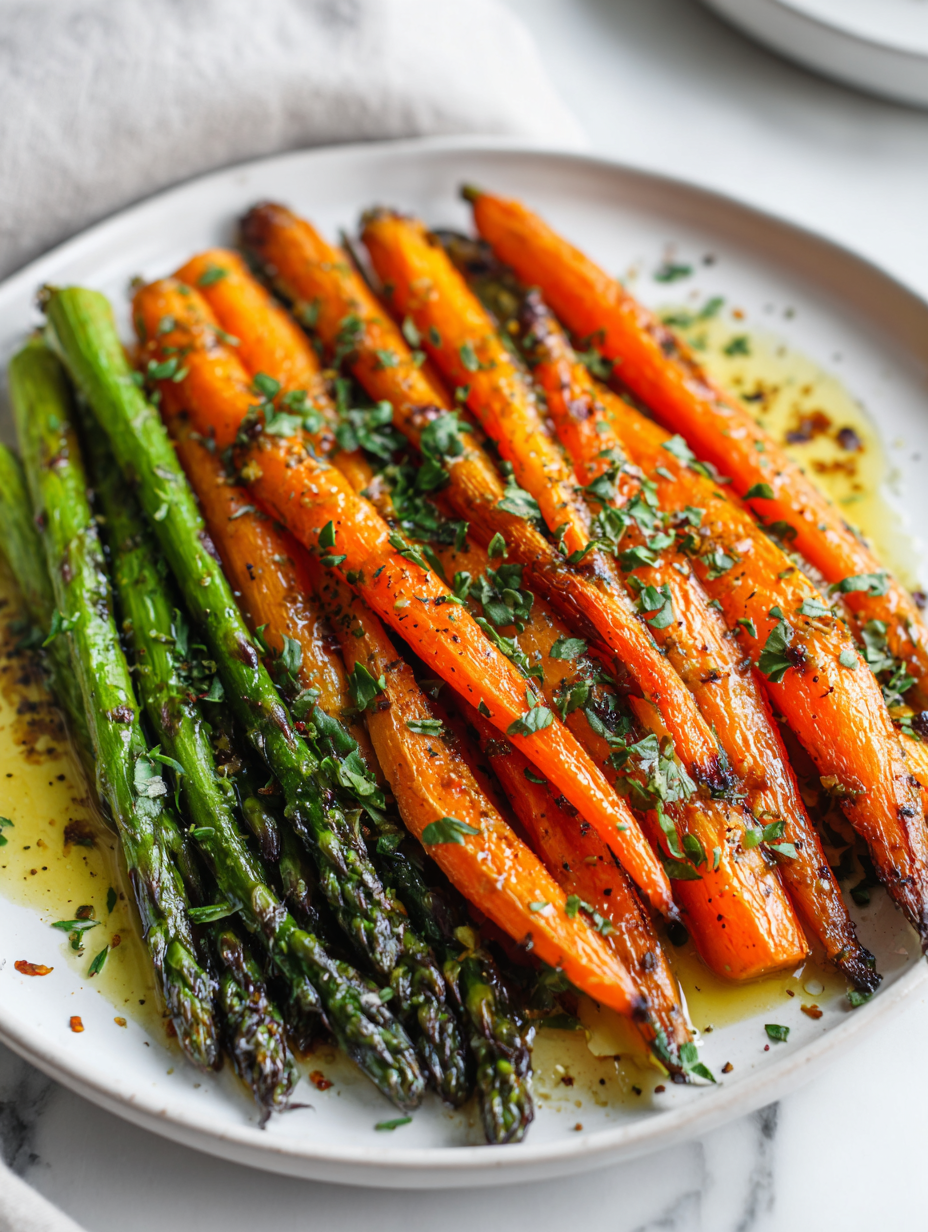
Roasted Carrots and Asparagus
Ingredients
Equipment
Method
- Preheat your oven to 220°C (430°F) and line a baking sheet with parchment paper to prevent sticking and make cleanup easier.
- Peel the carrots if they’re thick, then cut them into 2-inch sticks. Trim the woody ends off the asparagus, keeping the spears whole.
- In a large mixing bowl, toss the carrots and asparagus with 2 tablespoons of olive oil, making sure each piece is evenly coated. Add a generous pinch of flaky sea salt and freshly cracked black pepper, then toss again to distribute the seasonings.
- Spread the vegetables out in a single layer on the prepared baking sheet, giving them space so they roast evenly without overcrowding.
- Place the tray in the oven and roast for 20-25 minutes. Shake the tray or use tongs to turn the vegetables halfway through, watching for a deep golden color on the carrots and slight char at the tips of the asparagus.
- Check for doneness: the carrots should be tender and caramelized, and the asparagus tips should be crisp and slightly charred. The aroma will turn smoky with hints of sweetness filling your kitchen.
- Remove the vegetables from the oven and squeeze fresh lemon juice over them while still hot, to brighten and enhance the flavors.
- Let the vegetables rest for a couple of minutes, then serve warm, garnished with extra herbs or a sprinkle of salt if desired. Enjoy the smoky, tender bites that highlight the natural sweetness and vibrant colors.
Pro tips for perfect roasting
- Bolded Mini-Head: Use a hot oven (220°C/430°F) to encourage deep caramelization and smoky edges.
- Bolded Mini-Head: Toss vegetables thoroughly with oil to ensure even browning and prevent sticking.
- Bolded Mini-Head: Spread in a single layer—overcrowding causes steaming, not roasting, and dulls those charred bits.
- Bolded Mini-Head: Shake the tray halfway—this helps vegetables roast evenly and develop a consistent color.
- Bolded Mini-Head: Check carrots for tenderness with a fork—aim for a slight jiggle, not mush.
- Bolded Mini-Head: For extra flavor, toss with lemon juice immediately after roasting—brightens and enhances caramel notes.
- Bolded Mini-Head: Keep an eye on asparagus to prevent over-char—10-12 minutes is usually perfect for crisp-tender tips.
Common roasting mistakes and how to fix them
- FORGOT to check oven temperature → Use an oven thermometer for accuracy.
- DUMPED vegetables too close → Spread them out for even roasting and caramelization.
- OVER-TORCHED carrots → Reduce oven time or lower temperature if they burn.
- MISSED seasoning at the end → Add lemon or vinegar immediately after roasting for brightness.
Quick fixes and pantry swaps
- When vegetables are unevenly cooked, increase oven temperature slightly for quicker browning.
- Splash a bit more oil if vegetables seem dry or sticking during roasting.
- Patch a smoky aroma by opening windows or turning on a fan, especially if over-torched.
- DUMPED too much salt? Rinse vegetables lightly and pat dry before roasting again.
- When in doubt, swap out carrots for sweet potatoes for a similarly roasted, sweeter twist.
Prep, store, and reheat tips
- You can prepare the vegetables—peel and cut carrots, trim asparagus—a day ahead. Keep them in airtight containers in the fridge; they stay fresh and firm for up to 24 hours.
- Roasted vegetables are best enjoyed within 1-2 days. Store leftovers in an airtight container in the fridge, where they’ll keep for about 2 days. Expect some loss of crispness but still good flavor.
- Reheating: Toss the vegetables on a baking sheet and warm in a 180°C (350°F) oven for 8-10 minutes. Look for a slight shimmer and aroma of roasted goodness—don’t overcook to avoid sogginess.
- For a quick reheat, microwave on medium power in short bursts, checking often. Vegetables will lose some crispness but should still be tender and smoky. Serve immediately to enjoy the best flavor and texture.
- Flavors can mellow a bit after storage, so a squeeze of lemon or fresh herbs after reheating can brighten everything back up and bring some of that original vibrancy.
FAQs about roasted carrots and asparagus
1. How do I pick the best carrots?
Look for carrots that are firm, with vibrant color, and avoid any with soft spots or cracks. Freshness helps them caramelize better during roasting.
2. How do I select good asparagus?
Trim the woody ends of the asparagus and choose spears that are firm and bright green with tightly closed tips for best texture.
3. Can I use a different oil?
Use a good-quality extra virgin olive oil for depth of flavor. If you don’t have it, a neutral oil like avocado can work, but it won’t have the same richness.
4. How do I know when it’s done?
Roast until carrots are deeply caramelized and tender, and asparagus tips are crisp and slightly charred, about 20-25 minutes at 220°C/430°F.
5. What if they burn or stay undercooked?
If vegetables appear burnt or overly charred, reduce oven temperature or check earlier. For undercooked, give them a few more minutes and test again.
6. How do I add brightness after roasting?
Add a squeeze of fresh lemon or a splash of vinegar right after roasting to brighten flavors and balance the smoky notes.
7. How should I store and reheat leftovers?
Store leftovers in an airtight container in the fridge for up to 2 days. Reheat in a hot oven or skillet for best texture and flavor.
8. What if reheated veggies are dry?
If the vegetables are too dry after reheating, toss with a little fresh oil or lemon juice to revive some moisture and flavor.
9. How do I avoid soggy vegetables?
Overcrowding the pan causes steaming instead of roasting. Spread vegetables in a single layer for even caramelization and crispness.
10. What if some pieces are undercooked or burnt?
When vegetables are unevenly cooked, increase oven heat slightly or give them extra time, and check often to prevent burning.
This roasted carrots and asparagus dish is a simple reminder of how heat can unlock the best in humble vegetables. It’s honest, smoky, and a little charred—just how I like it when I want something familiar yet exciting.
Whenever I need a quick, nourishing side that feels a bit special, I turn to this. It’s the kind of recipe that makes the kitchen smell warm and inviting, and leaves me feeling grounded. Sometimes, the best moments are in these small, unpolished dishes that bring comfort without fuss.

Hi, I’m Jonny Andrew Miller, the cook, taster, and slightly messy mind behind Bite & Boom. I live in Austin, Texas, a city that smells like barbecue smoke, fresh tortillas, and late-night tacos if you wander long enough. It suits me.