
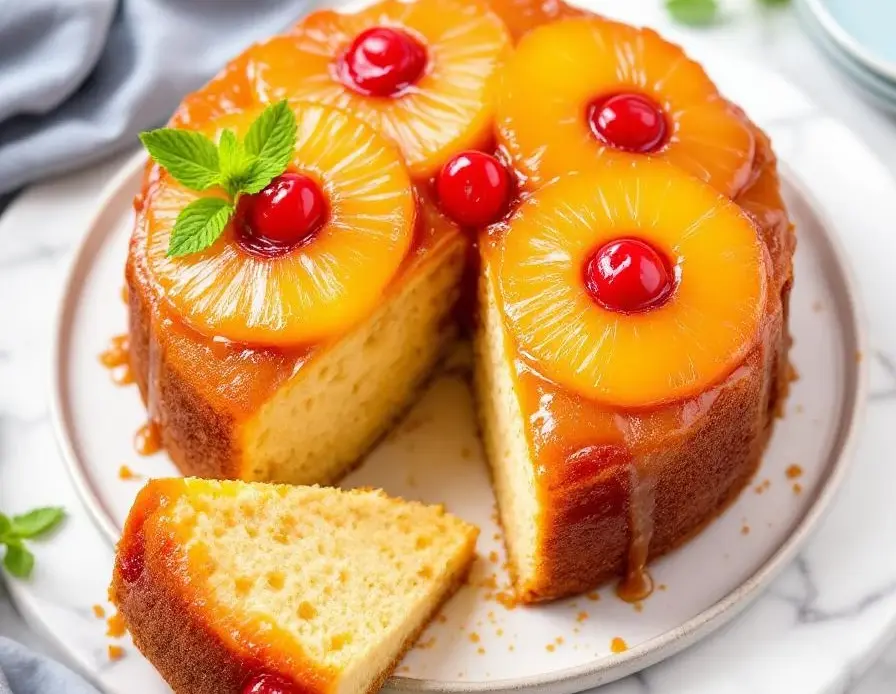
Making a pineapple upside down cake starts with lining the pan carefully, arranging pineapple slices and maraschino cherries in a pattern that looks a bit like a floral mosaic. The caramel layer sizzles and bubbles as you pour it in, sticky and fragrant, before adding the batter on top.
Baking involves a lot of gentle oven heat and a watchful eye to prevent over-browning. When you flip the cake out of the pan, the caramelized fruit layer should stick to the top, revealing a glossy, fruit-topped surface that’s slightly sticky to the touch.
The caramelizing sugar hiss as it hits the hot pan, filling the kitchen with a smoky-sweet scent that hints at the sticky, gooey topping to come.
Key ingredients and swaps
- Pineapple slices: Fresh pineapple slices are juicy and sweet, with a slight tang and a firm bite. If you only have canned, look for rings packed in juice, not syrup, to avoid overly sweet, sticky slices.
- Maraschino cherries: Bright red and glossy, they add a pop of color and a slight maraschino flavor. Skip them if you prefer a more natural look; dried or fresh cherries can work in a pinch.
- Brown sugar: Deeply molasses-scented, it caramelizes beautifully, creating that sticky, smoky topping. Light brown sugar can be swapped, but the flavor will be less rich and dark.
- Butter: Rich and creamy, it’s the base for that golden caramel. Olive oil or coconut oil can replace butter, but expect a different aroma and less traditional flavor.
- Flour: All-purpose flour provides structure without fuss. Whole wheat or almond flour can be used for a denser crumb, but might alter the texture and rise slightly.
- Eggs: They help the batter hold together and rise. Flaxseed or chia seed mixes work as vegan substitutes, but the texture will be a bit denser and the flavor nuttier.
- Vanilla extract: Adds warmth and depth to the batter. Almond or lemon extract can add a different aroma, or skip for a more neutral flavor.
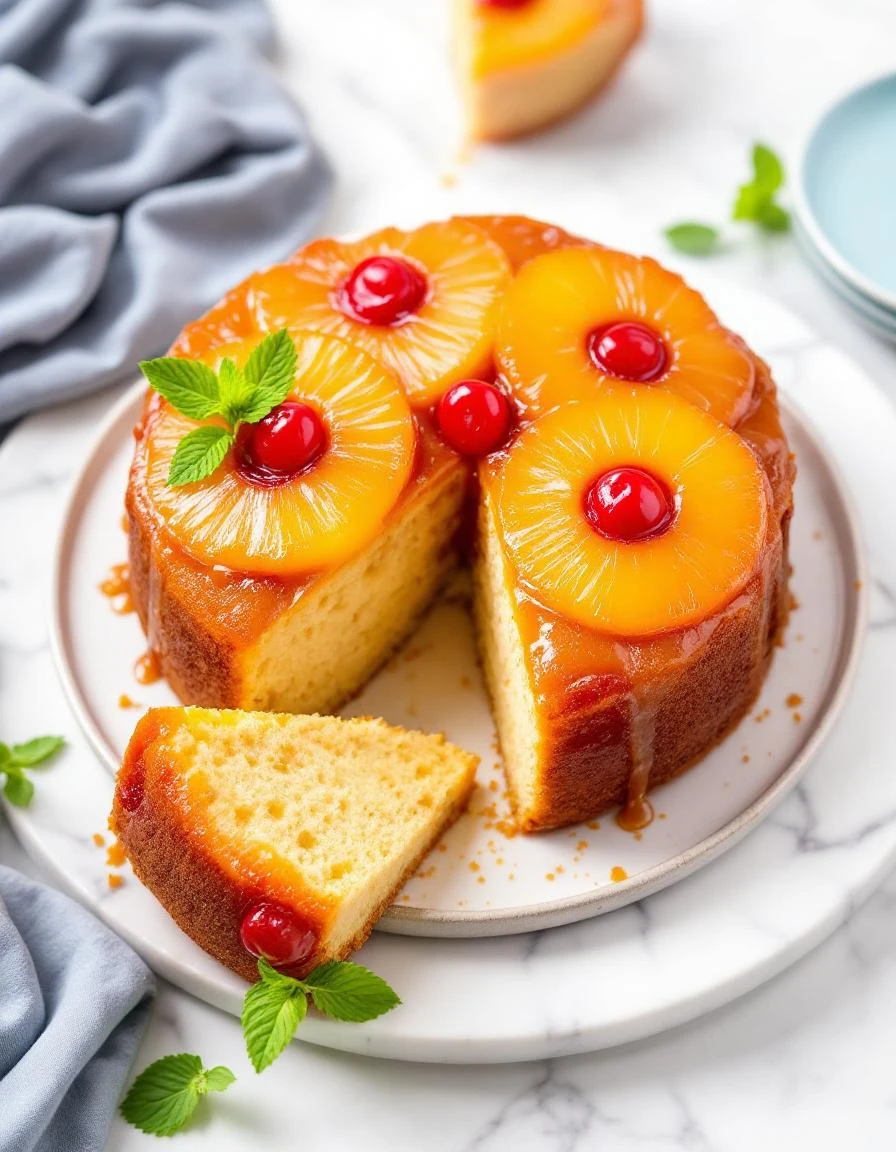
Pineapple Upside Down Cake
Ingredients
Equipment
Method
- Preheat your oven to 350°F (175°C). Melt the butter and pour it into the bottom of a 9-inch round cake pan, then sprinkle evenly with brown sugar. Place the pan on the stove over medium heat and cook until the mixture bubbles and turns golden, creating a caramel layer.
- Arrange pineapple slices in a single layer over the caramel, fitting them snugly in the pan. Place a maraschino cherry in the center of each pineapple ring for a colorful touch.
- In a large mixing bowl, whisk together the flour, sugar, eggs, vegetable oil, vanilla extract, and milk until smooth and well combined. The batter should be slightly thick but pourable.
- Carefully pour the batter evenly over the arranged pineapple and cherries in the pan, smoothing the top with a spatula if needed.
- Bake in the preheated oven for about 40 minutes, or until the cake is golden brown on top and a toothpick inserted in the center comes out clean. The caramel should be bubbling around the edges.
- Remove the cake from the oven and let it cool for 10 minutes. Then, carefully invert the cake onto a serving plate, allowing the caramelized fruit to be on top.
- Gently lift the pan off, revealing the glossy, sticky fruit topping and golden cake base. Serve warm or at room temperature to enjoy the gooey caramel and tender fruit.
Common mistakes and how to fix them
- FORGOT to evenly spread the caramel, causing uneven topping. FIX by smoothing it out immediately.
- DUMPED in too much pineapple, drowning the batter. ADJUST by using the recommended slices only.
- OVER-TORCHED the sugar, turning it bitter. MONITOR closely during caramelization, remove once golden.
- MISSED lining the pan with parchment, sticking occurs. FIX by greasing generously and lining well.
Make-Ahead and Storage Tips
- Prepare the pineapple slices and arrange the fruit in the pan ahead of time to save mess during assembly.
- You can make the caramel the day before; store it in an airtight container in the fridge for up to 24 hours, then rewarm gently before pouring.
- Cake can be baked a day in advance; keep it wrapped tightly at room temperature for best texture and flavor.
- Refrigerate leftovers for up to 3 days, but the caramel may become sticky; reheat gently in the oven or microwave to restore softness.
- Freezing the cake is possible for up to a month; thaw at room temperature and reheat slightly for optimal texture.
- Reheat slices in the oven at 325°F until warm and fragrant, listening for the caramel to bubble slightly—then enjoy that oozy, sticky finish.
FAQs
1. How do I know when the cake is done?
The pineapple should be soft with a slight caramelized edge, and the cake should be moist and tender when you cut into it, with a fragrant aroma of caramel and pineapple filling the kitchen.
2. What’s the best way to check doneness?
You’ll see a deep golden-brown top with bubbling caramel around the edges. The batter will no longer jiggle in the middle and a toothpick inserted comes out clean.
3. Can I use canned pineapple?
Use ripe, juicy pineapple slices for a sweet, tangy bite. If fresh isn’t available, canned rings in juice work well—avoid syrup for less stickiness.
4. How should I store leftovers?
Refrigerate the cake in an airtight container for up to 3 days. For longer storage, freeze slices wrapped tightly for up to a month, then reheat gently to restore softness.
5. How do I reheat the cake?
Warm slices in the oven at 325°F until the caramel bubbles slightly and the house fills with that sweet, smoky aroma—about 10 minutes. Feel for warmth and a sticky, gooey texture.

Hi, I’m Jonny Andrew Miller, the cook, taster, and slightly messy mind behind Bite & Boom. I live in Austin, Texas, a city that smells like barbecue smoke, fresh tortillas, and late-night tacos if you wander long enough. It suits me.