
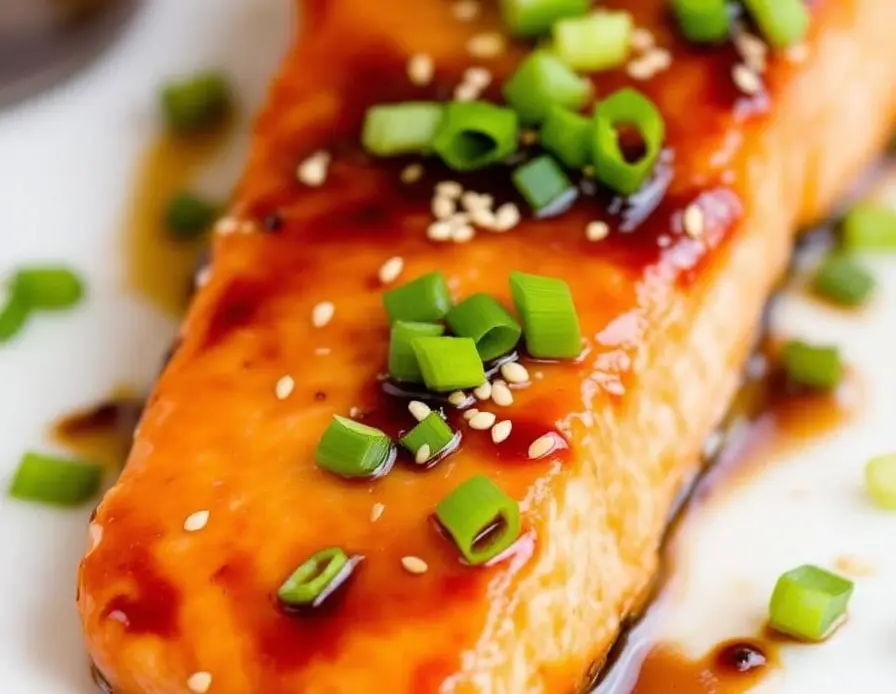
Firing up the air fryer means dealing with the plop of honey and soy that drips as you brush it on the salmon. You gotta keep an eye on it so it doesn’t pool or burn on the edges. The sound of that sticky glaze bubbling and crackling as it cooks is oddly satisfying.
Getting the salmon in and out is a quick dance—no flipping, just a careful slide into the basket and a quick check for doneness. The texture is all about that contrast: crispy, caramelized top with tender, flaky flesh underneath.
Listening to the gentle sizzle and sticky glaze as the honey caramelizes on the salmon, creating a soft, crackly crust that gives way to tender flesh.
What goes into this dish
- Salmon fillets: I prefer skin-on for crispness, but skinless works fine if you’re squeamish about bones. Look for bright, firm flesh—the smell should be fresh and oceanic, not fishy. Swap with cod or trout if needed.
- Honey: Go for good-quality, thick honey—clover or wildflower—that gives a rich, floral sweetness. If you’re out, agave syrup or maple syrup can mimic the sticky sweetness, but expect a slightly different aroma and flavor.
- Soy sauce: I use a splash for umami punch, but tamari makes it gluten-free and slightly richer. Low-sodium if you want to control salt, but don’t skip the saltiness altogether. It’s key for that savory glaze.
- Garlic: Fresh garlic minced finely adds a pungent, aromatic kick, but garlic powder is a quick swap if time’s tight. Just be mindful—it’s less punchy, and a little can go a long way.
- Ginger (optional): Fresh grated ginger gives a bright, spicy zing that complements the honey’s sweetness. If you’re out, a pinch of ground ginger works, but it’s not quite the same lively punch.
- Cooking spray or oil: Lightly spray or brush the basket with oil to prevent sticking. A neutral oil like canola or avocado works best. Skip this if your salmon’s skin is well-oiled from the start.
- Lemon or lime (for finishing): A squeeze right before serving brightens everything up with a fresh, citrusy note. Skip if you prefer a mellow profile, but it’s a nice counterbalance to the sweet glaze.
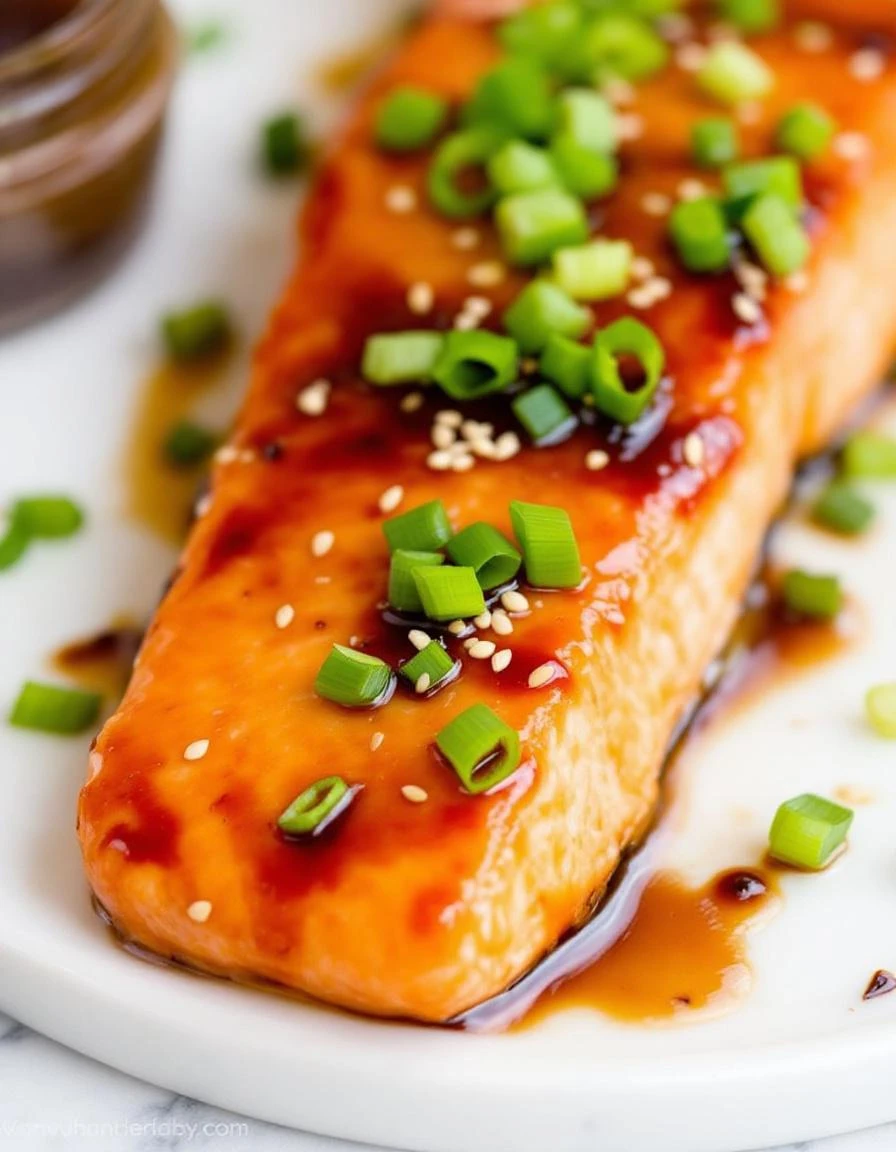
Honey Soy Glazed Salmon in Air Fryer
Ingredients
Equipment
Method
- Preheat your air fryer to 390°F (200°C) for about 3 minutes to ensure even cooking.
- Meanwhile, prepare the glaze by whisking together honey, soy sauce, minced garlic, and grated ginger in a small bowl until well combined.
- Pat the salmon fillets dry with paper towels, then lightly brush or drizzle with a little oil to prevent sticking.
- Carefully slide the salmon fillets into the air fryer basket, skin-side down if skin is on, leaving space between each piece.
- Brush a thin layer of the honey soy glaze over the top of each fillet, focusing on coating evenly but avoiding excess pooling.
- Cook the salmon in the air fryer for 8 to 10 minutes, until the glaze bubbles and the top develops a crispy, caramelized crust. Check doneness by gently pressing the fillet; it should flake easily with a fork.
- Halfway through cooking, open the air fryer and brush another light layer of glaze onto the fillets for extra flavor and shine.
- Once cooked, carefully remove the salmon with tongs or a spatula and place on a serving plate.
- Squeeze fresh lemon or lime over the top just before serving for a bright, citrusy finish.
- Serve immediately, enjoying the crispy, caramelized crust and tender, flaky flesh of the salmon.
Notes
Common mistakes and how to fix them
- FORGOT to preheat the air fryer, resulting in uneven cooking. Always preheat for 3 minutes.
- DUMPED too much honey directly on the salmon, causing burning. Use a light brush or drizzle.
- OVER-TORCHED the glaze, leading to a bitter taste. Check frequently and lower heat if needed.
- MISSED flipping the fillets, leading to uneven crispness. Remember to gently flip halfway through.
Make-Ahead and Storage Tips
- You can prep the salmon and honey glaze a day ahead. Keep covered in the fridge, up to 24 hours.
- Marinate the fish in the glaze mixture for a few hours if you want more flavor infusion; don’t go beyond 24 hours though.
- Freeze the salmon if you’re not cooking immediately—wrap tightly, and it stays good for up to 2 months. Thaw overnight in the fridge before cooking.
- Refrigerated salmon will lose a little of its glaze’s sparkle, so expect a slightly less sticky finish. Reheat gently to preserve texture.
- Reheating in the air fryer at 350°F for 3-4 minutes brings back some crispness. Watch for bubbling and caramelization to avoid burning.
FAQs
1. How can I tell if salmon is fresh?
The salmon should smell fresh and briny, almost like the ocean, not fishy or sour. The flesh should be firm to the touch, with a bright color. If it smells off or feels slimy, skip it.
2. How do I prevent the honey from burning?
Apply honey glaze lightly—just a thin brush or drizzle—so it caramelizes without burning. Too much honey can cause a sticky, bitter crust. Watch the color change as it cooks.
3. What’s the best temperature and time for cooking?
Use a preheated air fryer set to 390°F. Cook for about 8-10 minutes, checking for a crispy top and flaky interior. The glaze should bubble and crackle as it caramelizes.
4. How do I reheat honey salmon without drying it out?
Reheat leftovers in the air fryer at 350°F for 3-4 minutes. The skin will crisp up again, and the glaze will warm, releasing that sweet, smoky aroma. Keep an eye to avoid overcooking.
5. Can I make this ahead and store it?
The glaze develops a deeper, richer flavor after a day in the fridge, but the texture might soften. Serve cold or reheat gently; the crackly crust might be a bit less crisp but still tasty.

Hi, I’m Jonny Andrew Miller, the cook, taster, and slightly messy mind behind Bite & Boom. I live in Austin, Texas, a city that smells like barbecue smoke, fresh tortillas, and late-night tacos if you wander long enough. It suits me.