
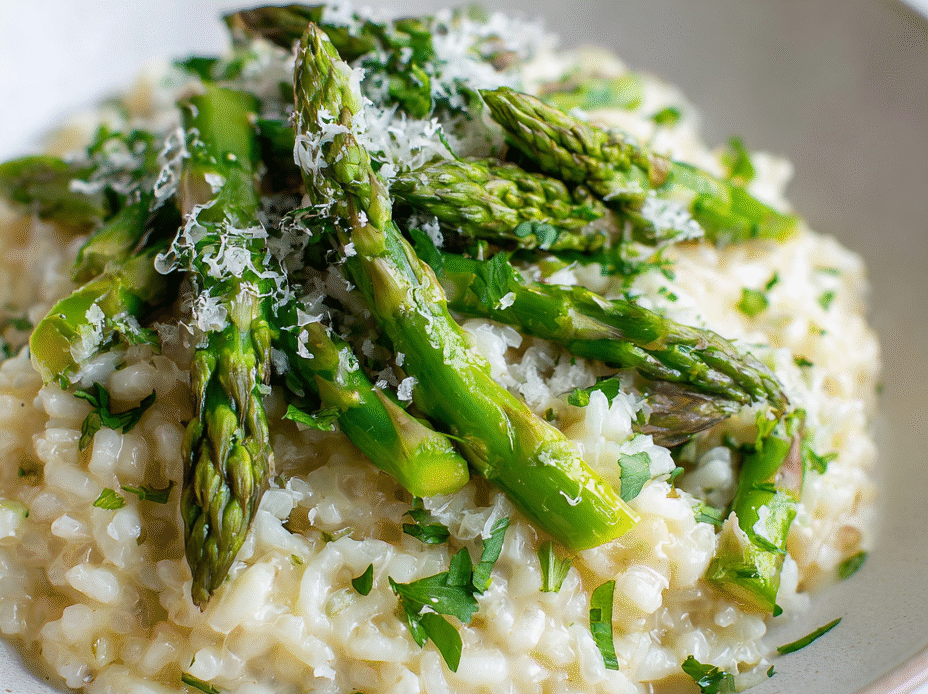
I’ve always been drawn to the fleeting beauty of spring vegetables, and asparagus is at the top of that list. There’s something about its crisp bite and bright green color that makes me want to keep it simple, letting its natural charm shine. This risotto is my way of celebrating that—creamy, cheesy, but still fresh enough to remind you of the season’s first bounty.
Making this dish feels like a slow, meditative process—stirring, tasting, adjusting. It’s a bit chaotic, but in that chaos, I find a rhythm that makes the final bite all the more satisfying. Plus, it’s a cozy way to bring a touch of elegance to a weeknight dinner, without fuss or fancy ingredients.
Focusing on the overlooked beauty of seasonal asparagus, this risotto celebrates its tender crunch and vibrant color, elevating a humble vegetable into a creamy, cheesy masterpiece that’s as comforting as it is bright.
The story behind this recipe
- This recipe came from a lazy Sunday afternoon craving—something creamy, bright, and straightforward enough to make while half-watching a movie. I remember the first time I found a perfect bunch of asparagus at the market, still tinged with morning dew, and thought: why not turn it into something special? That moment of inspiration stuck with me as I stirred the rice, the aroma of toasty parmesan filling the kitchen, and I realized how humble ingredients can really shine when treated with patience and care.
- Cooking this risotto feels like an act of quiet celebration—a slow dance of flavors that builds with each stir. It’s become a go-to comfort dish, especially when I want something nourishing but not fussy. There’s a satisfaction in turning simple, seasonal vegetables into something that feels both indulgent and honest.
- heading:
Ingredient breakdown: key components
- Asparagus: I love the fresh, grassy scent of ripe asparagus and its tender snap. Skip older, woody stalks—they turn bitter and tough.
- Arborio rice: It’s the backbone—creamy when cooked right, but be mindful to toast it lightly first for a nutty aroma. Use a good quality brand for best texture.
- Parmesan cheese: I always opt for real, aged Parmesan—its sharp, salty punch sets the dish apart. Grate it fresh right before adding for maximum flavor.
- Vegetable broth: I prefer homemade or low-sodium broth—less sodium, more control over flavor. Keep it warm, so it doesn’t slow down the risotto’s cooking process.
- Olive oil and butter: They give that initial richness and flavor depth. Don’t skimp—use good-quality, extra virgin olive oil and a knob of butter for creaminess.
- Lemon: A splash of lemon juice brightens the whole dish and balances the richness. Don’t overdo it—just a little zest and juice make the flavors pop.
- Salt and pepper: Essential for seasoning, but add gradually. Taste as you go—over-salting can overshadow the delicate asparagus and cheese flavors.
Spotlight on key ingredients
Asparagus:
- I love the fresh, grassy scent of ripe asparagus and its tender snap. Skip older, woody stalks—they turn bitter and tough.
- Arborio rice: It’s the backbone—creamy when cooked right, but be mindful to toast it lightly first for a nutty aroma. Use a good quality brand for best texture.
- Parmesan cheese: I always opt for real, aged Parmesan—its sharp, salty punch sets the dish apart. Grate it fresh right before adding for maximum flavor.
Parmesan cheese:
- Arborio rice: It’s the backbone—creamy when cooked right, but be mindful to toast it lightly first for a nutty aroma. Use a good quality brand for best texture.
- I always opt for real, aged Parmesan—its sharp, salty punch sets the dish apart. Grate it fresh right before adding for maximum flavor.
Notes for ingredient swaps
- Dairy-Free: Use coconut cream or cashew cheese instead of Parmesan. It won’t have that sharp, salty punch, but it adds richness.
- Vegan: Swap butter for a neutral oil like grapeseed or avocado oil, and use nutritional yeast for cheesy flavor. Keep in mind, the umami will be different.
- Broth: Replace vegetable broth with mushroom broth for a deeper, earthier flavor. Or use chicken broth if you prefer a richer taste.
- Rice: Substitute with pearl barley or farro for a different texture—more chewy and hearty, but still satisfying.
- Lemon: Omit or replace with a splash of white wine to keep brightness, but lemon really cuts through the richness nicely.
- Olive oil: Use toasted sesame oil for a nutty twist. It’ll add a different aroma but still keeps the dish lush.
- Parmesan: Try Pecorino Romano or Grana Padano if you want a different salty bite. The flavor will shift slightly, but still delicious.
Equipment & Tools
- Heavy-bottomed skillet or wide saucepan: Ensures even heat for uniform cooking and prevents sticking.
- Wooden spoon or silicone spatula: For stirring gently and continuously without scratching the pan.
- Ladle: To add hot broth gradually and control liquid intake.
- Grater: Freshly grate Parmesan for maximum flavor and aroma.
- Chopping board and knife: Prep asparagus and other ingredients efficiently.
Step-by-step guide to creamy asparagus risotto
- Equipment & Tools: Gather a large, heavy-bottomed skillet or wide saucepan for even heat distribution; a wooden spoon or silicone spatula for stirring; a ladle for adding broth; a sharp grater for cheese; a chopping board and knife for prep.
- Start by warming 1 liter of vegetable broth in a separate pot over low heat. Keep it simmering; this prevents it from cooling the rice when added.
- Trim the woody ends off 1 bunch of fresh asparagus—about 250g. Chop into 2-3cm pieces. Set aside a few tips for garnish if desired.
- Finely chop 1 small onion or shallot. Grate 100g of Parmesan cheese. Prepare 1 cup of Arborio rice and zest a lemon—set everything within arm’s reach.
- In your skillet, heat 2 tbsp olive oil and a small knob of butter over medium heat (about 160°C/320°F). Add the onion, cook until translucent—about 2-3 minutes, stirring often. It should smell sweet and slightly toasted.
- Add the rice to the onion. Stir well to coat each grain in oil and butter. Toast lightly for 2 minutes until edges turn translucent and smell nutty.
- Pour in a ladle of warm broth. Stir constantly until the liquid is mostly absorbed—about 3-4 minutes. Repeat this process, adding broth gradually, stirring constantly, for about 18-20 minutes total.
- After about 10 minutes, add the asparagus pieces to the rice. Continue adding broth in small ladles and stirring. Check that the rice is becoming creamy and tender but still has a slight bite.
- When rice is plump, creamy, and just tender (test by tasting—should be al dente), turn off heat. Stir in the grated Parmesan, lemon zest, and a squeeze of lemon juice. Adjust seasoning with salt and pepper.
- Rest the risotto for 1-2 minutes. It helps flavors meld and the texture settle. Serve immediately, garnished with reserved asparagus tips or extra cheese if desired.
Serve immediately while hot, with a sprinkle of extra Parmesan and a few asparagus tips for color. Rest for 1-2 minutes to let flavors settle before plating.
How to Know It’s Done
- Creamy texture with rice grains just tender but not mushy.
- Aroma of toasted rice, buttery Parmesan, and fresh asparagus.
- Bright, lemon-bright flavor balanced with savory cheese and rich broth.
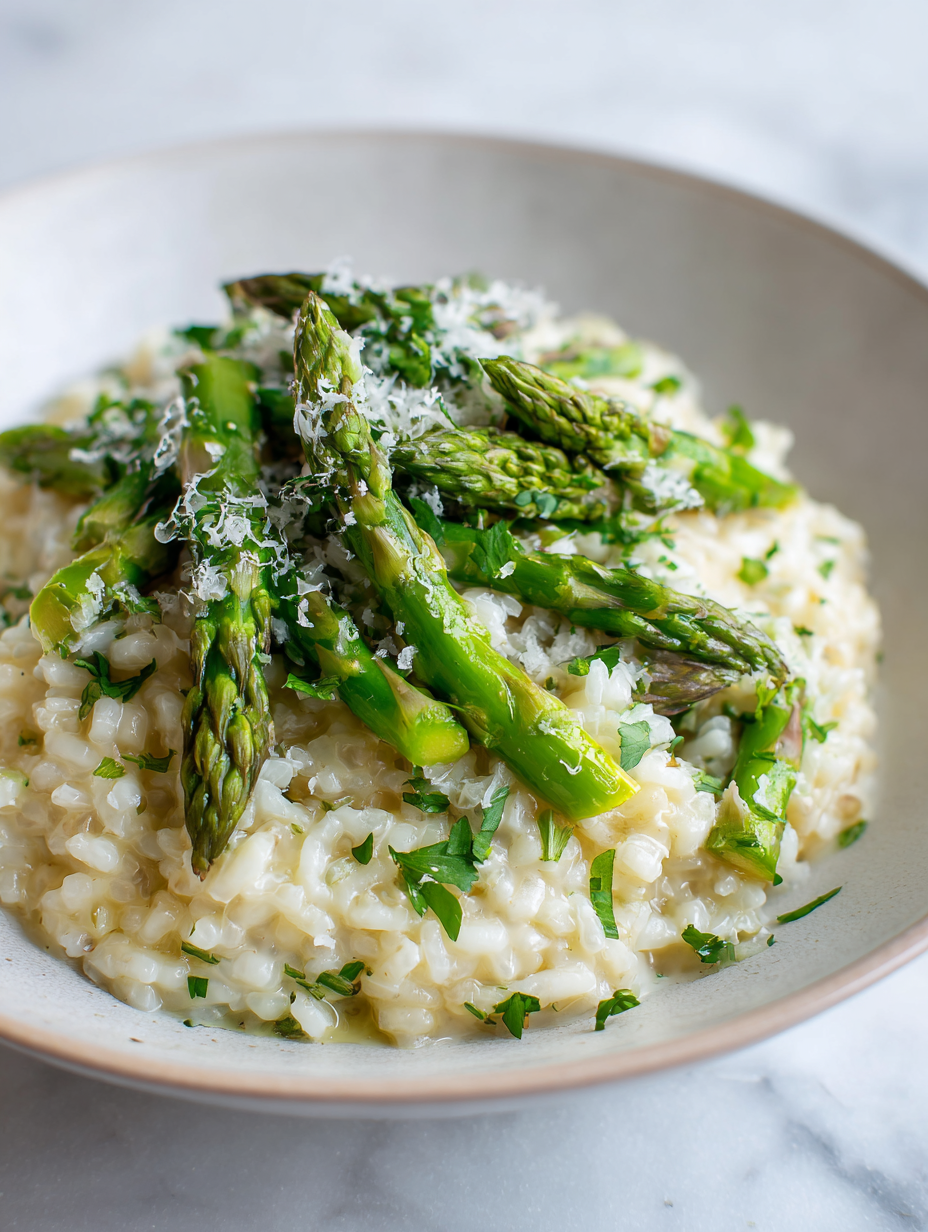
Creamy Asparagus Risotto
Ingredients
Equipment
Method
- Start by warming the vegetable broth in a separate pot over low heat, keeping it simmering gently.
- Trim the woody ends off the asparagus, then chop the tender parts into 2-3cm pieces. Set aside a few tips for garnish if you like.
- Finely chop the onion or shallot. Grate the Parmesan cheese and zest the lemon, keeping everything within arm’s reach.
- In your skillet or wide saucepan, heat the olive oil and add the chopped onion. Cook over medium heat until the onion turns translucent and fragrant, about 2-3 minutes.
- Add the Arborio rice to the pan and stir well, coating each grain with oil and onion. Toast lightly for about 2 minutes until the rice edges look translucent and smell nutty.
- Pour in a ladle of warm broth and stir continuously until the liquid is mostly absorbed. Repeat this process, adding broth gradually, for about 18-20 minutes until the rice is creamy and just tender.
- About halfway through, stir in the chopped asparagus pieces, letting them cook in the rice and absorb flavors while remaining bright and crisp.
- Continue adding broth and stirring until the rice is tender but still has a slight bite, and the risotto has a creamy, velvety texture.
- Turn off the heat and stir in the grated Parmesan, lemon zest, and a squeeze of lemon juice. Season with salt and pepper to taste, adjusting as needed.
- Let the risotto rest for 1-2 minutes, allowing the flavors to meld and the texture to settle. Serve immediately, garnished with reserved asparagus tips or extra cheese if desired.
Top tips for perfect risotto
- Consistent stirring: Keep the risotto moving to release the rice’s starch and create that silky texture.
- Gradual broth addition: Pour in warm broth slowly, stirring constantly, for even cooking and maximum creaminess.
- Toasting rice: Lightly toast the Arborio before adding liquid—this develops a nutty aroma and deeper flavor.
- Taste and adjust: Always taste before seasoning—balance the saltiness of cheese and brightness of lemon at the end.
- Finish with residual heat: Turn off the stove just as the rice hits perfect tenderness; residual heat completes the process.
- Use fresh Parmesan: Grate cheese just before adding—this preserves its sharpness and aroma.
- Lemon last: Add lemon zest and juice at the end to keep their brightness lively, not muted by the heat.
Common mistakes and how to fix them
- FORGOT to stir constantly → Stir frequently to prevent sticking and ensure creaminess.
- DUMPED all broth at once → Add broth gradually for even cooking and better texture.
- OVER-TORCHED the rice → Cook on medium heat, watch for a gentle simmer and golden aroma.
- USED cold broth → Keep broth warm to maintain consistent cooking temperature.
Quick fixes and pantry swaps
- When risotto looks dry, splash a little hot broth and stir gently until creamy.
- If parmesan isn’t melting smoothly, grate it finer or add a touch more warm broth.
- Splash lemon juice at the end to brighten flavors if the dish feels dull.
- Patch over overcooked rice with a splash of broth and stir vigorously to loosen.
- When asparagus turns limp, quick-blanch in boiling water for 30 seconds to revive brightness.
Prep, store, and reheat tips
- Prep the asparagus: Trim and chop ahead, then store in an airtight container in the fridge for up to 24 hours. The fresher, the better for vibrant texture and flavor.
- Cook the risotto partially: Prepare and cook until just tender, then cool quickly and store in a sealed container for up to one day. Reheat gently, adding warm broth to loosen the texture.
- Store leftovers: Keep any remaining risotto in an airtight container in the fridge for up to 2 days. Expect the texture to be a bit firmer; stir in a splash of hot broth when reheating.
- Reheating tips: Warm in a skillet over low heat, stirring constantly, until steaming hot. The risotto may lose some creaminess—adjust with a little extra broth and cheese for richness.
Frequently Asked Questions
1. How do I choose the best asparagus?
Use fresh asparagus for the best snap and vibrant flavor. Older stalks can turn bitter and mushy when cooked.
2. Why is stirring so important?
Stir the risotto constantly during cooking to release the rice’s starch, creating that creamy texture we love.
3. How much broth should I add at once?
Add warm broth gradually, about a ladle at a time, to ensure even cooking and prevent mushiness.
4. How do I know when the risotto is done?
Taste the risotto near the end; it should be tender but still have a slight bite, not mushy.
5. When should I add the lemon and cheese?
Finish with freshly grated Parmesan and a squeeze of lemon juice to brighten the flavors.
6. What if my risotto gets too thick?
If the risotto becomes too thick or sticky, stir in a little warm broth to loosen it up.
7. Can I use different rice varieties?
Use high-quality Arborio rice for the creamiest results; lower-quality rice can turn gluey or dry.
8. Can I make this dish dairy-free?
For a dairy-free version, substitute Parmesan with nutritional yeast, which adds cheesy umami without dairy.
9. How do I reheat leftover risotto?
Reheat leftovers gently in a skillet with a splash of broth, stirring until steaming hot and creamy again.
10. Why add lemon at the end?
Adding a touch of lemon juice at the end enhances brightness and balances the richness of the cheese.
This dish really captures the essence of spring—vibrant, fresh, and comforting all at once. The aroma of toasted rice and melting Parmesan makes the whole kitchen feel alive. It’s simple enough for weeknights but special enough to serve to guests, especially when asparagus is at its peak.
Sharing this risotto feels like a small act of celebration—an ode to seasonal ingredients and slow cooking. Once you get the hang of stirring and tasting, it becomes a mindful, almost meditative process. And honestly, there’s something about that creamy, cheesy bite that just sticks with you long after the plates are cleared.

Hi, I’m Jonny Andrew Miller, the cook, taster, and slightly messy mind behind Bite & Boom. I live in Austin, Texas, a city that smells like barbecue smoke, fresh tortillas, and late-night tacos if you wander long enough. It suits me.