
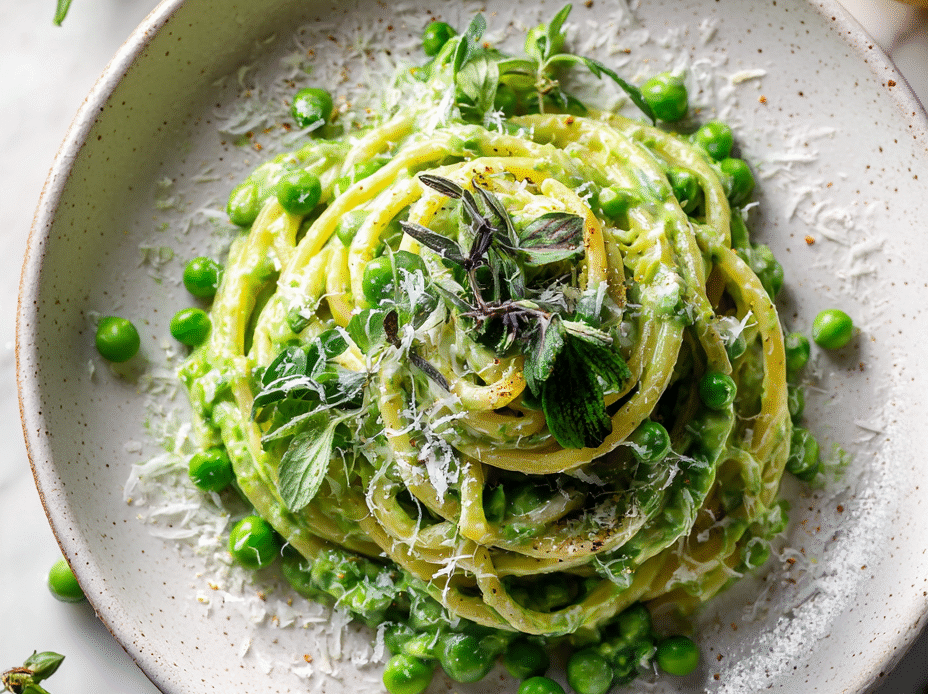
Frozen peas often get a bad rap as a dull, over-processed side, but I see them differently. They’re a secret weapon for capturing that fleeting burst of spring freshness, even in the middle of winter. When blended into a sauce, they transform into something bright and vibrant, with a natural sweetness that feels almost like a garden in full bloom.
This creamy pea pasta came about on one of those nights when I wanted comfort but also something lively on the plate. It’s a dish that’s quick to pull together, yet it has a sneaky crunch of freshness thanks to those little green gems. Plus, it’s a reminder that sometimes, the simplest ingredients—frozen peas included—can make the most honest, satisfying meal.
Focusing on the overlooked freshness of frozen peas to create a bright, vibrant sauce that feels like spring in a bowl, even in the dead of winter.
The story behind this recipe
- This recipe sprouted from a simple moment of realizing how frozen peas, often overlooked, can really brighten up a meal. I was craving something quick, fresh, and satisfying, and those bright green gems kept catching my eye in the freezer. It’s funny how a small ingredient can shift a dish from plain to lively in a flash.
- I remember the first time I mashed peas directly into hot pasta water, watching that vibrant green turn creamy and luscious. That burst of flavor and color felt like a small victory, a reminder not to dismiss the humble frozen pea. Now, I keep them on hand for nights when I need something quick but still crave that garden-fresh brightness.
- heading
- story_type
Key ingredients and tips
- Frozen peas: I love how their bright, sweet flavor pops when blended into the sauce. If yours taste flat, try a quick rinse to brighten them up.
- Garlic: I always use fresh cloves, crushed until fragrant. For a softer, more mellow flavor, sauté it gently until just golden; skip the burn to avoid bitterness.
- Cream: I prefer heavy cream for richness, but a splash of good-quality half-and-half keeps it lighter. If you’re dairy-free, coconut milk works but adds a subtle sweetness.
- Pasta: I use something neutral like linguine or fettuccine that holds onto the sauce. If you want more bite, cook it just shy of al dente; it’ll finish in the sauce.
- Lemon: A bit of lemon juice brightens everything. Before adding, zest it first — the oils pack a punch of fresh aroma that lifts the entire dish.
- Olive oil: A good drizzle at the end makes a big difference. Use a fruity, peppery oil if you’ve got it; it adds a nice depth to the sauce.
- Salt & pepper: Season gradually and taste as you go. I often add a pinch of flaky sea salt just before serving for that subtle crunch and burst of flavor.
Spotlight on key ingredients
Frozen peas:
- I love how their bright, sweet flavor pops when blended into the sauce. If yours taste flat, try a quick rinse to brighten them up.
- Garlic: I always use fresh cloves, crushed until fragrant. For a softer, more mellow flavor, sauté it gently until just golden; skip the burn to avoid bitterness.
- Cream: I prefer heavy cream for richness, but a splash of good-quality half-and-half keeps it lighter. If you’re dairy-free, coconut milk works but adds a subtle sweetness.
Lemon and olive oil:
- Lemon: A bit of lemon juice brightens everything. Before adding, zest it first — the oils pack a punch of fresh aroma that lifts the entire dish.
- Olive oil: A good drizzle at the end makes a big difference. Use a fruity, peppery oil if you’ve got it; it adds a nice depth to the sauce.
- Pasta: I use something neutral like linguine or fettuccine that holds onto the sauce. If you want more bite, cook it just shy of al dente; it’ll finish in the sauce.
Notes for ingredient swaps
- Dairy-Free: Coconut cream or cashew cream can replace heavy cream, adding richness but with a slightly nutty or tropical note.
- Vegan: Swap out butter for olive oil or a plant-based butter alternative to keep the dish dairy-free and vegan-friendly.
- Gluten-Free: Use gluten-free pasta, which cooks similarly but may need a slightly different cooking time or texture adjustment.
- Herb Boost: Fresh basil or mint can elevate the sauce with a bright, herbal lift—add at the end for maximum aroma.
- Extra Protein: Toss in cooked shrimp or crispy pancetta for added texture and flavor, balancing the bright peas with savory richness.
Equipment & Tools
- Large skillet: Cook peas and garlic, and toss pasta with sauce.
- Slotted spoon: Remove pasta from boiling water.
- Colander: Drain the pasta efficiently.
- Blender or immersion mixer: Puree peas and cream into a smooth sauce.
Step-by-step guide to creamy pea pasta
- Equipment & Tools: Gather a large skillet (preferably non-stick), a slotted spoon, a colander, and a blender or immersion mixer.
- Bring a large pot of salted water (about 4 liters, 8.5 pints) to a rolling boil at 100°C (212°F).
- Add your pasta (about 400g or 14 oz) and cook until just shy of al dente, roughly 1-2 minutes less than package instructions. Drain, saving a cup of pasta water.
- While pasta cooks, heat the skillet over medium heat (about 160°C/320°F). Add 1 tbsp olive oil, then sauté 2-3 minced garlic cloves until fragrant, about 30 seconds. Do not burn the garlic—if it turns dark, start over.
- Add 200g frozen peas directly into the skillet. Cook for 2-3 minutes, stirring often, until peas are bright green and just warmed through. They should smell sweet and fresh.
- Transfer peas and garlic to a blender. Pour in 1/2 cup heavy cream, a squeeze of lemon juice, and a pinch of salt and pepper. Blend until smooth and creamy, about 30 seconds. If the mixture is too thick, loosen with a splash of reserved pasta water.
- Return the drained pasta to the skillet. Pour in the pea sauce, tossing gently to coat. Warm over low heat for 1-2 minutes, allowing flavors to meld. If sauce thickens too much, add more pasta water to loosen.
- Taste and adjust seasoning—more salt, lemon, or pepper if needed. Remove from heat and let sit for a minute to thicken slightly. The sauce should be velvety, bright, and cling to the pasta.
- Finish with a drizzle of good olive oil, a sprinkle of flaky sea salt, and maybe some fresh herbs if you like. Plate immediately, enjoying the vibrant green and creamy texture.
Let the pasta sit for a minute after tossing to allow the sauce to settle. Finish with olive oil and flaky salt, then serve immediately while vibrant and velvety.
How to Know It’s Done
- Peas are bright green and fragrant after sautéing.
- Sauce is smooth, velvety, and coats the pasta evenly.
- Pasta is cooked just shy of al dente, with a slight bite.
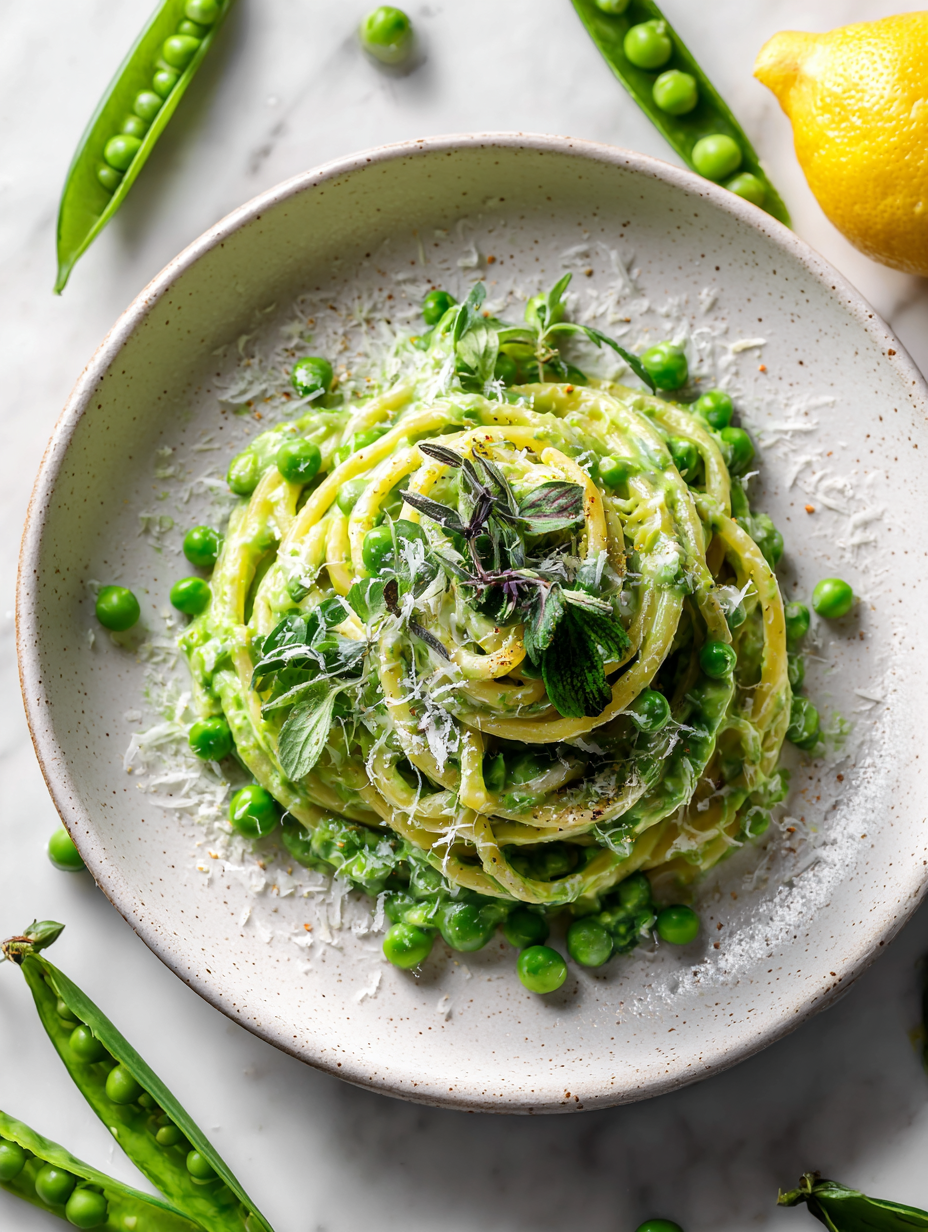
Creamy Pea Pasta
Ingredients
Equipment
Method
- Bring a large pot of salted water to a rolling boil and cook the pasta until just shy of al dente, about 1-2 minutes less than package directions. Drain and set aside, reserving a cup of pasta water.
- While the pasta cooks, heat a large skillet over medium heat and add a tablespoon of olive oil. Sauté the crushed garlic until fragrant, about 30 seconds, until it turns golden but not burned.
- Add the frozen peas directly into the skillet. Cook for 2-3 minutes, stirring often, until the peas are bright green and just warmed through. They should smell sweet and fresh.
- Transfer the cooked peas and garlic to a blender. Pour in the heavy cream and add a squeeze of lemon juice. Season with salt and pepper, then blend until the mixture is smooth and velvety, about 30 seconds. If the sauce feels too thick, loosen it with a splash of the reserved pasta water.
- Return the drained pasta to the skillet or a large mixing bowl. Pour the pea sauce over the pasta and gently toss to coat evenly. Warm everything together over low heat for 1-2 minutes, adding more pasta water if needed to reach your desired consistency.
- Taste the dish and adjust the seasoning with more salt, pepper, or lemon juice if needed. Finish with a drizzle of good olive oil for shine and flavor, then serve immediately to enjoy the bright, velvety pasta.
Pro tips for creamy pea pasta
- Bolded mini-head: Use fresh garlic, crush until fragrant, to maximize aroma and sweetness.
- Bolded mini-head: Sauté peas briefly until vibrant green and just warmed through for best flavor.
- Bolded mini-head: Puree sauce until velvety smooth, avoiding lumps to ensure a luxurious texture.
- Bolded mini-head: Reserve pasta water, then add little by little to loosen sauce if it thickens.
- Bolded mini-head: Finish with a drizzle of good olive oil for added shine and depth of flavor.
- Bolded mini-head: Taste and adjust seasoning at the end—lemon, salt, and pepper make all the difference.
- Bolded mini-head: Serve immediately to enjoy the bright, creamy contrast before it starts to set.
Common mistakes and how to fix them
- FORGOT to stir peas early → Stir often to prevent burning and ensure even cooking.
- DUMPED hot pasta into water → Shock pasta in cold water to stop cooking and prevent sticking.
- OVER-TORCHED garlic → Sauté garlic gently on low-medium to keep flavor sweet and avoid bitterness.
- FAILED to taste and adjust seasoning → Always taste sauce before serving; balance lemon, salt, and pepper.
Quick fixes and pantry swaps
- When sauce looks grainy, splash in a bit more hot pasta water and blend again.
- If peas aren’t bright green, rinse them quickly to refresh their color and flavor.
- Splash olive oil on the sauce if it starts to thicken or look dull during reheating.
- Patch overcooked pasta with a spoonful of fresh sauce to revive flavor and moisture.
- Shield pan from direct heat if garlic begins to burn, and stir immediately to prevent bitterness.
Prep, store, and reheat tips
- Prepare the garlic and measure out frozen peas in advance to streamline assembly during busy evenings.
- Store leftover sauce in an airtight container in the fridge for up to 2 days; the vibrant green may fade slightly, but flavor remains fresh.
- Reheat gently over low heat, stirring often; the sauce may thicken, so loosen with a splash of warm water or extra pasta water, watching for a velvety texture.
- For longer storage, freeze the sauce in small portions for up to 1 month; expect a slight change in texture, but flavor stays bright.
- When reheating from frozen, thaw in the fridge overnight for more even warming, avoiding any microwave surprises like separation or overcooking.
Top questions about creamy pea pasta
1. How do I get the peas to taste fresh and vibrant?
Frozen peas can be slightly starchy or dull if not rinsed. Rinse briefly to brighten their flavor and color.
2. Can I use other herbs instead of lemon or basil?
Yes, you can substitute basil or mint for a different herbal note, but the sweetness of peas pairs best with lemon.
3. How do I prevent the pasta from turning mushy?
Overcooking pasta makes it mushy and less able to hold sauce. Cook it just shy of al dente, then finish in the sauce.
4. What if my sauce is too thick or gloopy?
If the sauce is too thick, add reserved pasta water a tablespoon at a time until it reaches a silky consistency.
5. Which pasta type works best for this recipe?
Use a neutral pasta like linguine or fettuccine; they hold the sauce well and don’t overpower the delicate pea flavor.
6. Can I make this dish dairy-free?
Dairy-free options include coconut milk or cashew cream, which add richness but may alter the flavor slightly.
7. When should I add olive oil for best results?
Adding a splash of olive oil at the end enhances shine and depth. Use a good quality, fruity oil if possible.
8. How do I know when the sauce is seasoned perfectly?
Taste the sauce before serving and adjust salt, lemon, or pepper as needed for balance and brightness.
9. How should I store and reheat leftovers?
Leftover sauce can be stored in the fridge for 1-2 days; reheat gently, adding water to loosen if needed.
10. My peas look dull after cooking, what can I do?
If the peas lose their color, rinse them quickly with cold water to restore vibrancy before blending.
This dish isn’t just about the bright, fresh flavor—it’s about reclaiming frozen peas as a versatile ingredient that can surprise you. Every time I make it, I’m reminded that simplicity, when done right, can turn a cozy night into something memorable.
Sharing this recipe feels like passing along a small secret: that a handful of frozen peas and a bit of cream can create something unexpectedly lively. It’s a reminder to look at everyday ingredients with fresh eyes, especially when you need a quick, satisfying meal in a pinch.

Hi, I’m Jonny Andrew Miller, the cook, taster, and slightly messy mind behind Bite & Boom. I live in Austin, Texas, a city that smells like barbecue smoke, fresh tortillas, and late-night tacos if you wander long enough. It suits me.