
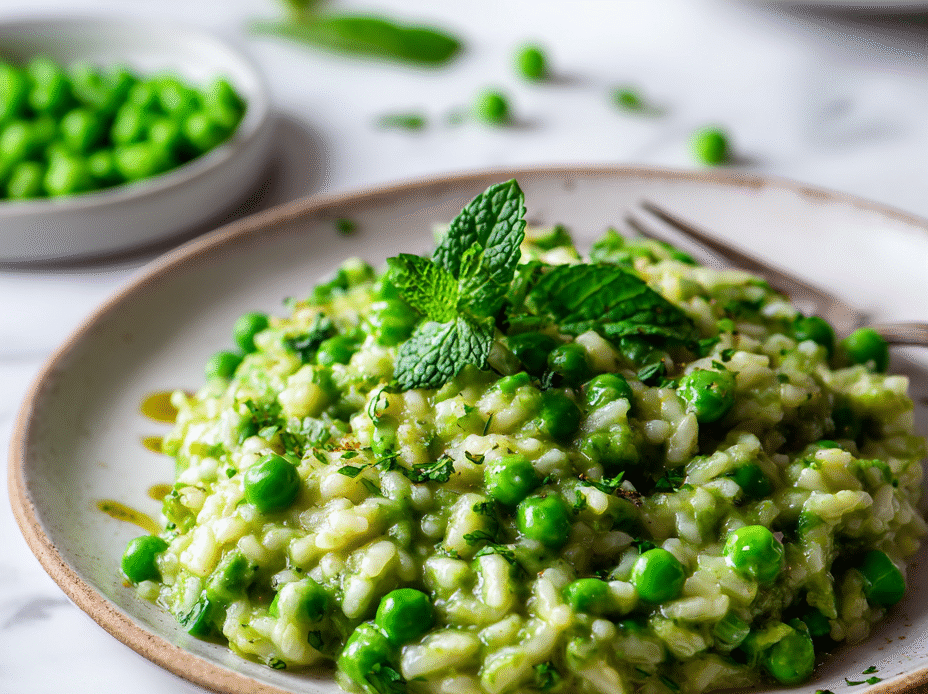
Green peas are like little bursts of spring in a pod, and using them in risotto feels like capturing a fleeting moment of freshness. I love how their sweet, slightly grassy flavor transforms a humble dish into something special, almost celebratory. It’s the kind of recipe that makes you appreciate the simple, seasonal pleasures, especially when peas are at their peak.
This risotto is a reminder that sometimes the most straightforward ingredients—good quality rice, fresh peas, and a good Parmesan—can come together to create something comforting yet bright. I’ve made it on busy weeknights when I need a quick lift, but also on slow weekends when I want to savor the process. Every spoonful is a reminder to keep things simple and let the ingredients speak for themselves.
There’s a certain joy in watching the vibrant green bloom as you stir, the gentle crackle of rice as it toasts, and the way the peas pop softly with each bite. It’s not fancy, but it’s honest, fresh, and perfect for celebrating spring’s fleeting bounty. I keep returning to this recipe because it’s quick, satisfying, and full of those little moments of seasonal happiness.
Focusing on the freshness of green peas and how their vibrant sweetness elevates a simple risotto, turning it into a celebration of spring’s fleeting bounty.
The story behind this recipe
- I first made this risotto on a rainy spring afternoon, when the markets were bursting with bright green peas. There’s a memory of sitting on my kitchen floor, shelling peas with a friend, laughing about how simple pleasures feel the most fulfilling. That moment of shared quiet and fresh flavors inspired me to capture that simplicity in a dish.
- Peas always remind me of childhood summers, the way they burst with sweetness and that fresh, grassy aroma. I wanted to create a recipe that honors that fleeting peak of spring, when everything feels just a little more vibrant and alive. It’s a dish that feels like a gentle celebration of the season, built on humble ingredients but full of life.
- heading: ‘The story behind this recipe’
Key ingredients in focus
- Green peas: I love how their sweet, slightly grassy aroma blooms when you cook them; opt for fresh or frozen, but never canned for that bright pop.
- Arborio rice: The creamy, starchy quality is what makes risotto work—give it a good rinse to remove excess surface starch, but don’t overdo it.
- Parmesan: I always use a sharp, aged Parmesan for that umami punch; grate it fresh just before adding for maximum flavor and meltiness.
- Vegetable stock: I prefer homemade or low-sodium store-bought for control; simmer it gently so it’s hot but not boiling when adding to the rice.
- Olive oil: Use a decent extra-virgin to start; the fruity, peppery notes add depth right from the first stir, but don’t drown the rice.
- Onion: Finely chopped and sautéed until translucent, it’s the aromatic base; if it browns too quickly, turn down the heat to avoid bitterness.
- Butter: I finish with a knob of good butter for silkiness; add it off heat to keep the sauce glossy and rich, and watch for that gentle shimmer.
Spotlight on key ingredients
Green peas:
- I love how their sweet, slightly grassy aroma blooms when you cook them; opt for fresh or frozen, but never canned for that bright pop.
- Arborio rice: The creamy, starchy quality is what makes risotto work—give it a good rinse to remove excess surface starch, but don’t overdo it.
- Parmesan: I always use a sharp, aged Parmesan for that umami punch; grate it fresh just before adding for maximum flavor and meltiness.
Parmesan:
- Its granular texture melts slowly, releasing nutty, salty notes that tie the dish together with richness.
- Olive oil: The fruity aroma and peppery bite develop during sautéing, giving the risotto depth and shine.
- Broth: The simmering liquid is the backbone—its clarity and heat influence how evenly the rice cooks and flavors develop.
Notes for ingredient swaps
- Dairy-Free: Swap Parmesan for a nutty nutritional yeast; it won’t melt the same but adds umami depth.
- Vegan: Use vegan Parmesan or a blended cashew and nutritional yeast mix; expect slightly different creaminess.
- Frozen Peas: Keep them frozen until use; they retain sweetness and vibrant color better than thawed ones.
- Fresh Peas: Use fresh in early spring for a sweeter, more tender bite; adjust cooking time slightly.
- Rice Options: Carnaroli or Vialone Nano can replace Arborio; they cook similarly but might be slightly creamier.
- Broth: Vegetable broth can be replaced with mushroom broth for an earthy, richer flavor.
- Oil: Olive oil can be substituted with avocado oil; it has a milder flavor and higher smoke point.
Equipment & Tools
- Large heavy-bottomed pan: For even rice cooking and heat distribution.
- Wooden spoon: For stirring and scraping the rice.
- Measuring cup: To measure rice and liquids accurately.
- Ladle: To add hot broth in portions.
Step-by-step guide to green pea risotto
- Gather your equipment: a large heavy-bottomed pan (preferably wide for even rice cooking), a wooden spoon for stirring, a measuring cup for rice, and a ladle for adding broth.
- Heat 1 tbsp of olive oil over medium heat (about 160°C/320°F). Add 1 finely chopped small onion. Cook for 3-4 minutes until translucent and fragrant, stirring often.
- Add 1 cup of Arborio rice. Toast it gently for 2 minutes until the edges look slightly translucent, and it starts to crackle. Stir continuously to prevent sticking.
- Pour in ½ cup dry white wine (optional). Stir until mostly absorbed, about 1-2 minutes. This adds brightness and helps loosen the grains.
- Start adding hot vegetable broth, about ½ cup at a time. Stir constantly, allowing each addition to be mostly absorbed before adding more. Keep the broth simmering gently, around 85°C (185°F).
- After about 15 minutes, when the rice is just tender but still slightly firm (al dente), stir in 1 cup of fresh or thawed frozen peas. Cook for 2-3 more minutes, until peas are bright green and just tender.
- Check the risotto’s texture. It should be creamy but with individual rice grains still holding shape. If too thick, stir in a splash more warm broth. If too loose, cook a minute longer to thicken.
- Remove from heat. Stir in 2 tbsp of freshly grated Parmesan and a small knob of butter (about 1 tbsp). Mix until glossy and well combined. Season with salt and black pepper to taste.
- Let rest for 1-2 minutes. Serve hot, garnished with extra Parmesan and a drizzle of olive oil if desired.
Rest the risotto for 1-2 minutes off heat. Finish with Parmesan and butter, stir well to create a glossy, creamy texture. Serve immediately, garnished as desired.
How to Know It’s Done
- Rice is tender but slightly firm (al dente).
- Risotto is creamy and coats the back of a spoon.
- Bright green peas are just cooked, not mushy.
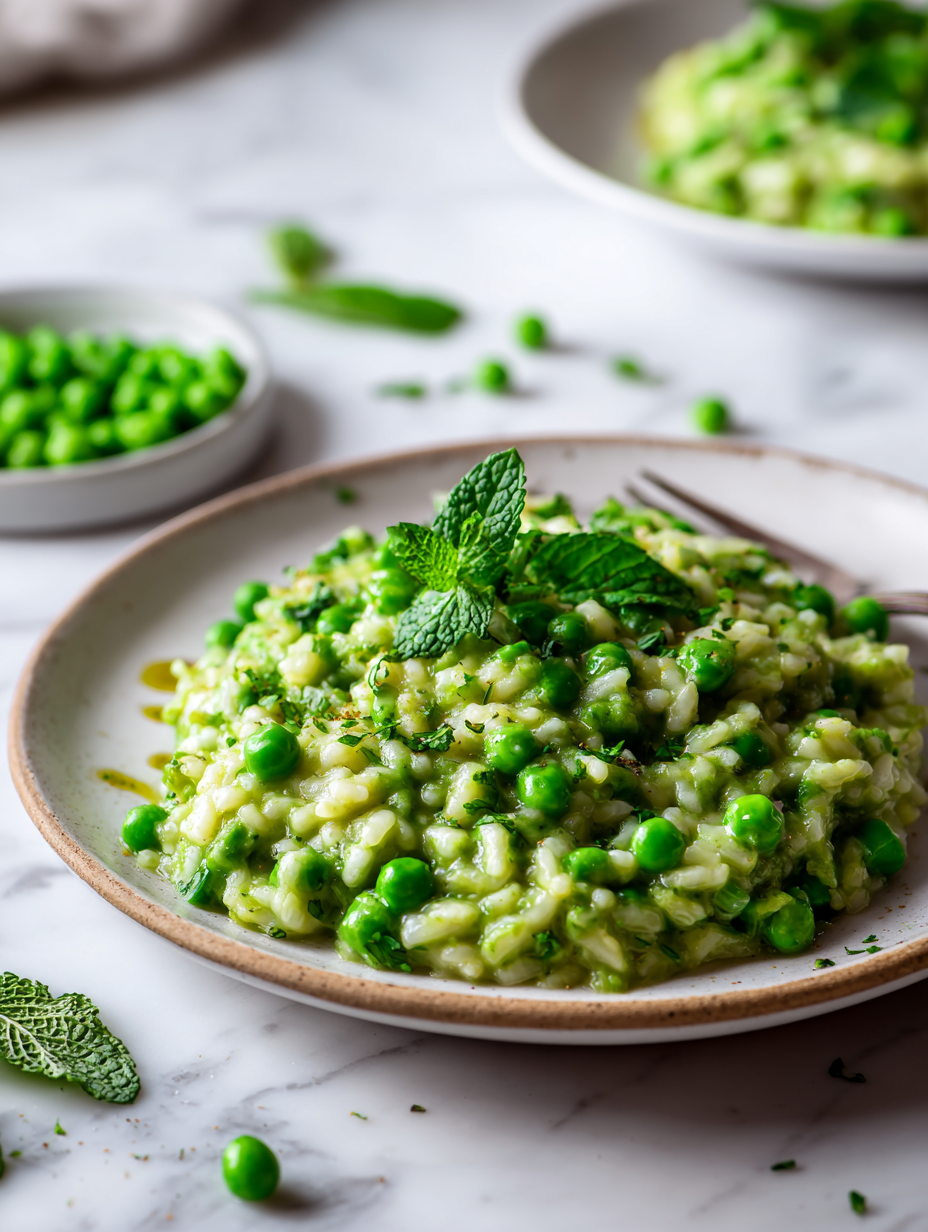
Spring Green Pea Risotto
Ingredients
Equipment
Method
- Heat a large heavy-bottomed pan over medium and add the olive oil. Once it shimmers and starts to smell fragrant, add the finely chopped onion. Sauté for 3-4 minutes until translucent and soft, with a gentle sizzle.
- Add the rinsed arborio rice to the pan. Stir constantly for about 2 minutes, toasting the grains until they look slightly translucent at the edges and release a nutty aroma.
- If using wine, pour it in now and stir until mostly absorbed, about 1-2 minutes. The rice will bubble gently and smell fragrant.
- Begin adding the warm vegetable stock, about half a cup at a time. Stir constantly, allowing each addition to be mostly absorbed before adding the next, maintaining a gentle simmer. Continue this process for about 15 minutes, watching the rice become tender but still slightly al dente.
- When the rice is nearly done, stir in the green peas. Cook for another 2-3 minutes until peas are bright green and tender, and the risotto is creamy.
- Remove the pan from heat. Stir in the grated Parmesan and a tablespoon of butter until melted and glossy. Adjust seasoning with salt and pepper as needed.
- Let the risotto rest for a minute or two. Then, serve immediately, garnished with extra Parmesan if desired, and enjoy the vibrant, creamy texture with bursts of sweet peas in every bite.
Pro tips for perfect risotto
- Bolded mini-head: Toast the rice briefly before adding liquid—this enhances nutty flavor and improves texture.
- Bolded mini-head: Use warm broth—adding cold liquid chills the rice and slows cooking, so keep it simmering gently.
- Bolded mini-head: Stir continuously during the liquid addition—this releases starch, creating that creamy risotto consistency.
- Bolded mini-head: Watch for peas—add them near the end to keep their bright color and fresh sweetness.
- Bolded mini-head: Finish with cheese off heat—this prevents clumping and ensures a silky, glossy finish.
Common mistakes and how to fix them
- FORGOT to stir continuously → Stir often to prevent sticking and ensure even cooking.
- DUMPED too much broth at once → Add broth gradually, maintaining a gentle simmer for creaminess.
- OVER-TORCHED rice → Lower heat if rice starts to brown or stick; adjust to maintain gentle sizzle.
- MISSED the final cheese step → Add Parmesan off heat for meltiness and depth, don’t skip it.
Quick fixes and pantry swaps
- When risotto sticks, splash in warm broth and stir vigorously to loosen it.
- If peas turn mushy, patch with a quick squeeze of lemon for brightness.
- Splash extra oil if risotto feels dry or dull in shimmer.
- Shield overcooked rice with a splash of hot broth and stir gently.
- When in doubt, pantry swap: swap Parmesan for nutritional yeast for a cheesy boost.
Prep, store, and reheat tips
- Prep the broth and have it gently simmering so it’s ready to add, saving time and maintaining flavor integrity.
- Shell and blanch the peas up to a day ahead; keep them in an airtight container in the fridge for freshness.
- Grate Parmesan fresh just before serving; store in an airtight container in the fridge, but grate only when needed for maximum flavor.
- Cook the rice and have it cooled slightly; store in an airtight container in the fridge for up to 24 hours, reheating gently.
- Reheat leftovers slowly over low heat, stirring often, until steaming and creamy; expect some loss of vibrancy in color and brightness.
Top questions about green pea risotto
1. Should I use fresh or frozen peas?
Fresh peas give a sweeter, more vibrant flavor and a firmer bite compared to frozen or canned. Use what’s available, but fresh or frozen is best for that bright pop.
2. When do I add the peas?
Add the peas in the last 2-3 minutes of cooking. They should be bright green, tender but still firm, and slightly pop in your mouth.
3. How much do I stir?
Stir constantly while adding broth to release enough starch for that creamy texture. It’s the key to good risotto, and it helps prevent sticking.
4. Can I skip Parmesan?
Use a good quality Parmesan, freshly grated. It melts better and adds a sharper, nuttier flavor that elevates the dish. Add it off heat for best glossiness.
5. What temperature should the broth be?
Keep the broth hot but not boiling when adding it to the rice. This maintains a steady cooking temperature, helping the rice cook evenly and absorb flavors.
6. How do I fix thick or runny risotto?
If the risotto gets too thick before the rice is tender, stir in a splash more warm broth. If it’s too loose, cook a minute longer until it thickens.
7. What equipment do I need?
Use a wide, heavy-bottomed pan for even heat distribution. It helps the rice cook uniformly without burning or sticking.
8. Should I add butter at the end?
Finish with a pat of butter and extra Parmesan off the heat. It adds richness and a glossy, velvety finish that makes it feel special.
9. Can I make this ahead?
Risotto tastes best when served immediately, but you can reheat gently with a splash of broth. It may lose some brightness, but it’ll still be comforting.
10. Can I substitute frozen peas?
Use frozen peas instead of fresh if they’re out of season—they retain sweetness and color better than thawed ones left out too long.
This risotto is a reminder that simplicity and seasonal ingredients can create something truly memorable. I find myself coming back to it, especially when those bright green peas are at their peak, bursting with sweetness and freshness.
In the rush of daily life, a dish like this offers a slow, mindful moment—stirring, tasting, and appreciating each tiny burst of flavor. It’s not just about dinner; it’s about pausing for the little pleasures that make cooking worthwhile.

Hi, I’m Jonny Andrew Miller, the cook, taster, and slightly messy mind behind Bite & Boom. I live in Austin, Texas, a city that smells like barbecue smoke, fresh tortillas, and late-night tacos if you wander long enough. It suits me.