
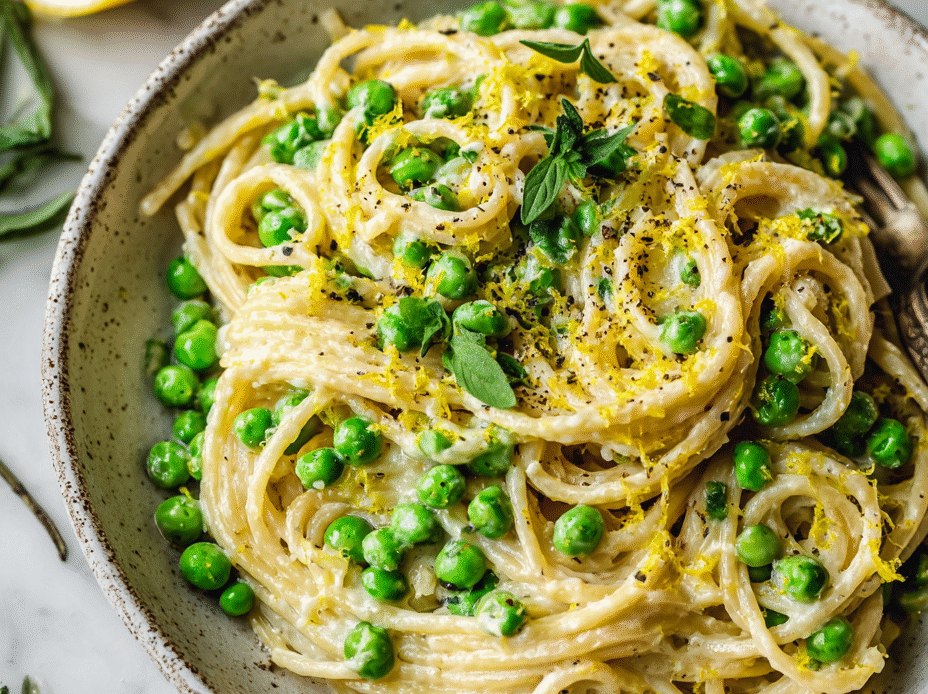
Lemon pea pasta feels like a little burst of spring in a bowl. It’s bright, fresh, and surprisingly simple to throw together after a busy day. The sharpness of lemon and the sweet pop of peas make it feel both comforting and invigorating, perfect for those days when you want something quick but not boring.
I stumbled upon this combo when I was craving something green and zingy but didn’t want to fuss with complicated sauces. It’s become a go-to, especially when I have a handful of peas and a lemon sitting in the fridge and a craving for flavor that wakes up your palate. It’s honest, unpretentious, and somehow feels like a little celebration of spring, even if it’s still cold outside.
Focusing on the surprisingly bright and fresh flavor combo of lemon and peas, this dish turns simple pasta into a celebration of spring’s fleeting sweetness, all while being quick enough for a weekday dinner that feels special.
The story behind this recipe
- This recipe was born out of a lazy spring afternoon, when I had a handful of fresh peas and a lemon that needed using. I wanted something light, bright, and fast—something that felt like a small celebration of those fleeting spring days. It’s the kind of dish that sneaks in a little joy with every bite, without fuss or complication.
- I remember the moment I discovered how well lemon and peas paired—bright, sweet, and a little zesty—like a breath of fresh air in the middle of a hectic week. Since then, I’ve kept it close, tweaking it here and there, until it felt just right—simple, honest, and perfect for those quick dinners that make you smile.
- heading:
Key ingredients and tips
- Lemon: The zest and juice give this dish its bright, zesty punch. Use fresh lemons for the best aroma and flavor—avoid bottled lemon juice, it lacks that vibrant zing.
- Peas: Sweet, tender, and a little poppy—frozen peas work perfectly and save you time. Thaw them slightly before tossing in to keep the dish bright and fresh.
- Pasta: I swear by spaghetti or linguine here—something that holds the sauce well. Cook it al dente, about 1 minute less than package directions, so it stays firm and absorbs the lemony goodness.
- Garlic: Minced garlic adds a warm, aromatic backdrop. Sauté just until fragrant—about 30 seconds—so it doesn’t turn bitter or burnt and overpower the lemon’s brightness.
- Olive Oil: Extra virgin for richness and smoothness. Drizzle generously—this is what coats the pasta with that luscious, slightly fruity sheen, making each bite feel indulgent.
- Parmesan: Freshly grated, it melts into the warm pasta, adding a salty, umami depth. If dairy’s an issue, skip or substitute with nutritional yeast for a cheesy hint without the creaminess.
- Salt & Pepper: Season liberally—peas and lemon can be assertive. Taste as you go; a pinch of flaky sea salt amplifies all the flavors, and freshly cracked pepper adds a subtle heat.
Spotlight on key ingredients
Lemon & Peas:
- Lemon: The zest and juice give this dish its bright, zesty punch. Use fresh lemons for the best aroma and flavor—avoid bottled lemon juice, it lacks that vibrant zing.
- Peas: Sweet, tender, and a little poppy—frozen peas work perfectly and save you time. Thaw them slightly before tossing in to keep the dish bright and fresh.
Notes for ingredient swaps
- Dairy-Free: Nutritional yeast can replace Parmesan, adding a cheesy flavor without dairy, though it’s less creamy.
- Vegan: Swap out Parmesan for a nut-based cheese or skip altogether, expect a less salty, slightly different flavor profile.
- Fresh Herbs: Basil or mint can brighten the dish instead of parsley, adding their own fresh, aromatic punch.
- Lemon: Lime juice offers a similar tartness with a slightly different citrus aroma; use sparingly to match lemon’s brightness.
- Peas: Fresh peas can be used instead of frozen—just blanch them first to keep their sweet, tender bite.
- Olive Oil: Avocado oil can be a mild substitute, providing richness with a slightly different fruitiness.
- Pasta: Gluten-free options like chickpea or rice pasta work well but may alter texture—look for al dente to avoid mushiness.
Equipment & Tools
- Large pot: To boil the pasta efficiently.
- Large skillet or frying pan: To sauté garlic and peas, and toss the pasta.
- Colander: To drain cooked pasta.
- Microplane or zester: To zest the lemon finely and evenly.
- Juicer or hand-held reamer: To extract fresh lemon juice.
- Cooking spoon: To stir ingredients and combine flavors.
Step-by-step guide to lemon pea pasta
- Bring a large pot of salted water to a boil, about 100°C (212°F). Add pasta and cook until just al dente, about 1 minute less than package instructions. Drain, reserving a cup of pasta water.
- While pasta cooks, heat a large skillet over medium heat. Add 2 tablespoons olive oil and minced garlic. Sauté until fragrant, about 30 seconds; do not let it brown.
- Add frozen peas directly to the skillet, cook for 1-2 minutes until just tender and bright green. If peas are frozen, they’ll crackle and release a little sweetness.
- Zest the lemon directly into the skillet, then squeeze in the juice. Stir well, letting the flavors meld for about 30 seconds. If the mixture seems dry, add a splash of reserved pasta water.
- Toss the cooked pasta into the skillet, coating it thoroughly with the lemon-pea mixture. Cook together for 1-2 minutes, allowing the pasta to absorb the lemony aroma and flavor.
- Taste and adjust seasoning with salt and freshly cracked pepper. If needed, add more lemon juice for brightness or pasta water for looseness.
- Remove from heat. Toss in grated Parmesan if using, stirring until melted and creamy.
- Plate immediately. Garnish with extra lemon zest and a drizzle of olive oil for shine. Serve hot, savoring the bright, fresh aroma of lemon and peas.
Serve immediately while hot. Garnish with extra lemon zest and a drizzle of olive oil if desired. No resting needed, but a quick toss before plating helps distribute flavors evenly.
How to Know It’s Done
- Pasta is just tender and not mushy, with a slight bite.
- Peas are bright green, tender, and slightly sweet.
- Lemon aroma is fresh and zesty, with a balanced acidity.
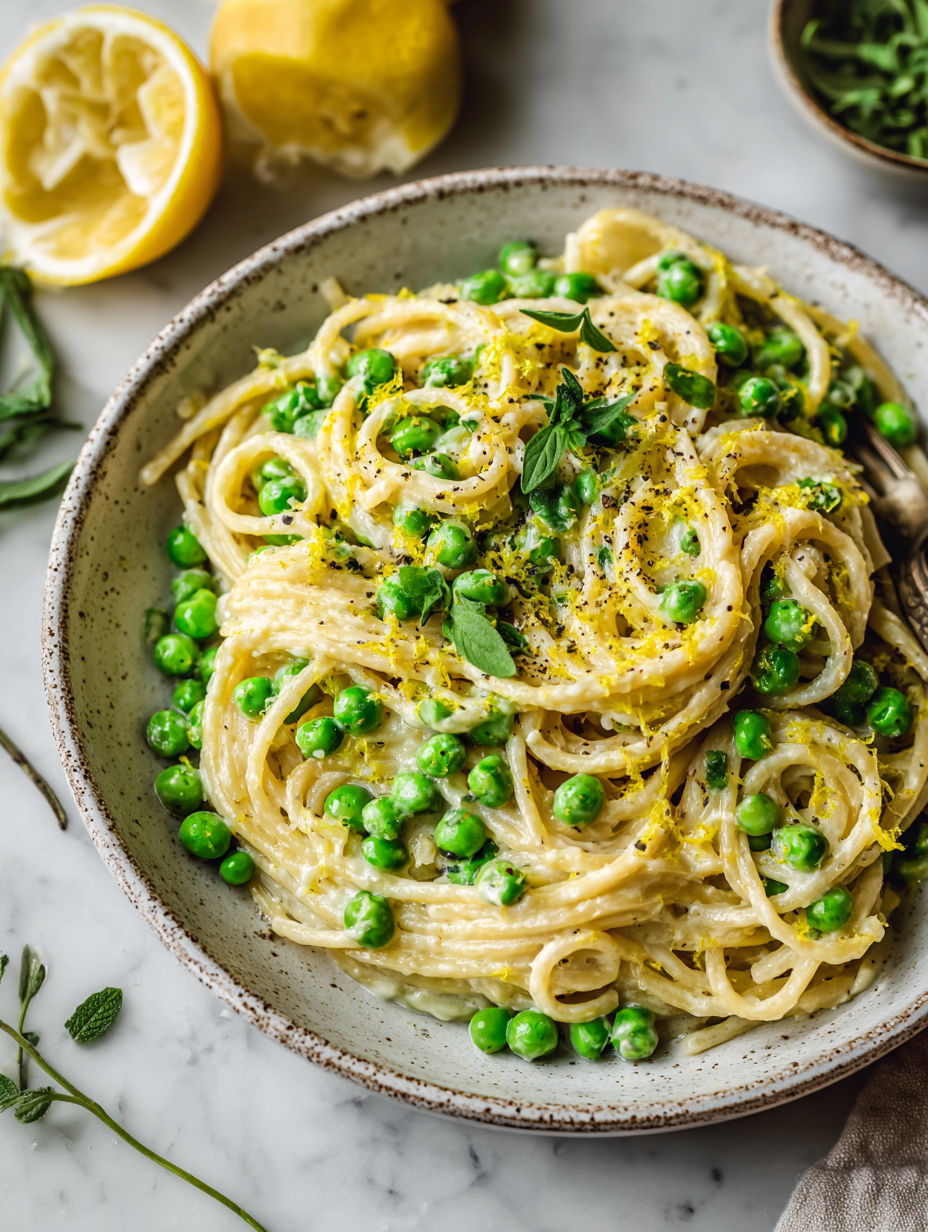
Lemon Pea Pasta
Ingredients
Equipment
Method
- Bring a large pot of salted water to a rolling boil. Add the pasta and cook until just al dente, about 1 minute less than the package instructions. Drain, reserving a cup of pasta water.
- While the pasta cooks, heat a large skillet over medium heat. Add the olive oil and minced garlic, sautéing until fragrant and just beginning to turn golden, about 30 seconds.
- Add the thawed peas directly to the skillet, cooking for 1-2 minutes until tender and bright green, releasing a sweet aroma.
- Zest the lemon directly into the skillet, then squeeze in the lemon juice. Stir well, allowing the flavors to meld and the zest to release a fresh citrus aroma.
- Add the drained pasta to the skillet, tossing to coat evenly with the lemon-pea mixture. If the sauce seems dry, add a splash of the reserved pasta water to loosen it.
- Taste and season with salt and freshly cracked black pepper. Adjust the lemon juice or add more pasta water if needed for desired consistency.
- Remove from heat and stir in the grated Parmesan cheese until melted and creamy, coating the pasta with a luscious, cheesy sheen.
- Serve immediately, garnished with extra lemon zest and a drizzle of olive oil if desired. Enjoy the bright, spring-inspired flavors in every bite!
Notes
Pro Tips for Perfect Lemon Pea Pasta
- Use fresh lemon zest to amplify brightness, adding it early for a zesty aroma throughout.
- Sauté garlic gently until fragrant—about 30 seconds—to avoid bitterness and preserve its sweet aroma.
- Add frozen peas directly to the skillet—crackling and sweetening—just long enough until tender.
- Reserve pasta water before draining; it’s starchy and perfect for loosening the sauce smoothly.
- Taste frequently and adjust lemon and seasoning—bright, sharp flavors make the dish sing.
- Toss pasta in the sauce off heat—this prevents overcooking and keeps it al dente with a glossy coating.
- Finish with a drizzle of olive oil and extra lemon zest—adds shine and a fresh citrus aroma right before serving.
Common mistakes and how to fix them
- FORGOT to adjust heat, pasta turns mushy—reduce to medium after boiling.
- DUMPED in too much water—use reserved pasta water to loosen sauce and enhance flavor.
- OVER-TORCHED garlic—sauté just until fragrant, about 30 seconds, then remove from heat.
- MISSED lemon zest—add it early for bright flavor, not just lemon juice for acidity.
Quick fixes and pantry swaps
- When sauce is too thick, splash in warm pasta water and stir gently.
- If lemon flavor is dull, add a squeeze of fresh lemon juice for brightness.
- Splash extra olive oil if pasta feels dry or dull-looking in the bowl.
- Patch overcooked peas with a quick squeeze of lemon to revive their freshness.
- Shield burning garlic by lowering heat immediately and adding a splash of water.
Prep, store, and reheat tips
- Prep the lemon zest and juice ahead—zest the lemon and store in a small container in the fridge for up to 2 days. Juice can be kept in a squeeze bottle for quick use.
- Frozen peas can be thawed slightly in the fridge overnight or quickly in warm water. Keep in an airtight container for up to 2 months if pre-portioned.
- Cook the pasta until just al dente, then toss with a teaspoon of olive oil to prevent sticking. Store in an airtight container for up to 2 days in the fridge.
- Reheat gently in a skillet over low heat, adding a splash of reserved pasta water or lemon juice to loosen the sauce. The aroma should be bright, and the pasta heated through in about 3-4 minutes.
- The lemony brightness diminishes over time, so try to enjoy leftovers within 1 day for the best flavor and texture. The peas may lose some of their pop and sweetness after storage.
Top questions about lemon pea pasta
1. Can I use bottled lemon juice instead of fresh?
Use fresh lemon juice and zest for the brightest flavor. Bottled lemon juice won’t give you the same zing.
2. Can I substitute fresh peas for frozen?
Frozen peas work best—thaw them slightly before tossing in. Fresh peas can be used if in season, just blanch first.
3. How do I know when the pasta is perfectly cooked?
Cook the pasta until just al dente, about 1 minute less than package instructions. It keeps the texture firm and absorbs flavors better.
4. When should I add lemon zest and juice?
Add lemon zest early in cooking to release a fresh aroma. Lemon juice should be added at the end to keep the bright flavor.
5. What kind of olive oil is best?
Use good quality extra virgin olive oil for richness and a smooth, fruity finish that coats the pasta well.
6. Can I make this vegan or dairy-free?
For a dairy-free version, swap Parmesan with nutritional yeast. It provides a cheesy flavor, but less creamy.
7. When should I add the Parmesan cheese?
Stir in the cheese immediately after removing from heat. It melts into the warm pasta, creating a luscious coating.
8. Why should I save pasta water?
Reserve some pasta water before draining. It’s starchy and helps loosen the sauce if it gets too thick.
9. How do I reheat lemon pea pasta without losing flavor?
Reheat leftovers gently in a skillet over low heat, adding a splash of lemon juice or pasta water to refresh the flavors.
10. Why is lemon pea pasta a good spring dish?
This dish is perfect for spring when peas are fresh, and lemon is in season. It’s a quick bright burst after a busy day.
This lemon pea pasta isn’t just a quick meal; it’s a reminder that simple ingredients can create something lively and satisfying. The bright citrus and sweet peas make it perfect for spring, even if it’s still chilly outside.
Whenever I make this, I feel a little spark of joy — like capturing a fleeting moment of freshness and flavor. It’s one of those dishes that feels like a small, honest celebration of seasonal ingredients, in a bowl.

Hi, I’m Jonny Andrew Miller, the cook, taster, and slightly messy mind behind Bite & Boom. I live in Austin, Texas, a city that smells like barbecue smoke, fresh tortillas, and late-night tacos if you wander long enough. It suits me.