
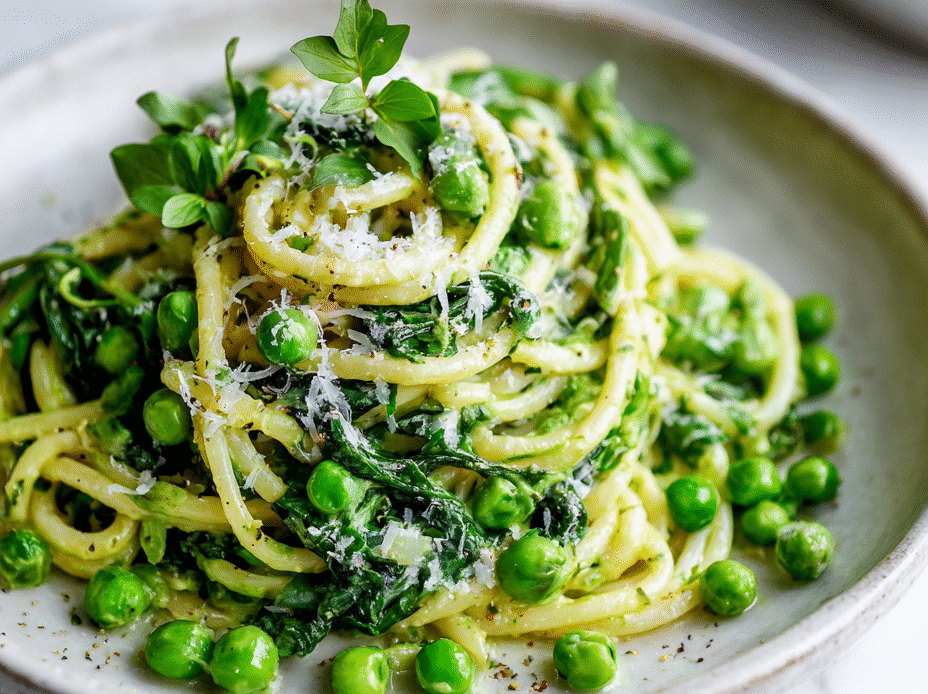
This pea and spinach pasta is my go-to for spring when the garden yields are bursting. I love how the sweetness of fresh peas plays against the earthy spinach, all wrapped up in a simple, honest dish. It’s not about fancy ingredients, just good greens and pasta, done right.
What keeps me coming back is how quick it is to make—perfect for weeknights when time feels tight but I still want something nourishing. The greens get tender and bright, and the whole thing somehow feels both light and filling, a real balance. It’s a reminder that good, fresh flavors don’t need fuss or heavy sauces.
I’ve tweaked this recipe over the years, trying to keep it straightforward but packed with flavor. It’s one of those dishes that feels like a small celebration—simple, fresh, and just a little bit special. When I serve it, I know I’ve got a meal that’s honest, satisfying, and bright as spring itself.
Focusing on the unexpected richness of combining fresh peas and spinach in a simple pasta dish, this recipe explores how the subtle sweetness and earthy tones of these greens can be elevated with minimal ingredients, creating a vibrant, comforting meal that celebrates spring harvests.
The story behind this recipe
- This recipe was born from a lazy Sunday afternoon when I rummaged through my fridge and found a bag of fresh peas and a bunch of spinach that needed using up. I wanted something quick, vibrant, and comforting, without turning on the stove for ages. The combination of sweet peas and earthy spinach felt like a little spring burst in every bite, even if it was midwinter.
- I remember the first time I made it, I was surprised how the greens brightened the pasta so effortlessly. It’s one of those dishes that’s simple but feels special because of the freshness. Over the years, I’ve tweaked it—less garlic, more lemon, a splash of pasta water—and it’s still a favorite when I need a quick, honest meal.
- heading
- story_type
Key ingredients’ secrets
- Fresh peas: I love how their sweet, slightly grassy pop awakens the dish; if you’re out of fresh, frozen works fine, just taste the sweetness as you cook.
- Spinach: I prefer baby spinach for tenderness and milder flavor; if you use mature leaves, give them a quick chop and a longer wilt to avoid bitterness.
- Pasta: I usually go for spaghetti or linguine—long and thin. If you only have penne, it still works, but the sauce clings differently, more coating than glaze.
- Garlic: I smash and lightly sauté it till fragrant—about 30 seconds—watch for that golden hue. Skip if you’re sensitive or want a milder flavor.
- Lemon: Brightens everything with a zesty punch, especially when added right before serving—look for a firm, heavy lemon for maximum juice.
- Olive oil: Use a good extra virgin—its grassy, peppery notes really lift the greens. If you only have light oil, add a squeeze of lemon for extra zing.
- Salt & pepper: I season generously, tasting as I go. The salt helps the greens pop, and freshly cracked pepper adds a subtle heat that balances the sweetness.
Spotlight on key ingredients
Peas:
- Fresh peas: I love how their sweet, slightly grassy pop awakens the dish; if you’re out of fresh, frozen works fine, just taste the sweetness as you cook.
- Spinach: I prefer baby spinach for tenderness and milder flavor; if you use mature leaves, give them a quick chop and a longer wilt to avoid bitterness.
Spinach:
- I prefer baby spinach for tenderness and milder flavor; if you use mature leaves, give them a quick chop and a longer wilt to avoid bitterness.
- Peas: I love how their sweet, slightly grassy pop awakens the dish; if you’re out of fresh, frozen works fine, just taste the sweetness as you cook.
Notes for ingredient swaps
- Fresh peas: I love their sweet, slightly grassy pop; if out of season, frozen peas work just as well, just taste for sweetness during cooking.
- Spinach: Baby spinach is tender and mild, but if you prefer more bite, use mature leaves and give them a quick chop and longer wilt.
- Pasta: Long, thin varieties like spaghetti or linguine are ideal, but penne or fusilli can hold the sauce differently—more coating, less glaze.
- Garlic: I sauté until fragrant, about 30 seconds, until golden but not burnt; if you’re garlic-sensitive, skip or reduce the amount.
- Lemon: Brightens the dish with a zesty punch; use a firm lemon with heavy feel for maximum juice and aroma.
- Olive oil: I prefer a good extra virgin for its grassy, peppery notes; lighter oils can be used, but add a splash of lemon for extra brightness.
- Salt & pepper: Season generously, tasting as you go; freshly cracked pepper adds just the right subtle heat to balance the greens.
Equipment & Tools
- Large pot: For boiling pasta evenly.
- Large skillet: For sautéing greens and combining ingredients.
- Strainer: To drain pasta efficiently.
- Tongs or pasta fork: To toss and combine pasta with greens.
- Measuring spoons: For lemon juice and seasoning.
Step-by-step guide to pea and spinach pasta
- Bring a large pot of salted water to a rolling boil, about 4 liters (1 gallon), and cook the pasta until al dente, around 8-10 minutes. Save a cup of pasta water before draining.
- While pasta cooks, heat a generous tablespoon of olive oil in a large skillet over medium heat, about 160°C (320°F). Add 2 minced garlic cloves and sauté until fragrant, 30 seconds. Beware of burning, reduce heat if garlic browns too quickly.
- Add 1 cup fresh peas to the skillet, cook for 2-3 minutes until they start to pop and turn tender. If using frozen peas, toss them in directly from the freezer and cook until heated through, about 2 minutes.
- Stir in 3 cups fresh spinach, cook for 1-2 minutes until wilted and vibrant green. If using mature spinach, chop roughly and cook a bit longer until tender and bright.
- Drain the pasta, then add it to the skillet with peas and spinach. Toss well to coat, adding reserved pasta water a few tablespoons at a time until sauce is silky and clings to the noodles. Cook together for 1 minute, so flavors meld.
- Finish with a squeeze of lemon juice, about 1 tablespoon, and a drizzle of olive oil. Toss again, season with salt and freshly cracked pepper to taste. The pasta should shimmer and smell bright, with greens tender but not mushy.
- Remove from heat. Let sit for 1-2 minutes, then serve immediately. Garnish with grated Parmesan or a sprinkle of chili flakes if desired. The dish should be warm, bright, and slightly saucy, with peas bursting and greens tender.
Serve immediately while warm. Finish with a drizzle of oil and lemon, garnish as desired. If not eating right away, keep warm covered, but avoid overcooking greens.
How to Know It’s Done
- Pasta is al dente, with a slight bite when bitten.
- Greens are tender but still vibrant green and not mushy.
- Sauce is silky and coats the noodles evenly, not watery or clumpy.
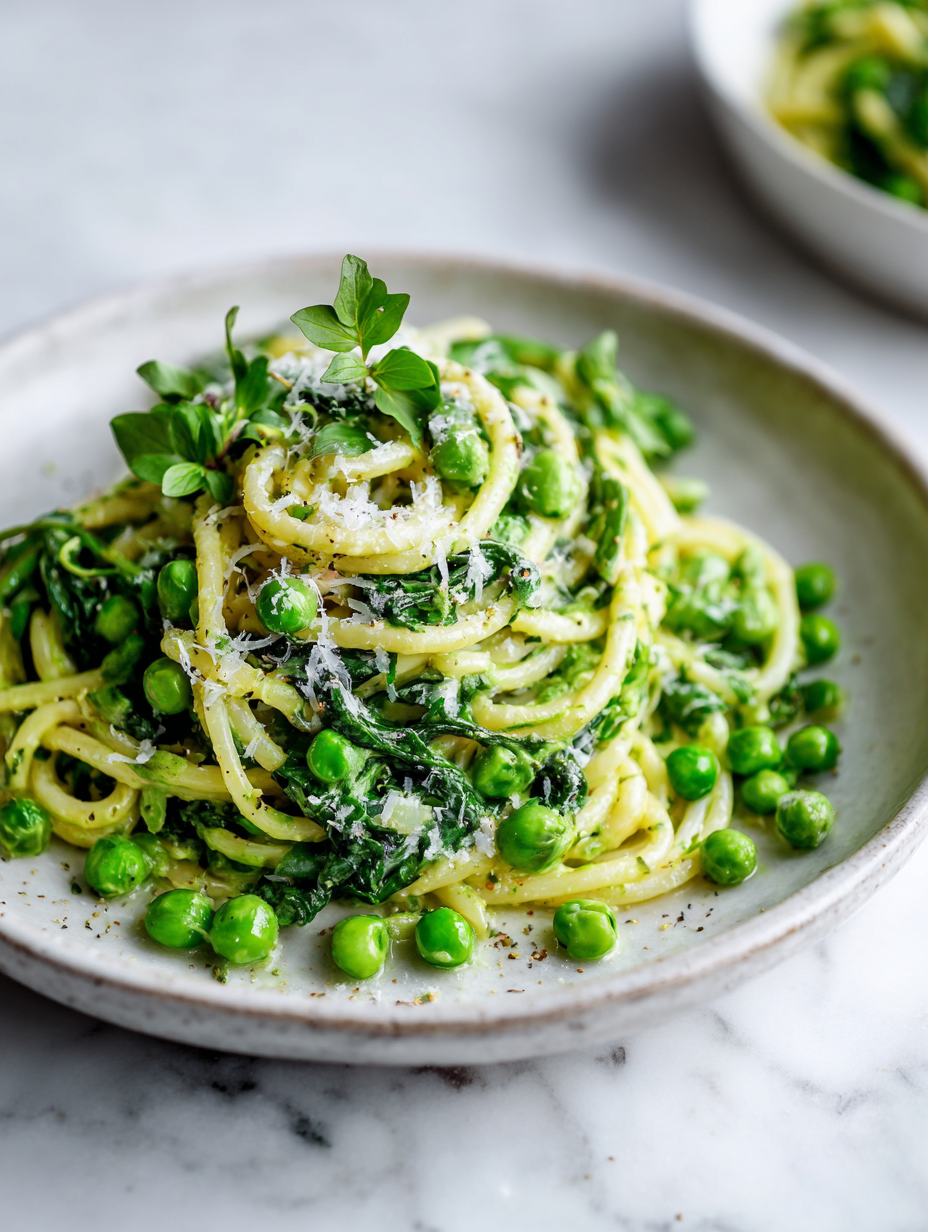
Spring Pea and Spinach Pasta
Ingredients
Equipment
Method
- Bring a large pot of salted water to a rolling boil. Add the pasta and cook until al dente, about 8-10 minutes, then reserve a cup of pasta water and drain the rest.
- While the pasta cooks, heat 2 tablespoons of olive oil in a large skillet over medium heat until shimmering. Add the minced garlic and sauté for about 30 seconds until fragrant and golden, being careful not to burn it.
- Add the fresh peas to the skillet and cook for 2-3 minutes until they start to pop and become tender. If using frozen peas, toss them in directly from the freezer and cook until heated through, about 2 minutes.
- Stir in the chopped spinach and cook for another 1-2 minutes until wilted and bright green. If using mature spinach, chop it roughly beforehand and cook a little longer until tender.
- Add the drained pasta to the skillet with the greens and peas. Toss everything together, adding a splash of the reserved pasta water gradually to create a silky, coating sauce. Cook together for about 1 minute to meld the flavors.
- Remove the skillet from heat and squeeze in the lemon juice. Drizzle with the remaining tablespoon of olive oil, then toss again to distribute evenly. Season generously with salt and freshly cracked pepper to taste.
- Serve immediately, garnished with extra lemon or grated cheese if desired. The pasta should be warm, bright, and coated with a light, flavorful sauce with peas bursting and greens tender but vibrant.
Pro tips for vibrant greens
- Bolded mini-head: Use the pasta water → Add starchy water gradually for a silky sauce that clings.
- Bolded mini-head: Sauté garlic carefully → 30 seconds over medium heat until fragrant, avoid browning for sweetness.
- Bolded mini-head: Toss greens last → Add spinach and peas at the end to keep their vibrant color and fresh flavor.
- Bolded mini-head: Taste seasoning early → Adjust salt and lemon juice before serving to balance the greens’ earthiness.
- Bolded mini-head: Use a large skillet → To fit all ingredients comfortably, ensuring even cooking and tossing.
- Bolded mini-head: Watch pasta doneness → Check for al dente, slightly firm to bite, about 8-10 minutes boiling.
- Bolded mini-head: Finish with lemon → Brighten the dish right before serving to enhance freshness and contrast.
Common mistakes and how to fix them
- FORGOT to drain pasta thoroughly → Drain completely to prevent sogginess.
- DUMPED greens into hot oil → Add greens gradually to avoid splatter and uneven wilt.
- OVER-TORCHED garlic → Sauté over medium heat, 30 seconds, until fragrant, not browned.
- MISSED tasting for seasoning → Taste and adjust salt and pepper before serving for balance.
Quick fixes and pantry swaps
- If sauce is too thick, splash in hot pasta water and stir until silky.
- When greens are wilted but dull, add a squeeze of lemon for vibrancy.
- Splash olive oil if pasta clumps or feels dry on serving.
- Patch overcooked peas by stirring in fresh ones to revive sweetness.
- Shield burnt garlic by removing pan from heat immediately, then add more oil.
Prep, store, and reheat tips
- Prepare and blanch the peas and spinach ahead of time; store separately in airtight containers for up to 2 days, keeping greens vibrant and peas sweet.
- Cook the pasta until just al dente, then drain and toss with a teaspoon of olive oil; keep in a sealed container for up to 24 hours for quick assembly.
- Reheat cooked greens briefly in a hot skillet or microwave, just until warmed and slightly tender, to preserve their fresh color and flavor.
- When ready to serve, toss pasta with greens and peas, adding a splash of hot pasta water or olive oil to refresh the sauce and rehydrate the greens if needed.
Top questions about pea and spinach pasta
1. How do fresh peas differ from frozen in this dish?
Fresh peas have a sweet, grassy flavor and a slightly firm texture that pops in every bite. Frozen peas are a good substitute, just taste for sweetness as they cook to ensure they retain some of that freshness.
2. Should I use baby or mature spinach?
Baby spinach wilts quickly and has a milder, tender flavor, perfect for a quick toss. Mature spinach is sturdier, so chop it up and cook a bit longer to avoid bitterness.
3. Can I use different pasta shapes?
Long pasta like spaghetti or linguine helps coat the greens nicely. If you use penne, the sauce clings more like a coating rather than a glaze, but it still works.
4. How do I avoid burning the garlic?
Add garlic until fragrant, about 30 seconds over medium heat. It should turn golden, not brown or burnt, to keep that sweet, aromatic flavor.
5. When should I add lemon juice?
A squeeze of lemon brightens the dish immediately before serving, adding a zesty, fresh flavor that balances the greens’ earthiness.
6. Can I substitute olive oil?
Use a good quality extra virgin olive oil for its grassy, peppery notes that enhance the greens. If you only have lighter oil, add extra lemon for brightness.
7. How much salt and pepper should I add?
Season generously with salt and freshly cracked pepper, tasting as you go. Proper seasoning makes the greens and peas pop with flavor.
8. How do I store leftovers?
To prevent sogginess, drain the pasta thoroughly and toss with a little oil if not using immediately. Reheat greens briefly on medium heat, just until warmed and vibrant.
9. My sauce is too thick, what now?
If the sauce thickens too much, splash in some hot pasta water and stir until it’s silky again. This also helps loosen the greens for a fresher look.
10. How do I fix dull greens?
If greens look dull, add a squeeze of lemon or a drizzle of oil to revive their color and flavor just before serving.
Cooking this pea and spinach pasta feels like a small act of spring. It’s simple, honest, and somehow makes me feel connected to the season’s burst of green and sweetness. When I make it, I remember that good things often come from just a handful of fresh ingredients and a bit of gentle heat.
It’s not fancy, but it’s honest, quick, and full of flavor—perfect for those nights when I want something nourishing without fuss. Sharing it with someone I love or just enjoying it solo always leaves me with a little warmth, knowing I’ve kept it real and tasty.

Hi, I’m Jonny Andrew Miller, the cook, taster, and slightly messy mind behind Bite & Boom. I live in Austin, Texas, a city that smells like barbecue smoke, fresh tortillas, and late-night tacos if you wander long enough. It suits me.