

Making a peach galette is about handling that sticky, slightly messy dough with your hands, pressing it into a rough circle that’s not perfect but honest. You’ll fold the edges over the juicy peach slices, creating a rustic, craggy border that catches drips and spills with each bake.
As it bakes, the crust puffs up in spots, turning golden and flaky, while the fruit beneath oozes syrupy juice that bubbles over the edges. The whole process feels tactile, a little messy, but satisfying as you watch it come together in the oven.
The satisfying crunch of the flaky crust giving way to the tender, juicy peach filling with each bite.
What goes into this dish
- All-purpose flour: I stick with good old plain flour for the crust—if you want a richer flavor, swap in pastry flour or add a touch of almond meal. Keeps things flaky and tender without fuss.
- Cold unsalted butter: I cut it into small cubes and freeze briefly before mixing—cold butter creates those flaky layers. Skip this step and you’ll end up with a dough that’s more biscuit than crust.
- Ice water: Splash in just enough to bring the dough together—too much and it gets tough, too little and it cracks during rolling. You want it just moist enough to hold when pressed.
- Peaches: I prefer ripe, juicy peaches—think scent of summer, sweet and slightly fragrant. If not in season, frozen peaches work, but drain off excess juice first, or you’ll get a soggy crust.
- Sugar: Usually granulated, but a sprinkle of brown sugar gives a deeper caramel note. Adjust to taste if your peaches are super sweet or tart—balance is key to that oozy filling.
- Egg wash: Just one beaten egg brushed over the crust before baking helps it turn a shiny, golden brown. If avoiding eggs, a touch of milk or cream works, but the shine isn’t quite the same.
- Optional: A pinch of cinnamon or vanilla—adds warmth, but skip if you want pure peach flavor. Use sparingly, as too much can drown out the fruit’s brightness.
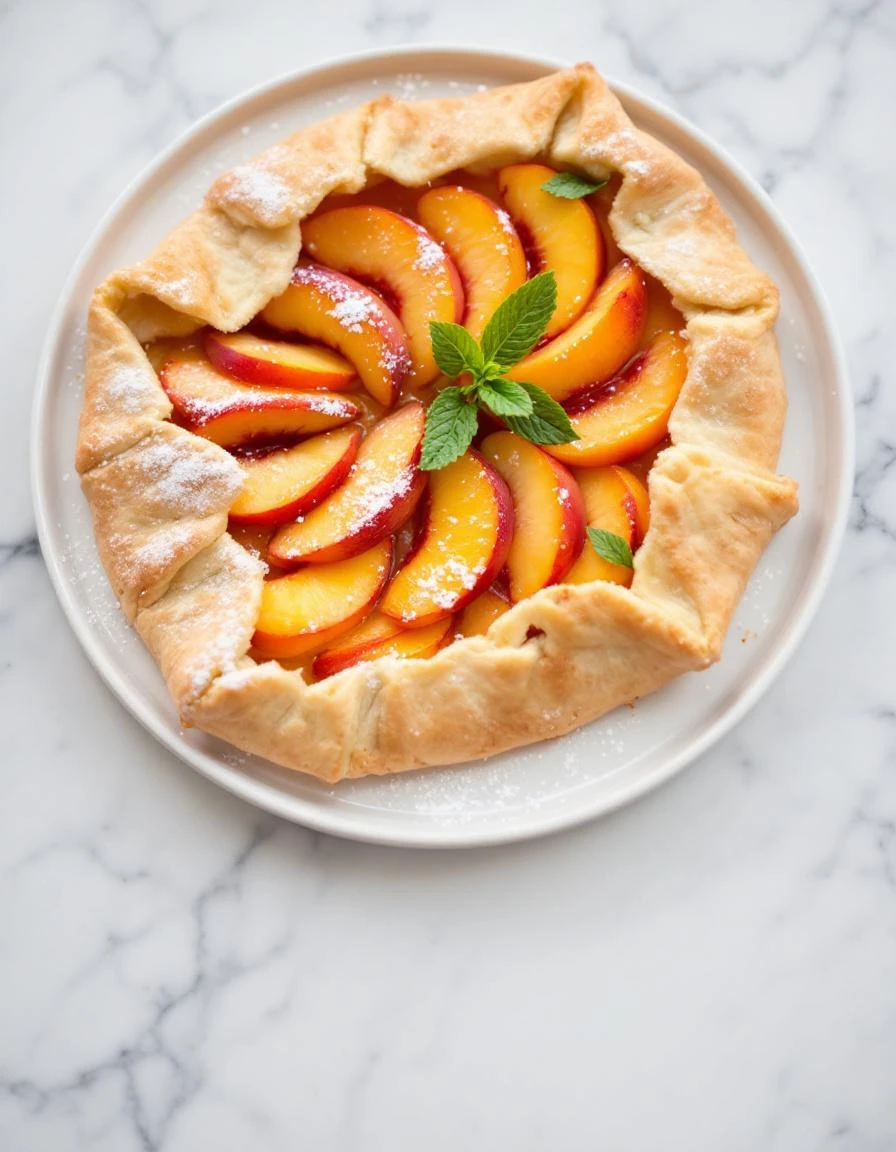
Peach Galette
Ingredients
Equipment
Method
- In a mixing bowl, combine the all-purpose flour and a pinch of salt, then add the cold, cubed butter. Use your fingertips or a pastry cutter to work the butter into the flour until the mixture resembles coarse crumbs with pea-sized pieces.
- Sprinkle ice water, one tablespoon at a time, over the mixture, gently mixing with a fork or your hands after each addition. When the dough begins to come together, press it into a rough ball, being careful not to overmix. Wrap in plastic and chill in the fridge for at least 30 minutes.
- While the dough chills, prepare the peach slices by washing, pitting, and slicing them thin. Toss the slices with sugar, cinnamon, and vanilla extract if using, then set aside to macerate slightly.
- Preheat your oven to 400°F (200°C). Remove the dough from the fridge and let it sit for a few minutes to relax. On a lightly floured surface, roll the dough into a rough 12-inch circle, about 1/8-inch thick.
- Transfer the rolled dough to a parchment-lined baking sheet. Arrange the sliced peaches in the center, leaving about a 2-inch border around the edges. Fold the edges of the dough over the fruit, pleating slightly to create a rustic border, and pinch to seal.
- Brush the crust with the beaten egg to give it a shiny, golden finish. Place the galette in the oven and bake for about 40 minutes, or until the crust turns deep golden and the filling is bubbling at the edges.
- Once baked, remove the galette from the oven and let it cool for a few minutes. The crust should be flaky and crisp, with a fragrant, caramelized glaze, and the peaches beneath will be juicy and bubbling.
- Slice and serve the peach galette warm or at room temperature, enjoying the contrast of flaky crust and tender, syrupy fruit with each bite.
Common Mistakes and How to Fix Them
- FORGOT to chill the butter, resulting in a less flaky crust. FIX by keeping it cold.
- DUMPED too much water into the dough, making it tough. FIX by adding water gradually.
- OVER-TORCHED the crust, turning it dark and bitter. FIX by watching closely in the oven.
- MISSED sealing the edges tightly, causing juices to leak out. FIX by pinching edges firmly.
Make-Ahead and Storage Tips
- Peach slices can be prepared a day ahead, kept in an airtight container in the fridge—they stay juicy but may darken slightly.
- Dough can be made up to 2 days in advance, wrapped tightly in plastic, stored in the fridge—bring to cool room temperature before rolling.
- Freeze assembled galette before baking for up to a month; bake straight from frozen, adding a few extra minutes.
- The baked galette tastes best within a day, but can be stored covered at room temp for up to 2 days—crust softens over time.
- Reheat slices in a 350°F oven until the crust feels crisp again, about 10 minutes—use sensory cues like the smell of toasted pastry.
FAQs
1. Should I serve it warm or cold?
Peach galette can be warm or at room temperature. The crust remains flaky, and the juicy fruit is best experienced with a slight chew and a burst of sweet, fragrant juice.
2. What peaches work best?
Use ripe peaches for flavor and juiciness. If they’re underripe, the filling will be tart and less oozy, but still tasty.
3. How do I know when it’s done?
Keep an eye on the crust, especially near the edges. It should turn golden and smell toasty, not burnt or bitter.
4. What if the crust darkens too quickly?
If the edges brown too fast, cover them with foil during baking. This keeps the crust from over-darkening while the filling finishes bubbling.
5. How do I store leftovers?
Store leftovers in a loosely covered container at room temp for a day or two. For longer, refrigerate and reheat in the oven until the crust crisps again and smells warm.

Hi, I’m Jonny Andrew Miller, the cook, taster, and slightly messy mind behind Bite & Boom. I live in Austin, Texas, a city that smells like barbecue smoke, fresh tortillas, and late-night tacos if you wander long enough. It suits me.