
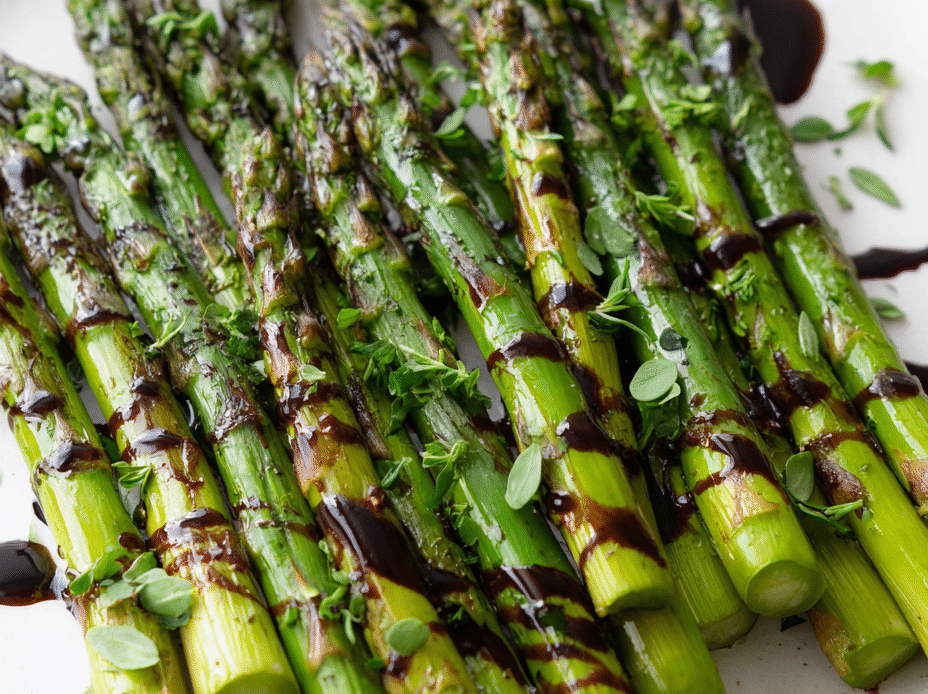
Sometimes, the simplest vegetables can shine brightest with just a little help from a good glaze. Roasted asparagus, with its tender stalks and slightly caramelized tips, becomes something truly special when topped with a thick, sweet-tangy balsamic reduction. It’s one of those dishes that feels fancy but is dead easy to throw together after a busy day.
The magic happens in that moment when the asparagus hits the oven and you start to smell that earthy, roasted aroma, mingling with a hint of smoky sweetness from the balsamic. It’s a reminder that a few good ingredients—nothing fancy—can come together to make something that’s both comforting and a little bit elegant. Plus, it’s perfect as a quick side or a light vegetarian main when you want something straightforward but impressive.
Focusing on how the sweet tang of balsamic glaze can elevate humble roasted asparagus into a dish that feels both indulgent and simple, perfect for those nights when you want comfort with a touch of elegance.
The story behind this recipe
This recipe came from a lazy Sunday afternoon craving something bright and satisfying without much fuss. I remembered how my grandmother used to cook simple vegetables with a splash of good vinegar, and I wanted to recreate that feeling, but with a touch of modern elegance. Roasting the asparagus feels like giving it a little time to develop deep, nutty flavors while keeping its fresh bite. The balsamic glaze, thick and glossy, was my cheat to add a sweet, tangy punch that turns everyday greens into something special. It’s the kind of dish that’s been sitting in my kitchen for years, waiting for the right moment to be appreciated.
Ingredient breakdown
- Asparagus: I love picking firm, bright green spears that snap easily when bent. You want that fresh, grassy aroma during roasting—skip any limp or dull ones.
- Balsamic vinegar: The good stuff is thick and sweet, almost syrupy. It should smell rich and tangy—less bitter, more jammy. Use a quality balsamic for that glossy glaze.
- Olive oil: I drizzle enough to coat evenly without drowning the spears. Look for a fruity, slightly peppery oil—skip overly processed or bland varieties.
- Salt: I prefer flaky sea salt for that crunch and burst of flavor. Just a pinch enhances the natural sweetness of the asparagus and balances the acidity.
- Optional additions: A sprinkle of crushed red pepper or a handful of toasted pine nuts can elevate the dish. Keep it simple, but don’t be afraid to add a little extra kick or crunch.
Spotlight on key ingredients
Asparagus:
- I look for firm, bright green stalks that snap when bent. They should smell fresh and grassy, not dull or limp.
- Balsamic vinegar: The good stuff is thick, sweet, and aromatic—almost jammy. It should smell rich and tangy, not sour or overly sharp.
Balsamic glaze:
- Balsamic vinegar: The syrupy, glossy reduction brings a sweet-tangy punch that transforms the dish. Use quality vinegar for best flavor and sheen.
- Olive oil: I prefer a fruity, peppery variety that coats evenly and helps the asparagus roast to a tender, caramelized finish.
Ingredient substitutions
- Dairy-Free: Skip butter or creamy toppings—this dish shines without dairy, letting the balsamic and asparagus shine through.
- Vinegar Alternatives: Use sherry vinegar or apple cider vinegar if balsamic isn’t available—these add acidity but lack the sweet jammy note.
- Oil Choices: Swap olive oil for avocado or grapeseed oil—both have high smoke points and neutral flavors, perfect for roasting.
- Salt Variations: Use kosher salt or Himalayan pink salt—each adds a different texture and mineral note, but flaky sea salt keeps it classic.
- Add-ins: Try a squeeze of lemon juice or a handful of chopped herbs after roasting—brighten flavors without altering the core dish.
- Sweetener: Drizzle with a touch of honey or maple syrup instead of balsamic glaze for a different sweet-tangy profile.
- Herb Garnish: Finish with fresh thyme or basil—these add freshness and aroma, contrasting the deep sweetness of the glaze.
Equipment & Tools
- Baking sheet: To roast the asparagus evenly in the oven.
- Parchment paper: For easy cleanup and prevent sticking.
- Small saucepan: To reduce the balsamic vinegar into a glaze.
- Tongs or a spatula: To toss the asparagus for even oil coverage.
- Serving platter: To present the finished dish attractively.
Step-by-step roasting with glaze
- Preheat your oven to 220°C (425°F). Line a baking sheet with parchment paper for easy cleanup.
- Trim the woody ends off the asparagus—about 1-2 inches from the bottom. Toss the spears with 1-2 tbsp olive oil, ensuring even coating.
- Spread the asparagus in a single layer on the baking sheet. Sprinkle with flaky sea salt for flavor.
- Roast in the oven for 12-15 minutes. Check for a vibrant green color and slightly caramelized tips; they should be tender but still have a bite.
- While roasting, pour 1/2 cup balsamic vinegar into a small saucepan. Bring to a simmer over medium heat and cook until reduced by half, about 8-10 minutes. It should turn into a thick, glossy glaze with a sweet-tangy aroma.
- Remove the asparagus from the oven. Place on a serving platter and drizzle generously with the balsamic glaze while still warm.
- Optional: add a few toasted pine nuts or a sprinkle of red pepper flakes for extra texture and heat. Serve immediately.
Serve the asparagus immediately while warm, drizzled with balsamic glaze. Let it rest for a minute to settle flavors before plating for the best presentation and taste.
How to Know It’s Done
- Asparagus tips are golden and slightly caramelized, not burnt.
- Balsamic reduction coats the back of a spoon with a syrupy consistency.
- Spears are tender when pierced with a fork but hold their shape.
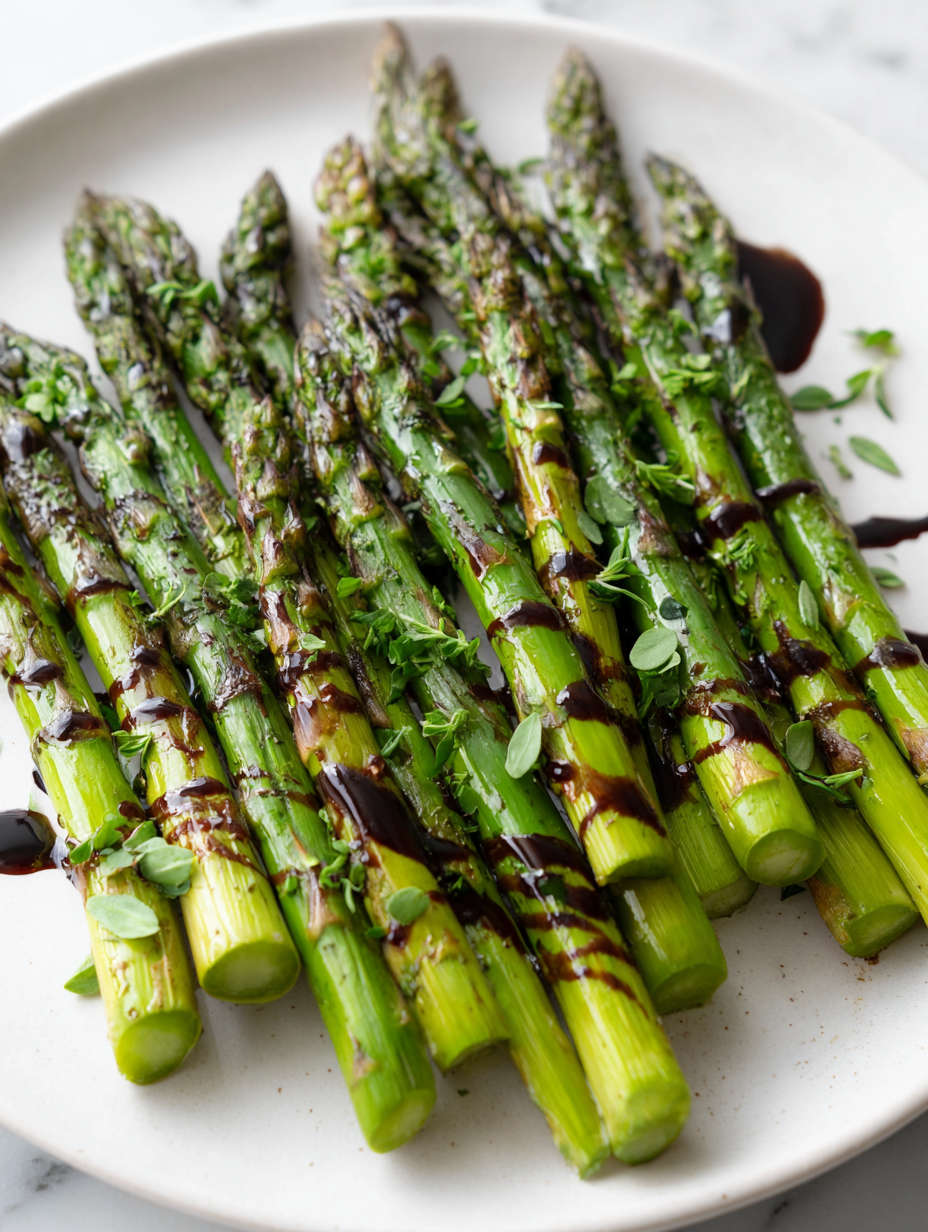
Roasted Asparagus with Balsamic Glaze
Ingredients
Equipment
Method
- Preheat your oven to 220°C (425°F). Line a baking sheet with parchment paper for easy cleanup.
- Trim the woody ends off the asparagus, about 1-2 inches from the bottom. Place the spears in a bowl and toss them with olive oil until evenly coated.
- Spread the coated asparagus in a single layer on the prepared baking sheet. Sprinkle lightly with flaky sea salt for flavor.
- Roast in the oven for 12-15 minutes, until the asparagus turns vibrant green with slightly caramelized tips and is tender when pierced with a fork.
- Meanwhile, pour the balsamic vinegar into a small saucepan and bring to a simmer over medium heat. Cook until it reduces by half, about 8-10 minutes, until it thickens to a syrupy consistency and smells rich and tangy.
- Remove the saucepan from heat and set aside. Once the asparagus is roasted, transfer it to a serving platter.
- Drizzle the warm balsamic glaze generously over the roasted asparagus, allowing it to coat each spear with a glossy, sweet-tangy finish.
- If desired, sprinkle with toasted pine nuts or red pepper flakes for extra crunch and heat. Serve immediately while warm and flavorful.
Notes
Tips and Tricks for Perfect Glazed Asparagus
- Bolded Mini-Head: Use high heat for roasting to get quick caramelization and a smoky edge.
- Bolded Mini-Head: Toss asparagus thoroughly with oil—this ensures even roasting and prevents drying out.
- Bolded Mini-Head: Watch the balsamic reduction closely—it’s ready when it coats the back of a spoon and shimmers.
- Bolded Mini-Head: For crisp tips, spread spears in a single layer; overcrowding causes steaming instead of roasting.
- Bolded Mini-Head: When drizzling glaze, do it while the asparagus is still warm—this helps it soak in and cling better.
- Bolded Mini-Head: If the balsamic glaze gets too thick, add a splash of warm water and stir to loosen.
Common mistakes and how to fix them
- FORGOT to watch the balsamic reduction → It burns quickly; stir constantly and reduce heat if needed.
- DUMPED too much oil on asparagus → Use just enough to lightly coat, avoiding soggy spears.
- OVER-TORCHED the asparagus → Roast until vibrant green and slightly caramelized, not charred or blackened.
- MISSED the resting step → Let the dish sit for a minute to settle flavors and prevent burns.
Quick fixes and pantry swaps
- If balsamic glaze is too thick, splash warm water and stir gently.
- When asparagus is limp, toss in a hot skillet briefly to revive crispness.
- Splash lemon juice if the glaze tastes flat or dulls the sweetness.
- Patch burnt balsamic by quickly adding a new drizzle—use a fresh batch for best shine.
- Shield asparagus tips with foil if they start to char before the stalks are tender.
Prep, store, and reheat tips
- Can be prepped up to a day in advance—trim and refrigerate the asparagus in a sealed container. The flavor stays fresh and bright.
- Store the roasted asparagus in an airtight container in the fridge for up to 24 hours. It will lose some of its crispness, but the flavors still shine.
- Prepare the balsamic glaze ahead of time and keep it in a jar at room temperature; it thickens slightly but remains pourable.
- Reheat gently in a hot skillet for a minute or two to revive some of the roasted aroma and warmth. Watch for sogginess, which can develop if overdone.
- For best sensory experience, serve the reheated asparagus immediately, as it may lose some of its vibrancy and crunch after storage.
Frequently Asked Questions
1. How do I pick good asparagus?
Look for bright green spears that are firm and snap easily when bent. Dull, limp ones won’t roast well.
2. What kind of balsamic vinegar should I buy?
Use a thick, syrupy balsamic vinegar for a rich, sweet glaze. Cheaper versions are often more sour and less glossy.
3. How long should I roast the asparagus?
Roast the asparagus until they are vibrant green with slightly caramelized tips, about 12-15 minutes at 425°F (220°C).
4. How do I make the balsamic glaze?
Reduce the balsamic vinegar until it thickens and coats the back of a spoon, about 8-10 minutes over medium heat.
5. What if the balsamic glaze is too thick?
If the glaze gets too thick, add a splash of warm water and stir until it loosens up.
6. Can I make the glaze in advance?
Yes, you can prepare the balsamic reduction ahead and store it in a jar at room temperature for up to a week.
7. How do I keep the asparagus from steaming?
Roast the asparagus on a single layer to ensure even cooking and caramelization. Overcrowding causes steaming, not roasting.
8. How should I reheat leftovers?
Serve immediately while warm. If reheating, do it gently to preserve texture and flavor, about 1-2 minutes in a hot skillet.
9. How can I add more texture?
For extra crunch, sprinkle toasted pine nuts or a pinch of flaky sea salt just before serving.
10. What if the asparagus burns?
If you notice burnt spots, quickly drizzle with fresh balsamic glaze and serve immediately to mask the burn.
This dish feels like a little celebration of the everyday. The sweet tang of balsamic glaze paired with tender roasted asparagus somehow makes the simplest ingredients feel special. It’s one of those recipes I keep coming back to, especially in spring when asparagus is at its peak.
Cooking it always reminds me how a tiny bit of effort—just roasting and a quick glaze—can turn a routine veggie into something memorable. No fuss, just flavor, and that’s sometimes all you need to make your day a little brighter.

Hi, I’m Jonny Andrew Miller, the cook, taster, and slightly messy mind behind Bite & Boom. I live in Austin, Texas, a city that smells like barbecue smoke, fresh tortillas, and late-night tacos if you wander long enough. It suits me.