
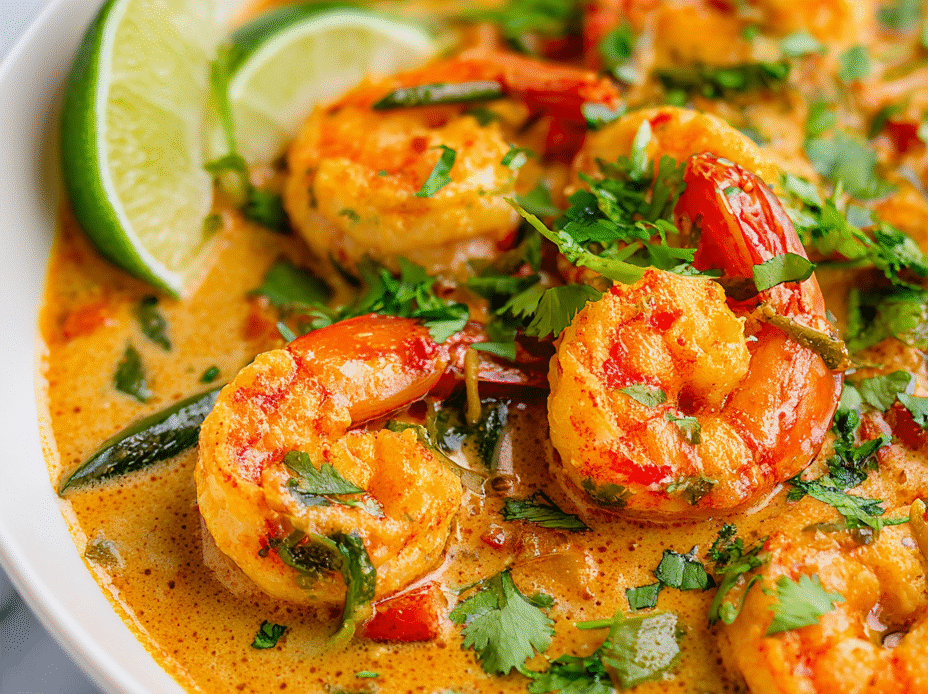
There’s something about the way the silky coconut sauce coats every piece of shrimp that keeps me coming back. It’s a contrast I crave—the tender, juicy shrimp and the rich, fragrant sauce playing off each other in every bite. It’s a simple dish, but the textures and temperatures make it feel special every time I make it.
This recipe started as a quick weeknight fix, but it’s become one of those meals that feels like a little celebration. The way the warm, spicy sauce mingles with the coolness of fresh herbs is addictive. It’s comfort food with a punch of brightness that lifts your whole evening.
Focusing on the sensory contrast between the silky coconut sauce and the tender, juicy shrimp, this recipe emphasizes how texture and temperature play off each other in every bite.
The Texture Dance of Coconut and Shrimp
- That first spoonful, when the heat hits your tongue and the coconut’s sweetness balances the spice—nothing else compares.
- I remember the chaos of trying to peel shrimp quickly, but it’s all worth it when the aroma of garlic and curry fills the kitchen.
- There’s a quiet pride in making this dish after a long day, the way the flavors come together so effortlessly.
- Every time I cook this, I feel a rush of nostalgia for summer nights and tropical breezes, even if I’m just in my apartment.
- The silky sauce on my fingertips, the zing of lime, and the tender shrimp—those moments remind me why I love cooking comfort food.
The Inspiration Behind This Curry
- I first stumbled upon this curry during a lazy afternoon in a small seaside town. The aroma of toasted spices and sweet coconut wafted through the open-air market, pulling me in. That moment, I realized how a simple combination could evoke a sense of escape, even if just for dinner.
- This dish became a way to bring a little tropical warmth into my kitchen, especially on cold, gray days. It’s a reminder that a handful of ingredients—shrimp, coconut, spices—can transform into something both comforting and vibrant. Every time I make it, I feel like I’m recreating that spontaneous burst of joy from the market.
- heading: ‘The Inspiration Behind This Curry’
Historical & Cultural Roots
- This curry style draws from Southeast Asian coastal communities where coconut milk and fresh seafood are staples, blending local flavors with colonial spice influences.
- Historically, coconut milk was a precious ingredient in many tropical regions, often reserved for special dishes like this shrimp curry, symbolizing celebration and abundance.
- The use of shrimp in curries dates back centuries, with regional variations across Thailand, Malaysia, and Indonesia, each adding their own spice blends and techniques.
- In some versions, this dish was traditionally cooked over open fires with ingredients gathered fresh from local markets, giving it an authentic smoky undertone.
- Today, the dish has become a comfort-food favorite worldwide, often adapted with supermarket ingredients but still rooted in its vibrant, tropical origins.
Ingredient breakdown: key components
- Shrimp: I like mine peeled and deveined for a quick cook and tender bite—look for pink and firm, then sauté until they turn opaque and slightly golden, like tiny sunsets in your pan.
- Coconut milk: It’s the velvety backbone of this curry, bringing richness and a gentle sweetness—shake the can well before opening, and choose full-fat for that luscious texture and coconut aroma.
- Red curry paste: This is your punch of spice and depth—smell it first; it should be fragrant and fiery, not dull or stale. Adjust the amount based on your heat preference, but don’t skip the sauté step to bloom the flavors.
- Lime juice: Brightens everything with a zing—use fresh lime for that sharp, citrusy burst. Add just before serving to keep the vibrant freshness alive, and don’t skimp on this punch of acidity.
- Fresh herbs: Cilantro and Thai basil make it lively—chop just before adding to preserve their aroma. Feel free to toss in a few mint leaves if you want an extra herbal lift that complements the coconut’s sweetness.
- Garlic and ginger: The duo that makes your kitchen smell like a spicy paradise—finely mince and sauté until fragrant, about 30 seconds, until you hear that gentle crackle, but avoid burning to keep it sweet and pungent.
- Oil: Use a neutral oil like vegetable or coconut for cooking—warm it in your pan until shimmering, then start your aromatics. It’s the silent carrier that helps everything meld smoothly.
Spotlight on key ingredients
Shrimp:
- I prefer mine peeled and deveined—quick to cook, tender, and sweet with a slight bounce. They turn opaque and pink in about 3-4 minutes, like tiny, succulent clouds in your pan.
- Coconut milk: It’s the velvety heart of this dish, bringing richness and a gentle sweetness. Shake the can well before opening—look for full-fat for that lush, creamy texture and coconut aroma that hits your nose first.
Curry paste:
- Coconut milk: It’s the velvety heart of this dish, bringing richness and a gentle sweetness. Shake the can well before opening—look for full-fat for that lush, creamy texture and coconut aroma that hits your nose first.
- Red curry paste: This is where the flavor punch comes from—fragrant and fiery. Smell it first; it should be vibrant and spicy, not dull or stale. Sauté it to bloom the spices and deepen the flavor.
Notes for ingredient swaps
- Dairy-Free: Swap coconut milk for cashew cream or almond milk—less creamy, but still rich and nutty.
- Shrimp: Use scallops or firm white fish like cod or halibut—still seafood, but with a different texture and flavor.
- Sweetener: Replace honey with agave syrup or maple syrup—adjust sweetness to taste, keep the tropical vibe.
- Herbs: Fresh cilantro and basil can be swapped with mint or parsley—different herbal brightness, but fresh and vibrant.
- Heat: For milder curry, reduce or omit red curry paste; add a pinch of smoked paprika for depth without heat.
- Oil: Use avocado oil or light olive oil—neutral flavors, good heat tolerance, keep the sauce silky.
- Lime: Lemon juice works in a pinch—brighter, less floral, but still adds that necessary acidity and freshness.
Equipment & Tools
- Large skillet or wok: Cook the curry evenly and stir ingredients.
- Spatula: Stir and scrape ingredients during cooking.
- Measuring jug: Measure coconut milk accurately.
- Sharp knife: Prep garlic, ginger, shrimp.
Step-by-step guide to shrimp coconut curry
- Equipment & Tools: Gather a large skillet or wok (for even heat), a spatula (to stir), a measuring jug (for coconut milk), and a sharp knife (for prep).
- Heat your skillet over medium heat (about 160°C/320°F). Add 1 tbsp oil, swirl to coat, and let it shimmer.
- Add 2 cloves minced garlic and 1 tsp grated ginger. Sauté until fragrant, about 30 seconds. Watch for a fragrant crackle; if it burns, reduce heat.
- Stir in 2 tbsp red curry paste. Cook for 1-2 minutes until it darkens slightly and releases a spicy aroma. If it sticks or burns, lower heat and add a splash of water.
- Pour in 1 can (400ml) coconut milk. Stir well, scraping up any bits from the bottom. Bring to a gentle simmer, about 5 minutes, until slightly thickened and fragrant.
- Add 300g peeled, deveined shrimp. Stir to coat in the sauce. Cook for 3-4 minutes, flipping halfway, until shrimp turn opaque and pink with a slight golden edge.
- Check seasoning; add salt or fish sauce if needed. Squeeze in juice of 1 lime for brightness. Taste and adjust spice or acidity as desired.
- For finishing, stir in chopped cilantro and Thai basil (about 2 tbsp each). Let sit for 1 minute for herbs to release aroma.
- Rest for 2 minutes off heat. Serve hot, with steamed rice or crusty bread. Garnish with extra herbs if you like.
Let the curry sit for 2 minutes off heat to settle flavors. Serve hot, garnished with extra herbs. Pair with steamed rice or crusty bread for a complete meal.
How to Know It’s Done
- Shrimp: Opaque, pink, with a slight golden edge.
- Sauce: Creamy, fragrant, slightly thickened and bubbling gently.
- Aromatics: Fragrant garlic and ginger, with a spicy aroma from curry paste.
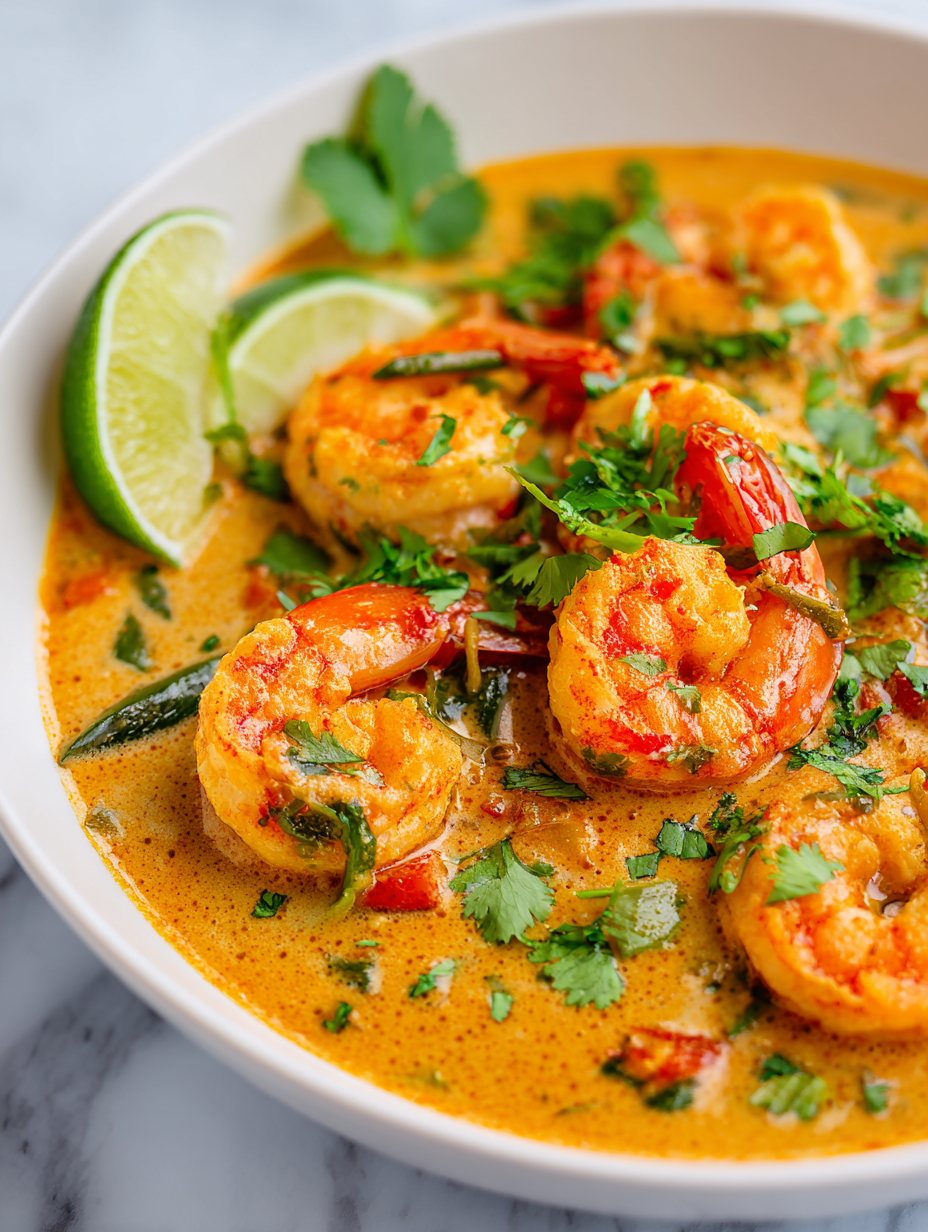
Shrimp Coconut Curry
Ingredients
Equipment
Method
- Gather all your ingredients: peeled shrimp, coconut milk, curry paste, garlic, ginger, lime, oil, and fresh herbs.
- Heat a large skillet or wok over medium heat and add the oil. Once shimmering, add the minced garlic and grated ginger, sautéing for about 30 seconds until fragrant and you hear a gentle crackle.
- Stir in the red curry paste and cook for 1-2 minutes, stirring constantly, until it darkens slightly and releases a fiery aroma that fills the kitchen.
- Pour in the coconut milk, scraping the bottom of the pan to loosen any browned bits. Bring the mixture to a gentle simmer and let it cook for about 5 minutes, allowing the sauce to thicken slightly and become fragrant.
- Add the peeled and deveined shrimp to the simmering sauce, stirring gently to coat. Cook for 3-4 minutes, flipping once, until they turn opaque, pink, and have a slight golden edge.
- Squeeze fresh lime juice into the curry, stirring to brighten the flavors. Taste the sauce and adjust seasoning with salt or more lime if needed.
- Remove the skillet from heat and stir in chopped cilantro and Thai basil, allowing their bright aromas to infuse the curry for about 1 minute.
- Serve the hot shrimp coconut curry immediately over steamed rice or with crusty bread, garnished with extra fresh herbs if desired.
Notes
Tips & Tricks for Perfect Curry
- Bolded mini-head: Bloom the curry paste → Sauté it until fragrant to unlock its full flavor and fiery depth.
- Bolded mini-head: Use full-fat coconut milk → Opt for full-fat to achieve that luscious, silky sauce that clings to every bite.
- Bolded mini-head: Handle shrimp properly → Cook just until pink and opaque to keep them tender and juicy, avoiding rubbery texture.
- Bolded mini-head: Adjust heat during simmering → Keep the sauce gentle, not boiling aggressively, to prevent curdling and develop rich flavor.
- Bolded mini-head: Finish with fresh herbs → Add chopped cilantro and basil at the last moment for bright, aromatic freshness that lifts the dish.
- Bolded mini-head: Balance acidity carefully → Squeeze fresh lime just before serving for a vibrant, zesty contrast to the rich coconut.
- Bolded mini-head: Tweak spice to taste → Start with less curry paste, taste, then add more if you want a spicier, more layered flavor.
Common mistakes and how to fix them
- FORGOT to adjust heat after adding coconut milk → Lower heat to prevent curdling.
- DUMPED too much curry paste at once → Add gradually for balanced spice and flavor.
- OVER-TORCHED shrimp → Remove immediately if they start turning hard or rubbery.
- MISSED to taste and adjust seasoning → Always taste before serving, adding lime or salt as needed.
Quick fixes and pantry swaps
- When sauce separates, splash in a little warm coconut milk to smooth it out.
- If shrimp are overcooked, quickly remove and add a splash of lime juice to brighten.
- Splash extra oil if curry paste sticks—helps release full flavor and prevent burning.
- Patch a too-spicy curry with a dollop of coconut cream or a squeeze of lime for balance.
- Shield delicate shrimp from over-torching by reducing heat immediately if they brown too fast.
Prep, store, and reheat tips
- Prep the shrimp: peel and devein up to a day in advance, keep covered in the fridge—shrimp stay fresh for 1-2 days, and the texture remains tender.
- Coconut milk: open the can, whisk well to blend the cream and liquid, then store in an airtight container in the fridge for up to 2 days—notice the slight aroma change, but the flavor stays lush.
- Sauce assembly: you can prepare the curry base (minus shrimp and herbs) a day ahead, refrigerate in a sealed container—expect flavors to deepen and meld overnight.
- Reheating: gently warm the curry in a skillet over low heat, stirring often—watch for separation; add a splash of water or coconut milk if it thickens too much, and check the aroma for fresh coconut and spices.
- Flavor note: the curry often tastes even better the next day, as spices and coconut meld into a richer, more complex sauce—just reheat carefully to preserve silkiness.
Top questions about shrimp coconut curry
1. Should I peel and devein the shrimp?
Peel and devein the shrimp for quicker cooking and better texture—look for pink, firm shrimp that turn opaque when done.
2. Can I use light coconut milk?
Use full-fat coconut milk for a richer, silkier sauce. Shake the can before opening to mix the cream and liquid.
3. How do I know when the shrimp are cooked?
Cook the shrimp just until they turn pink and opaque, about 3-4 minutes. Overcooking makes them rubbery.
4. When should I add lime juice?
Add lime juice right before serving to keep the bright, citrusy flavor vibrant and fresh.
5. How do I control the spiciness?
Adjust the spice level by starting with less curry paste. Taste and add more if you want more heat.
6. What temperature should I cook the curry at?
Simmer the curry gently—around 160°C/320°F—to develop flavor without curdling the coconut milk.
7. When do I add herbs?
Finish with fresh herbs like cilantro and Thai basil for aroma and brightness—add just before serving.
8. How long can I keep leftovers?
Store leftovers in an airtight container in the fridge for up to 2 days. Reheat gently over low heat, adding a splash of coconut milk if needed.
9. How should I prep garlic and ginger?
Use a sharp knife to finely mince garlic and ginger, which release fragrant oils and flavor quickly during sautéing.
10. What if my sauce separates or shrimp overcooks?
If sauce separates, stir in a little warm coconut milk or water to smooth it out. If shrimp overcook, remove immediately and add fresh herbs for freshness.
This dish isn’t just about the flavors; it’s about the process, the smells of coconut and spices filling your kitchen, and that satisfying moment when everything comes together. It’s a reminder that simple ingredients, when treated with care, can create something memorable. Right now, it feels like a perfect way to bring warmth and a little tropical escape into everyday life.
Cooking this curry makes me slow down and focus on each step—the fragrant sauté, the gentle simmer, the final herbs. It’s a dish that encourages patience and attention, turning a busy weeknight into a small celebration. And honestly, that’s what makes it special every single time.

Hi, I’m Jonny Andrew Miller, the cook, taster, and slightly messy mind behind Bite & Boom. I live in Austin, Texas, a city that smells like barbecue smoke, fresh tortillas, and late-night tacos if you wander long enough. It suits me.