
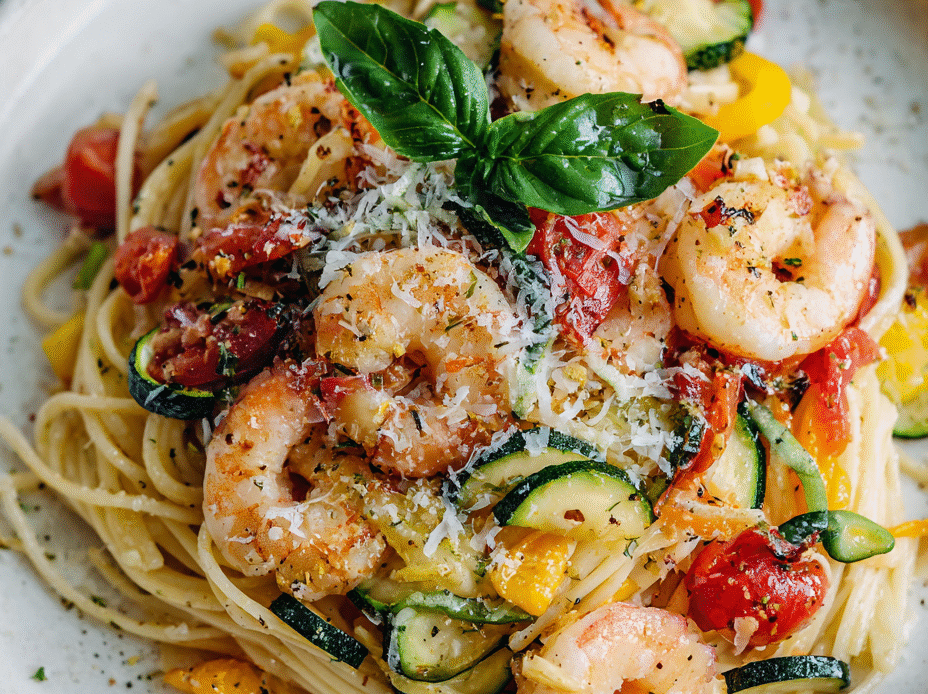
This Shrimp Pasta Primavera isn’t about fancy tricks; it’s about embracing the season’s bounty and letting fresh ingredients shine. I love how the colorful vegetables and tender shrimp come together in a simple, honest way that feels both rustic and elegant. It’s a dish that invites you to slow down and enjoy the natural flavors.
What makes this recipe stand out for me is the balance—between the bright crunch of bell peppers, the sweet snap of cherry tomatoes, and the perfectly tender shrimp. It’s a dance of textures and flavors that feels like a little celebration each time I make it. There’s something satisfying about turning a handful of everyday ingredients into something vibrant and wholesome.
Focusing on the art of balancing seasonal vegetables with perfectly cooked shrimp to create a vibrant, fresh pasta primavera that feels both rustic and refined.
The delicate balance of seasonal bounty
- Cooking this dish reminds me of summer evenings on the porch, with the smell of garlic and basil filling the air.
- I get a little proud every time I see the bright colors of the vegetables come together in the pan.
- There’s a quiet joy in watching the shrimp turn pink and plump, signaling they’re perfectly cooked.
- This recipe is my go-to when I need something fresh and lively, yet simple enough for a weeknight.
- Making it always feels like a small celebration of the season’s best ingredients, no fuss needed.
The spark behind this dish
This dish came together on a busy weeknight when I realized I had a handful of fresh vegetables and some shrimp that needed using up. I wanted something quick, vibrant, and satisfying, but also light enough to keep me moving through the evening. The idea of combining seasonal produce with the sweetness of shrimp seemed like a perfect balance of flavors and textures, and it’s become a go-to for those nights when I crave something wholesome without too much fuss.
Historical and Cultural Tidbits
- Originally inspired by Italian primavera, but adapted in the U.S. for quick, fresh weeknight dinners.
- This dish reflects the 1980s trend of incorporating more vegetables into pasta, making it both vibrant and healthy.
- Shrimp’s popularity in pasta dishes skyrocketed in coastal regions of the U.S., blending seafood with garden-fresh produce.
- The use of seasonal vegetables in primavera was a way to celebrate local harvests and reduce reliance on preserved ingredients.
- Modern takes often include bold herbs and citrus, a nod to Mediterranean flavors that enhance the shrimp’s sweetness.
Key ingredients at a glance
- Shrimp: I prefer to use large, peeled, deveined shrimp for that satisfying snap with every bite. If yours are small or frozen, adjust cooking time accordingly.
- Bell Peppers: The vibrant crunch of red and yellow peppers adds sweetness and color. You can swap in zucchini or snap peas for a different texture, but keep the color pop.
- Cherry Tomatoes: Juicy and bursty, they bring brightness. If out of season, canned cherry tomatoes work in a pinch—just drain well before adding.
- Garlic & Onion: These aromatics build the flavor foundation. I like to finely mince garlic to prevent biting into raw chunks, but a coarse chop works if you prefer a milder punch.
- Olive Oil: Use good quality extra virgin for that fruity, rich aroma. If you want a lighter dish, a splash of avocado oil can do, but don’t expect quite the same depth.
- Lemon Juice & Zest: Brightens everything up with a zingy, citrusy note. Fresh lemon is best, but bottled lemon juice can substitute in a pinch, though it’s less vibrant.
- Pasta: I usually go for spaghetti or linguine, but penne or farfalle hold the sauce beautifully. Use whatever you have on hand, just don’t overcook—bite should be al dente.
Spotlight on key ingredients
Shrimp:
- I prefer large, peeled, deveined shrimp for that satisfying snap with every bite. If yours are small or frozen, adjust cooking time accordingly.
- Bell Peppers: The vibrant crunch of red and yellow peppers adds sweetness and color. You can swap in zucchini or snap peas for a different texture, but keep the color pop.
- Cherry Tomatoes: Juicy and bursty, they bring brightness. If out of season, canned cherry tomatoes work in a pinch—just drain well before adding.
Cherry Tomatoes:
- Bell Peppers: The vibrant crunch of red and yellow peppers adds sweetness and color. You can swap in zucchini or snap peas for a different texture, but keep the color pop.
- Juicy and bursty, they bring brightness. If out of season, canned cherry tomatoes work in a pinch—just drain well before adding.
Notes for ingredient swaps
- Dairy-Free: Swap Parmesan for nutritional yeast or omit entirely; you’ll lose some umami but keep the savory vibe.
- Gluten-Free: Use rice or corn pasta instead of wheat; it’ll have a slightly different texture but still absorbs flavors well.
- Vegetarian: Replace shrimp with firm tofu or tempeh, sautéed until golden for a similar bite and protein boost.
- Low-Sodium: Opt for unsalted or lightly salted ingredients, and skip added salt during cooking to control saltiness.
- Extra-Virgin Olive Oil: Stick with good quality, but if you’re out, avocado oil offers a milder, buttery note without overpowering.
- Lemon Juice: Fresh lemon is best, but bottled lemon juice works in a pinch—just may lack that vibrant zing.
- Pasta: Whole wheat or legume-based options add fiber and flavor, but may alter texture and color slightly.
Equipment & Tools
- Large skillet: To sear shrimp and sauté vegetables in one pan.
- Large pot: To cook pasta efficiently.
- Colander: To drain pasta without losing too much water.
- Wooden spoon: To toss ingredients gently and prevent scratching the skillet.
Step-by-step guide to Shrimp Pasta Primavera
- Gather your equipment: a large skillet (for searing), a pot for boiling pasta, a colander, and a wooden spoon for tossing. Have everything within reach before you start.
- Bring a large pot of water to a rolling boil, seasoned with salt. Cook pasta until just al dente—about 8-10 minutes. Drain and set aside, saving a cup of starchy pasta water.
- While pasta cooks, prep your vegetables: julienne bell peppers, halve cherry tomatoes, mince garlic, and slice zucchini if using. Keep everything ready to toss quickly.
- Heat the skillet over medium-high heat, about 180°C (350°F). Add a splash of olive oil until shimmering. Toss in the shrimp, season lightly with salt and pepper. Sear for 2-3 minutes per side until pink and opaque. Remove and set aside.
- In the same skillet, add a little more oil if needed. Sauté garlic until fragrant—about 30 seconds—then add bell peppers and zucchini. Cook for 3-4 minutes, until just tender and fragrant. Add cherry tomatoes last, cooking for another 1-2 minutes until they start to burst.
- Return shrimp to the pan. Add a splash of reserved pasta water and a squeeze of lemon juice. Toss everything together over medium heat, about 1-2 minutes, until heated through and glossy. Adjust seasoning if needed.
- Finish with fresh herbs or a sprinkle of Parmesan if desired. Remove from heat. Let rest for 1 minute to allow flavors to meld.
- Plate the pasta primavera, ensuring a balanced mix of vegetables and shrimp on each serving. Drizzle with a little extra lemon if you like. Serve immediately for best freshness.
Once plated, let the dish rest for a minute for flavors to settle. Finish with a squeeze of lemon and fresh herbs. Serve hot, straight from the plate.
How to Know It’s Done
- Shrimp are firm, opaque, and pink, with a slight bounce when pressed.
- Vegetables are vibrant, tender but still crisp, with fragrant aroma.
- Sauce is glossy, coats pasta evenly, and has a citrusy lift.
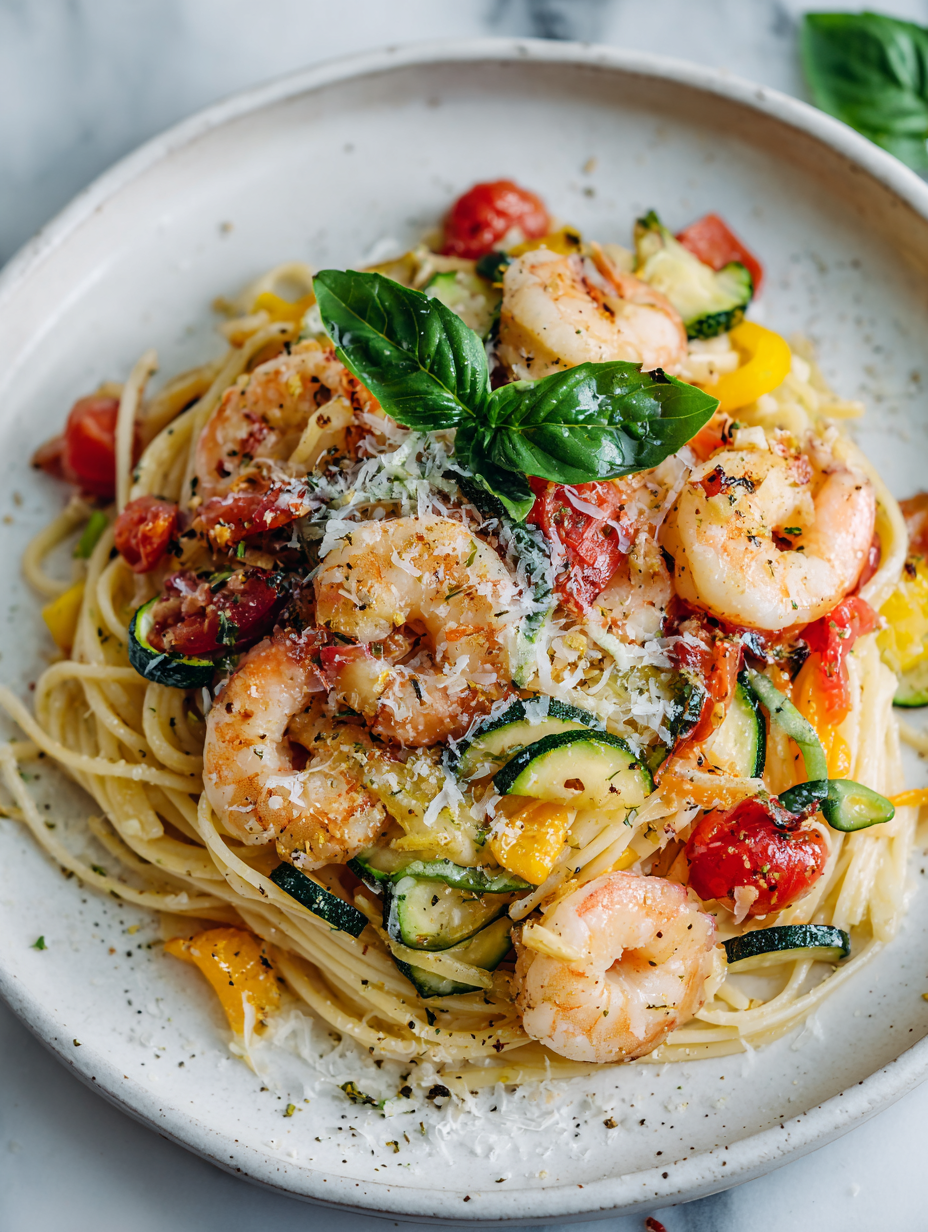
Shrimp Pasta Primavera
Ingredients
Equipment
Method
- Bring a large pot of salted water to a boil, then add the pasta and cook until just al dente, about 8-10 minutes. Drain and set aside, saving a cup of the starchy pasta water.
- While the pasta cooks, prepare your vegetables: julienne the bell peppers, halve the cherry tomatoes, and mince the garlic. Keep everything ready for quick sautéing.
- Heat a large skillet over medium-high heat and add 1 tablespoon of olive oil. Once shimmering, add the shrimp, season lightly with salt and pepper, and sear for 2-3 minutes per side until pink and opaque. Remove the shrimp and set aside.1 pound lb large peeled and deveined shrimp
- In the same skillet, add another splash of olive oil if needed. Toss in the minced garlic and sauté for about 30 seconds until fragrant, then add the julienned bell peppers. Cook for 3-4 minutes until they start to soften and become vibrant.1 pound lb large peeled and deveined shrimp
- Add the halved cherry tomatoes to the skillet and cook for another 1-2 minutes until they begin to burst and release their juices.1 pound lb large peeled and deveined shrimp
- Return the cooked shrimp to the pan, squeeze in the lemon juice, and add the lemon zest. Toss everything gently to coat and let cook for another minute until heated through.1 pound lb large peeled and deveined shrimp
- Add the cooked pasta to the skillet, tossing well to combine. If the mixture seems dry, drizzle in some reserved pasta water to create a glossy sauce. Taste and adjust seasoning with salt and pepper.
- Finish by sprinkling chopped basil or parsley and grated Parmesan cheese over the top. Give everything one last gentle toss to distribute flavors evenly.1 pound lb large peeled and deveined shrimp
- Serve immediately while hot, with an extra squeeze of lemon and a sprinkle of herbs for freshness.
Notes
Pro tips for perfect primavera
- Use high heat to sear shrimp quickly, locking in juices and developing a slight caramelization.
- Sauté vegetables until just tender and fragrant—overcooking dulls their bright flavors and crunch.
- Add garlic towards the end of sautéing to preserve its pungency—burned garlic turns bitter fast.
- Reserve some pasta water to loosen the sauce; it adds flavor and helps everything cling together.
- Toss ingredients gently but thoroughly to coat everything in the flavorful pan juices without breaking the shrimp.
- Finish with a squeeze of lemon after removing from heat to brighten the dish and enhance freshness.
Common mistakes and how to fix them
- FORGOT to keep shrimp cold before cooking → Thaw shrimp completely for even cooking.
- DUMPED all garlic into pan → Add garlic last to prevent burning and bitterness.
- OVER-TORCHED the oil → Use medium heat after oil shimmers to avoid burning the garlic.
- SERVED immediately without resting → Let the dish sit 1 minute for flavors to meld and juices to settle.
Quick fixes and pantry swaps
- When shrimp turn rubbery, splash with lemon juice to brighten and tenderize quickly.
- If sauce is too thick, rescue with a splash of pasta water until glossy and smooth.
- DUMPED in too much garlic? Patch by adding a squeeze of lemon to cut bitterness.
- Splash olive oil if vegetables start sticking or burning—keep that shimmer and flavor.
- When vegetables are undercooked, shield with a lid and steam briefly for perfect crunch.
Prep, store, and reheat tips
- Prep vegetables and shrimp a day ahead; store in airtight containers in the fridge for up to 24 hours. Freshness keeps the dish vibrant and crisp.
- Cook pasta al dente, toss with a little olive oil, and refrigerate for up to 24 hours. Reheat gently to avoid mushiness, aiming for a tender bite.
- The assembled dish can be refrigerated for up to 2 days. Flavors meld over time, but texture may soften slightly—reheat with a splash of pasta water or lemon juice.
- To reheat, warm gently in a skillet over medium heat, stirring often. Look for a bright aroma and a glossy coating; add a touch of water if it feels dry or dull.
Top questions about Shrimp Pasta Primavera
1. Can I use frozen shrimp?
Use large, peeled, deveined shrimp for the best snap. Frozen works if fully thawed and patted dry.
2. Can I substitute the bell peppers?
Yes, you can swap bell peppers for zucchini or snap peas for a different crunch and color.
3. What if cherry tomatoes are out of season?
Canned cherry tomatoes work well—just drain them thoroughly before adding to avoid extra liquid.
4. Can I use a different oil?
Use good quality extra virgin olive oil for a fruity aroma. Light avocado oil can be a lighter alternative.
5. What if I don’t have fresh lemon?
Fresh lemon juice and zest give the brightest flavor, but bottled lemon juice is a decent shortcut if needed.
6. Can I use whole wheat pasta?
Whole wheat or legume-based pasta adds fiber but may alter texture slightly. Use what you prefer.
7. How do I know when the pasta is done?
Cook pasta until al dente, about 8-10 minutes. It should be tender but still have a slight bite.
8. How long should I cook the vegetables?
Sauté vegetables just until tender and fragrant, around 3-4 minutes. Overcooking dulls their brightness.
9. When should I add the garlic?
Add garlic last, about 30 seconds, to prevent burning and bitterness in the dish.
10. How do I reheat the dish?
Reheat leftovers gently in a skillet with a splash of pasta water to revive the glossy sauce and flavors.
This dish feels like a little reminder to keep things simple and fresh, especially when produce is at its peak. It’s messy and vibrant, just like a good summer evening. I find myself craving that bright, citrusy punch and the tender shrimp every time I make it.
In a way, it’s more than just a pasta dish — it’s a snapshot of the season, really. No fuss, just honest flavors that come together easily, leaving you with a sense of satisfaction and a full belly. Sometimes, those straightforward, flavorful meals are exactly what I need.

Hi, I’m Jonny Andrew Miller, the cook, taster, and slightly messy mind behind Bite & Boom. I live in Austin, Texas, a city that smells like barbecue smoke, fresh tortillas, and late-night tacos if you wander long enough. It suits me.