
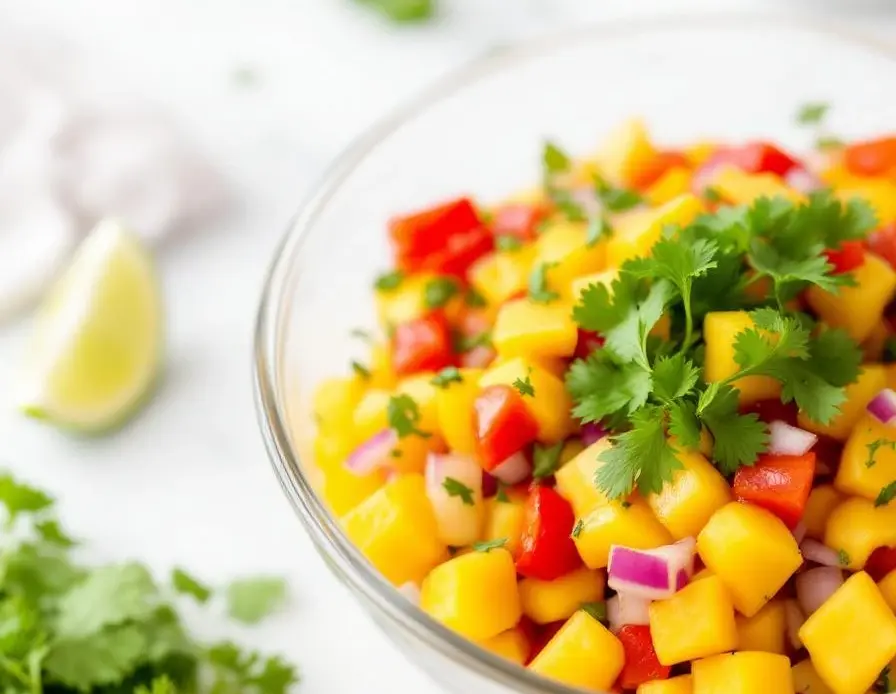
When you start chopping the mango, it’s all about patience—cut around the big pit, then peel away the skin with a steady, confident hand. The flesh is juicy and slippery, so keep your knife sharp and your grip firm.
Eating it involves a bit of mess—juice drips down your chin, and the sticky bits cling to your fingers. It’s a tactile experience, feeling the flesh give way under your knife and the burst of aroma as you scoop up the pieces with a spoon or flick them onto your plate.
The way the mango’s flesh gives way with a soft squish under the knife, releasing a sweet, slightly sticky juice that feels like a tiny burst of summer.
What goes into this dish
- Mango: I love the way a ripe mango yields under pressure, its sweet aroma filling the air; skip this if the mango’s firm and unripe, but then, it won’t be as juicy and luscious.
- Red onion: I prefer a finely diced red onion for a sharp, pungent bite that cuts through the sweetness; swap for shallots if you want a milder, less eye-watering flavor.
- Lime juice: Brightens the salsa instantly with a lemony, zesty punch; use lemon if limes are scarce, but expect a slightly different tang.
- Cilantro: Adds a fresh, grassy note that makes the whole thing pop; parsley works if cilantro’s not your thing, but it won’t have that distinct aroma.
- Jalapeño: Brings a smoky heat and crunch—remove seeds if you want less fire; skip altogether for a milder, kid-friendly version.
- Salt: Enhances all the flavors, making each bite pop; sea salt is my go-to, but table salt works if that’s all you have.
- Olive oil: Just a splash adds a subtle richness and helps meld the flavors; skip if you prefer a fresher, lighter salsa, but it does add a nice sheen.
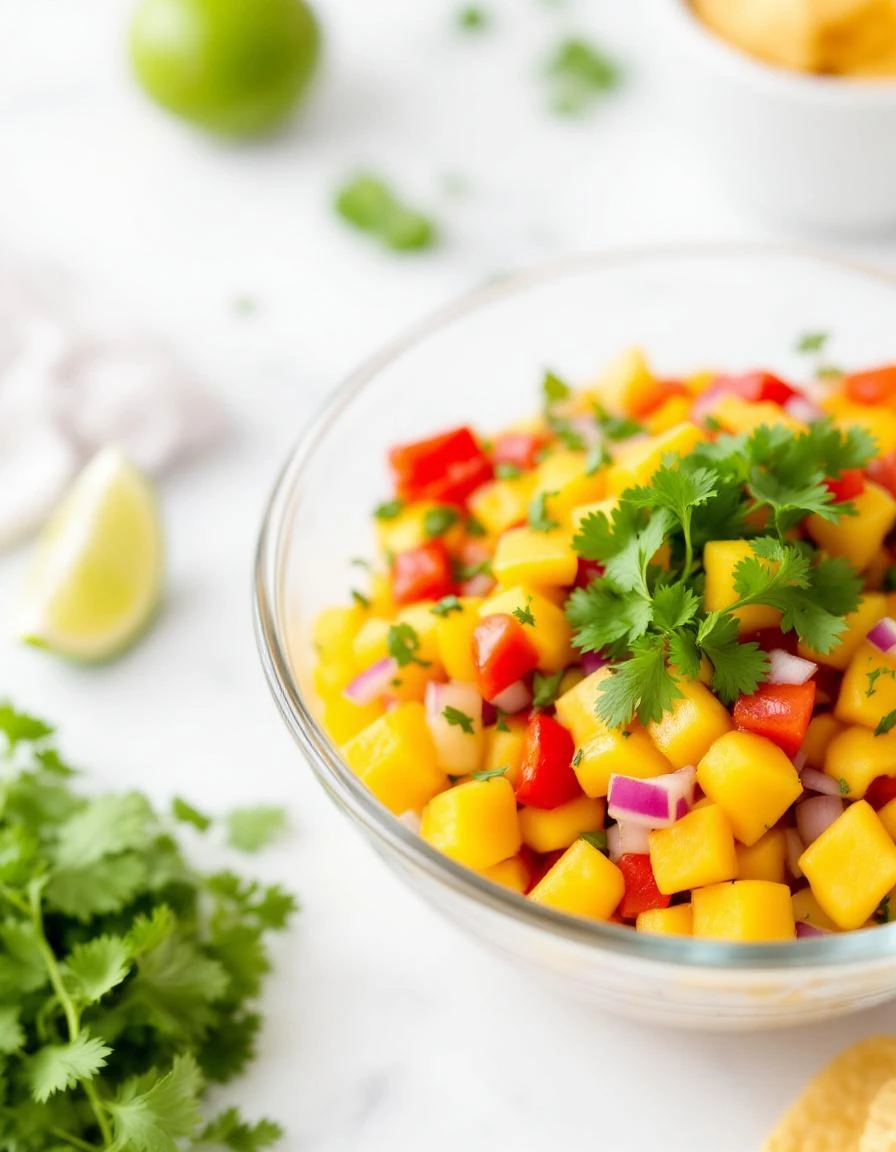
Fresh Mango Salsa
Ingredients
Equipment
Method
- Use a sharp knife to cut around the mango pit, then peel away the skin carefully, revealing the juicy flesh. Keep your grip steady to avoid slips as the flesh is slippery.
- Slice the mango into small cubes or chunks, maintaining a vibrant, juicy appearance. Place the chunks into a mixing bowl.
- Add the finely diced red onion to the bowl, watching for its sharp, pungent aroma as it mingles with the mango.
- Squeeze fresh lime juice over the mixture, allowing it to brighten the flavors and help meld the ingredients together.
- Chop the cilantro finely and sprinkle it into the bowl, adding a fresh, grassy note to the salsa.
- Finely dice the jalapeño, removing seeds if you prefer less heat, then stir it into the mixture for a smoky, spicy crunch.
- Add a pinch of salt to taste, stirring gently to balance the sweetness of the mango and tartness of the lime.
- If desired, drizzle a tablespoon of olive oil over the salsa for added sheen and richness, then give everything a gentle stir.
- Let the salsa sit for about 5 minutes to allow flavors to meld and the onion to soften slightly, then give it a final gentle stir.
- Serve the mango salsa in a bowl, garnished with extra cilantro if desired, and enjoy immediately for the best freshness and juiciness.
Common mistakes and how to fix them
- FORGOT to taste before seasoning? Always sample first, then adjust salt or lime for balance.
- DUMPED all ingredients together at once? Mix gently, let flavors meld slowly without breaking down the mango.
- OVER-TORCHED the onions? Sauté on medium-low, stirring often, to keep them sweet and tender.
- MISSED the mango ripeness? Wait for a soft, fragrant fruit—less juice, more flavor, better texture.
Make-Ahead and Storage Tips
- Chop the mango and onion ahead of time; store in an airtight container for up to 24 hours in the fridge, but expect a slight loss in brightness.
- Lime juice can be squeezed and mixed in early; it keeps well for a day but may intensify the tang slightly overnight.
- Cilantro and jalapeño can be pre-cut and refrigerated for a few hours, but flavors tend to mellow and lose some of their punch.
- The salsa is best eaten fresh, but can sit in the fridge for up to 2 days; flavors will meld and deepen, though the mango may turn a bit softer.
- Reheat is unnecessary—serve chilled or at room temperature. If you must replate, give it a gentle stir and check for brightness and saltiness.
FAQs
1. How do I pick the right mango?
Look for a mango that yields slightly under gentle pressure and gives off a sweet, fragrant aroma. If it’s too firm, it’s not ripe enough; if it’s too soft and mushy, it might be overripe and messy to chop.
2. How do I peel and chop mango easily?
Use a sharp knife and cut around the pit, then peel carefully. The flesh is slippery, so keep your grip steady to avoid slips and jagged cuts.
3. How do I fix bland mango salsa?
If your salsa tastes dull, add a squeeze more lime or a pinch of salt. For extra kick, toss in a few more jalapeño slices, but do it gradually, tasting as you go.
4. Can I make mango salsa ahead?
Store leftovers in an airtight container in the fridge for up to a day or two. Expect the mango to soften and flavors to meld, but the salsa might lose some of its bright punch.
5. Should I reheat mango salsa?
Reheat isn’t needed—serve it chilled or at room temperature. If it’s been in the fridge, give it a gentle stir and check the brightness of the lime and salt before serving.

Hi, I’m Jonny Andrew Miller, the cook, taster, and slightly messy mind behind Bite & Boom. I live in Austin, Texas, a city that smells like barbecue smoke, fresh tortillas, and late-night tacos if you wander long enough. It suits me.