
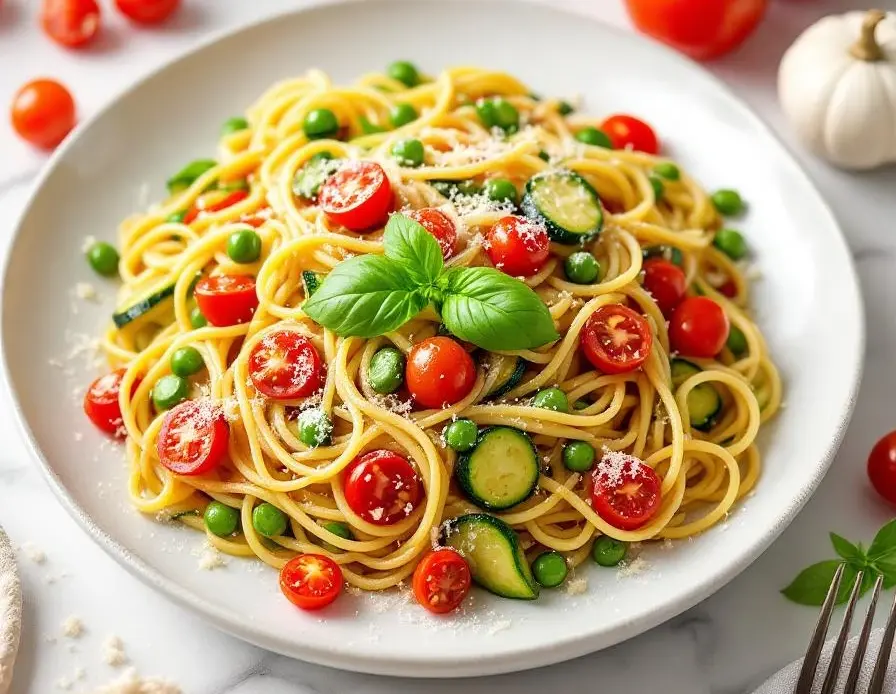
Cooking pasta Primavera means dealing with a mess of chopped vegetables—zucchini, peppers, cherry tomatoes—stuff that oozes juice and sticks to your knife. You’ll find yourself juggling a pot of boiling water and a sizzling pan, often with a splash or two of water on the stove from accidental overflows.
The real work happens when you toss the cooked pasta with the sautéed veggies, trying to coat every strand without turning everything into a soggy pile. It’s a dance of timing, patience, and a handful of good salt, all happening in close quarters on your stovetop.
The gentle sizzle of vegetables hitting hot oil, each one releasing a burst of aroma and a slight crackle as they soften.
What goes into this dish
- Cherry tomatoes: I love the burst of sweet juice when they pop in your mouth, but feel free to skip if you’re out of season—just add a splash of lemon for brightness.
- Zucchini: Thinly sliced zucchini adds a tender, almost creamy texture, but zucchini squash works just as well if that’s what you’ve got. Keep the slices uniform for even cooking.
- Bell peppers: Bright, crunchy, and colorful—red or yellow peppers give a fresh crunch, but green peppers can substitute if that’s what’s in the fridge, just cut back on cooking time.
- Garlic: Minced garlic brings a pungent aroma that wakes up the dish; if you’re out, a pinch of garlic powder can work, though it won’t have quite the same punch.
- Olive oil: Use good-quality extra virgin olive oil—its grassy, fruity notes really shine here. A neutral oil can be a stand-in, but you’ll miss that rich aroma.
- Pasta: Long strands like spaghetti or linguine are classic, but penne or fusilli hold the sauce nicely if that’s what you prefer or have on hand.
- Parmesan: Freshly grated cheese is best for that nutty, salty finish. If you’re out, a sprinkle of nutritional yeast can add a cheesy flavor, though it’s not quite the same.
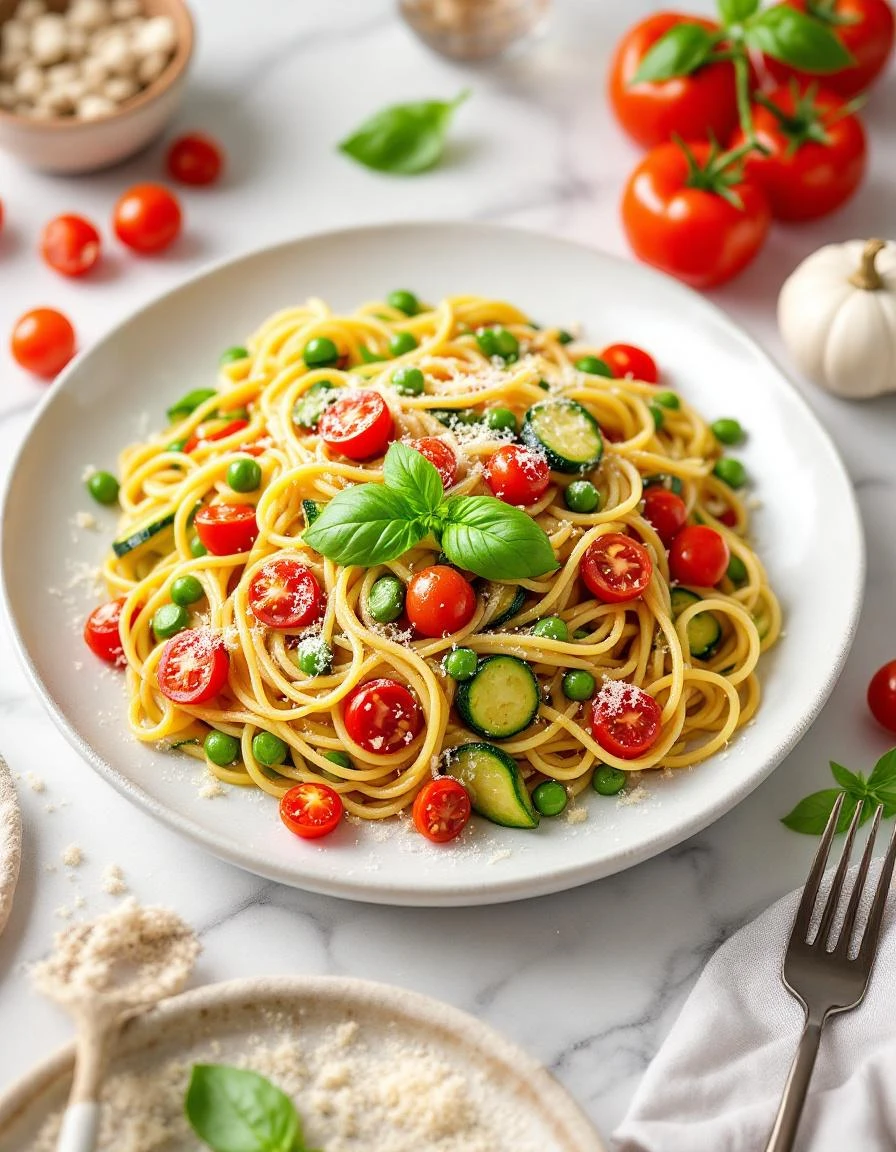
Pasta Primavera
Ingredients
Equipment
Method
- Bring a large pot of salted water to a boil and cook the pasta until just shy of al dente, about 1 minute less than package instructions. Drain and set aside.
- While the pasta cooks, heat a skillet over medium heat and add one tablespoon of olive oil. Once shimmering, add the sliced zucchini and cook, stirring occasionally, until slightly softened, about 3-4 minutes.
- Add the sliced bell pepper to the skillet and cook for another 2-3 minutes until tender but still vibrant.
- Stir in the minced garlic and cook until fragrant, about 30 seconds, being careful not to burn it.
- Add the halved cherry tomatoes to the skillet and cook for another 2 minutes until they start to soften and release their juices, creating a colorful sauce.
- Pour the cooked pasta into the skillet with the vegetables, tossing gently to coat all the strands evenly and allowing the flavors to meld for about 1-2 minutes.
- Remove the skillet from heat and sprinkle with freshly grated Parmesan cheese, tossing again to distribute evenly.
- Finish by drizzling with the remaining olive oil, giving one last gentle toss, and serve immediately for a bright, flavorful pasta Primavera.
Common mistakes and how to fix them
- FORGOT to taste and adjust seasoning at the end, fix with a pinch of salt and lemon juice.
- DUMPED all vegetables in at once, fix by sautéing in stages for better texture and flavor.
- OVER-TORCHED the garlic, fix by removing from heat immediately to prevent bitterness.
- MISSED draining pasta thoroughly, fix by shaking off excess water to avoid a watery dish.
Make-Ahead and Storage Tips
- Chop vegetables like zucchini, peppers, and cherry tomatoes a day ahead; store in airtight containers in the fridge for up to 24 hours.
- Cook the pasta until just shy of al dente, then rinse and toss with a little olive oil to prevent sticking. Keep in the fridge for up to 24 hours.
- Prepare the vegetable mixture and have it ready to sauté; flavors will deepen slightly after a day, making the dish more savory.
- Reheat in a skillet over medium heat, adding a splash of water or broth. Listen for the sizzle and look for vibrant, tender veggies to know it’s ready.
- Frozen prepped vegetables can be kept for up to a month, but expect a softer texture and slightly muted color after thawing.
- Avoid freezing cooked pasta—it tends to become mushy upon thawing, affecting the overall texture.
FAQs
1. Can I substitute vegetables?
Yes, you can swap out zucchini for yellow squash or snap peas for a sweeter crunch. Just keep the textures in mind; snap peas give a bright, crisp bite.
2. How should I cook the pasta?
Cooking the pasta a minute less than usual helps it stay firm and absorb flavors better when mixed with the veggies.
3. How do I brighten the flavor?
Adding a splash of lemon juice or a sprinkle of fresh herbs right before serving brightens the dish and enhances the fresh veggie flavors.
4. What if the dish is watery?
If the veggies seem too watery, cook them a little longer to evaporate excess moisture and concentrate their natural sweetness.
5. How do I reheat leftovers?
Reheat gently in a skillet over medium heat, stirring often. The veggies should steam and sizzle, not steam into mush.

Hi, I’m Jonny Andrew Miller, the cook, taster, and slightly messy mind behind Bite & Boom. I live in Austin, Texas, a city that smells like barbecue smoke, fresh tortillas, and late-night tacos if you wander long enough. It suits me.