
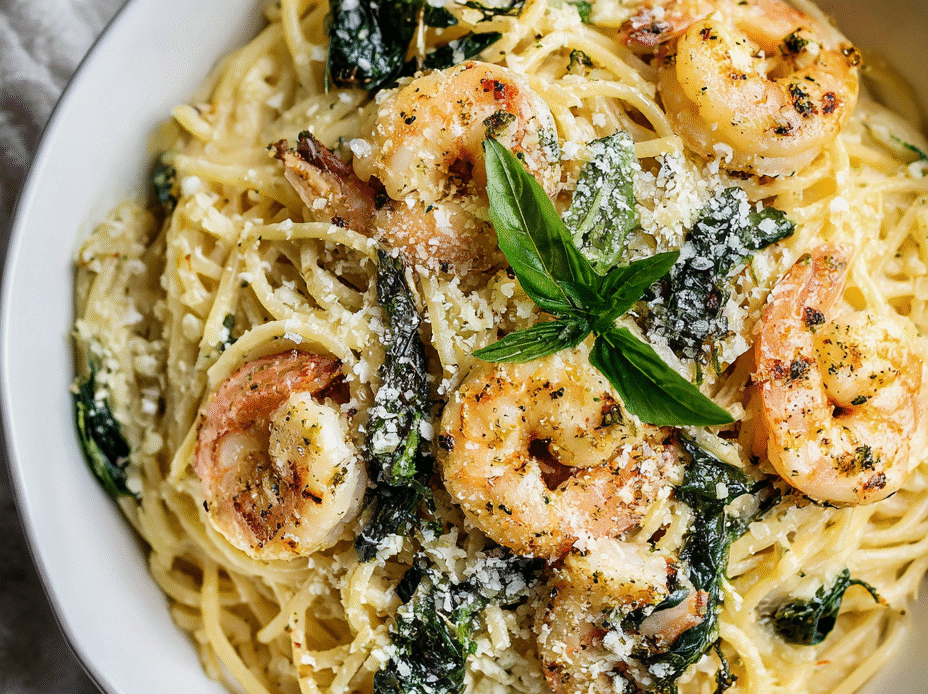
This shrimp basil pasta is a little snapshot of summer in a bowl. It’s all about that fresh basil aroma, which somehow makes everything taste brighter and more alive. I love how the herbs cut through the richness of the shrimp, adding a herbaceous punch that wakes up your taste buds with every bite.
Honestly, I didn’t think much of it the first time I made this dish. Just tossing some garlic, shrimp, and basil together seemed simple enough, but the smell alone pulled everyone into the kitchen. It’s quick enough to make after work, but feels fancy enough to serve to friends on a casual weekend.
If you’re craving a dish that’s fresh, fragrant, and not overthought, this pasta hits the spot. It’s a reminder that sometimes, the simplest ingredients—like basil—can transform a meal into something memorable. Plus, it’s one of those recipes that makes your kitchen smell incredible, all while coming together in under 30 minutes.
Focusing on how the fresh basil’s aroma and bright flavor truly transform a simple shrimp pasta into a lively, almost herbaceous experience that awakens the senses with every bite.
Herbaceous Brightness in Every Bite
- The aroma of fresh basil always takes me back to summer evenings on my balcony, herbs in hand, feeling the warm breeze.
- I used to think quick pasta dishes couldn’t be satisfying until I discovered how the brightness of basil can truly lift a simple shrimp meal.
- There’s a thrill in watching the shrimp turn pink and juicy as the garlic and basil fill the kitchen with their fragrant dance.
- This recipe feels like a small act of rebellion against heavy, complicated meals—simple, fresh, and utterly satisfying.
- Every time I make this, I’m reminded that the best dishes often come from just a handful of fresh ingredients, done right.
Herbaceous Brightness in Every Bite
- This dish was born out of a lazy afternoon craving something bright and herbaceous, but with enough substance to feel like a proper meal. I remember the first time I made it, I had a bunch of basil that was wilting and a pack of shrimp that needed using up. Tossing them together felt like a small act of kitchen defiance—simple, fast, and ridiculously fragrant.
- Since then, I’ve kept coming back to this combo whenever I want a taste of summer no matter the season. It’s wild how the scent of fresh basil can turn a humble pasta into something that feels almost celebratory. Plus, the way the shrimp turn tender and juicy with minimal fuss keeps me coming back for more, especially on busy weeknights.
- heading: ‘The story behind this recipe’
Trivia and Historical Notes
- This dish has roots in Mediterranean coastal cuisines where fresh herbs and seafood are staples.
- Basil was introduced to Italian cuisine in the Middle Ages, quickly becoming a fragrant symbol of summer dishes.
- The combination of shrimp and basil gained popularity in modern American cooking during the early 2000s fusion trend.
- In some coastal regions, similar pasta dishes are served with locally caught seafood and freshly picked herbs, emphasizing seasonality.
- The use of fresh basil in quick pasta recipes reflects a broader culinary movement toward simple, herb-forward, fast meals.
Ingredient breakdown
- Shrimp: I love using deveined, tail-off shrimp for quick cooking and easy eating. If yours are smaller, just adjust cooking time so they don’t overcook and turn rubbery.
- Fresh Basil: Its bright, peppery aroma completely transforms this dish. If basil isn’t available, a small handful of fresh mint can add a surprising, fresh note—though it’s not quite the same.
- Garlic: I crush and finely chop garlic to release that pungent, fragrant oil. If you prefer milder garlic, slice it thinly instead; the flavor will mellow out during cooking.
- Olive Oil: Use good-quality extra virgin—its fruity, peppery notes shine through. If you only have lighter oil, add a splash of lemon juice to brighten the dish.
- Lemon Juice: I squeeze fresh lemon right before serving for a zesty punch. Skip it if you want a milder, more herb-forward flavor, but never omit the zest—it’s the brightener.
- Pasta: I prefer a spaghetti or linguine that’s just shy of al dente. Overcooked pasta turns mushy; undercooked will feel stiff and gluey. Keep some pasta water handy to loosen the sauce if needed.
- Parmesan: A generous sprinkle of freshly grated adds a salty, umami depth. If you’re dairy-free, a pinch of nutritional yeast provides a similar savory boost, though less creamy.
Spotlight on key ingredients
Shrimp:
- I prefer deveined, tail-off shrimp for quick, even cooking. When they turn pink and firm, they’re just right—avoid overcooking or they’ll get rubbery.
- Basil: Its fresh, peppery aroma and bright green color make this dish come alive. During cooking, basil leaves wilt quickly, releasing their fragrant oils—don’t overdo it.
Basil:
- The fragrance is intense, almost sweet and peppery. When added at the right moment, it releases a vibrant aroma that fills the kitchen—skip it, and the dish feels flat.
- During cooking, basil leaves turn a darker green and become slightly wilted but still fragrant—timing is everything for maximum flavor.
Notes for ingredient swaps
- Protein: Chicken breast can replace shrimp for a milder, more neutral flavor—just cook it thoroughly, about 10-12 minutes in a hot pan.
- Herbs: If fresh basil isn’t available, fresh parsley or cilantro can add a bright note, though it won’t have that iconic basil aroma.
- Oil: Avocado oil or light vegetable oil can be used instead of extra virgin olive oil; expect a slightly different flavor profile but similar cooking properties.
- Citrus: Lemon juice can be swapped with lime or vinegar for acidity; lemon provides that classic bright, floral note.
- Pasta: Gluten-free spaghetti or shirataki noodles work well as alternatives; keep in mind texture and cooking times may vary.
- Dairy: Nutritional yeast or dairy-free cheese can replace Parmesan for a salty, umami touch—less creamy but still flavorful.
- Garlic: Garlic powder or garlic-infused oil can be used if fresh garlic isn’t on hand; use sparingly to avoid overpowering the dish.
Equipment & Tools
- Large skillet: For even cooking of shrimp and pasta.
- Colander: To drain pasta efficiently.
- Sharp knife: Prep garlic and basil.
- Measuring spoons: Accurately add lemon juice and seasonings.
- Tongs or pasta fork: Toss and serve pasta evenly.
Step-by-step guide to shrimp basil pasta
- Equipment & Tools: Use a large, deep skillet—around 30cm (12 inches)—to give everything room to cook evenly. Have a colander ready for pasta and a sharp knife for prep.
- Bring a large pot of water to a rolling boil—about 100°C (212°F). Salt generously—like seawater. Cook pasta until just shy of al dente, 8-10 minutes. Save a cup of pasta water before draining.
- While pasta cooks, peel and devein the shrimp if not already done. Pat dry with paper towels—moisture will cause splatters. Season lightly with salt and pepper.
- Heat about 2 tablespoons of olive oil over medium-high heat—around 180°C (356°F). When shimmering, add shrimp in a single layer. Cook 2-3 minutes per side until pink and opaque—look for a slight curl and firm texture. Remove and set aside.
- In the same pan, add a little more oil if needed. Toss in finely chopped garlic—about 2 cloves. Cook for 30 seconds until fragrant—smell that pungent, toasted aroma. Avoid burning, or it’ll turn bitter.
- Lower heat to medium. Add cooked pasta directly to the pan with garlic. Toss well, adding a splash of reserved pasta water to loosen the sauce—look for a glossy coating. Cook for 1-2 minutes until heated through.
- Return shrimp to the pan. Tear fresh basil leaves—about a handful—and add them in. Toss gently—shrimp should stay tender and basil bright green, just wilted. Check aroma—fresh basil and garlic should burst forth.
- Squeeze a touch of lemon juice over everything—about 1 teaspoon. Toss again. Taste and adjust salt if needed. If sauce feels too dry, add more pasta water, a tablespoon at a time.
- Rest for a minute off heat. Plate the pasta, ensuring some basil and shrimp are on top. Finish with a light sprinkle of Parmesan or nutritional yeast. Serve immediately, hot and fragrant.
Rest the pasta for a minute off heat. Plate generously, garnish with basil leaves and a sprinkle of cheese or nutritional yeast. Serve immediately while fragrant.
How to Know It’s Done
- Shrimp: should be tender, pink, with a slight bounce when pressed.
- Pasta: al dente, with a glossy, slightly sticky sauce coating.
- Aroma: fresh basil and garlic should smell bright and fragrant, not burnt.
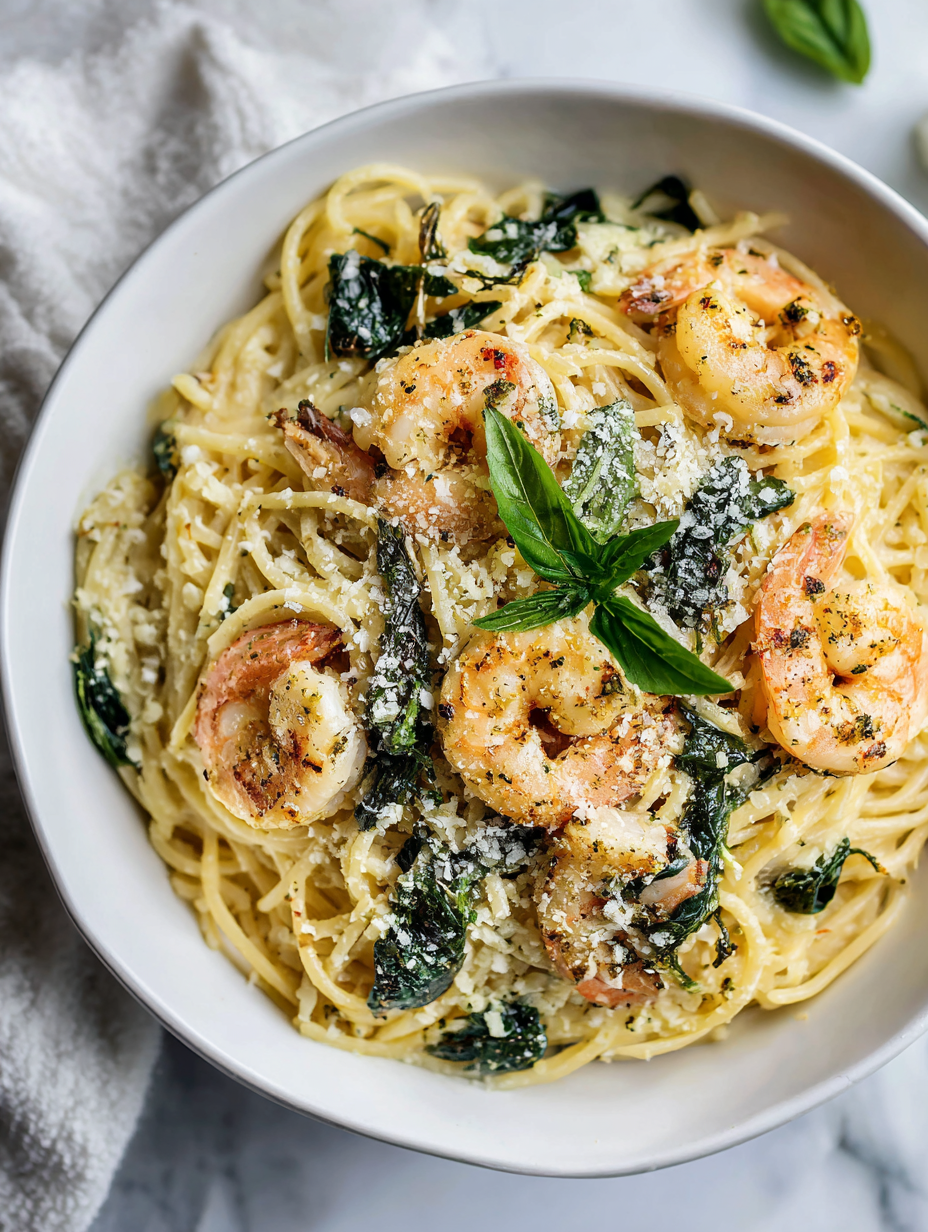
Shrimp Basil Pasta
Ingredients
Equipment
Method
- Bring a large pot of salted water to a rolling boil and cook the pasta until just shy of al dente, about 8-10 minutes. Reserve a cup of pasta water, then drain and set aside.
- Pat the shrimp dry with paper towels, then season lightly with salt and pepper. Heat 2 tablespoons of olive oil in a large skillet over medium-high heat until shimmering.
- Add the shrimp in a single layer and cook for 2-3 minutes per side, until they turn pink and are just cooked through. Remove from the skillet and set aside.
- Lower the heat to medium, add the remaining 1 tablespoon of olive oil, and toss in the finely chopped garlic. Cook for about 30 seconds until fragrant, with a slight sizzle and aroma filling the air.
- Add the cooked pasta directly to the skillet with garlic, tossing to coat evenly. Splash in some reserved pasta water to loosen the mixture and create a glossy sauce.
- Return the shrimp to the skillet, then tear the fresh basil leaves and add them in. Toss everything gently so the basil wilts slightly and releases its fragrant oils.
- Squeeze the lemon juice over the pasta and toss again. Taste and adjust seasoning with more salt, pepper, or lemon if desired.
- Remove the skillet from heat and sprinkle generously with freshly grated Parmesan cheese. Give everything one last toss to combine.
- Serve immediately, garnished with extra basil leaves if desired, and enjoy the vibrant, fragrant flavors of this quick, herbaceous shrimp pasta.
Pro tips for shrimp basil pasta
- Use high heat to sear shrimp quickly—look for a slight char and a firm, pink exterior.
- Toss basil in at the last minute—its aroma fades fast, so add it when the pasta is off heat.
- Crush garlic to release more flavor—be careful not to burn it; cook until just fragrant, about 30 seconds.
- Save pasta water before draining—its starchy content helps the sauce cling better and enhances flavor.
- Keep shrimp moving in the pan—avoid overcrowding to prevent steaming; cook in batches if needed.
- For a glossy sauce, add a splash of lemon juice or pasta water after tossing everything together.
- Don’t overcook the pasta—aim for just shy of al dente; it will finish cooking in the sauce and absorb flavors better.
Common mistakes and how to fix them
- FORGOT to pat shrimp dry, resulting in splattering—dry shrimp thoroughly before cooking.
- DUMPED in all the basil at once, losing aroma—add basil in stages for maximum fragrance.
- OVER-TORCHED garlic, turning bitter—cook garlic gently until fragrant, not browned.
- SERVED pasta immediately without tasting—wait a minute for flavors to meld and cool slightly.
Quick fixes and pantry swaps
- When sauce looks thin, splash in a bit more pasta water to thicken and shimmer.
- If shrimp overcooks and gets rubbery, quickly toss in ice water to halt cooking—then reheat gently.
- Splash some lemon juice if basil aroma fades during cooking—brightens and refreshes the flavor.
- Patch a burnt garlic mess by removing the burnt bits and adding fresh garlic—smell will tell you when it’s right.
- Shield delicate basil leaves from intense heat by adding them last—preserve their vibrant aroma and color.
Prep, store, and reheat tips
- Prep the shrimp: peel, devein, and pat dry. Store in an airtight container for up to 1 day in the fridge, where it stays firm and fresh.
- Wash and dry fresh basil; chop just before serving to preserve aroma. Keep in a damp paper towel inside a sealed bag for 1-2 days.
- Cook the pasta al dente, then toss with a little olive oil to prevent sticking. Refrigerate in an airtight container for up to 24 hours, where it remains tender but not mushy.
- Make the garlic and basil sauce base ahead: sauté garlic and store in a jar in the fridge for 1-2 days. Reheat gently, smelling for fragrant, toasted garlic.
- Reheat leftovers in a skillet over low heat, adding a splash of pasta water or olive oil to revive the sauce and keep everything fragrant and bright. Consume within 1-2 days for best flavor.
Top questions about shrimp basil pasta
1. What are the essential ingredients for this dish?
Use fresh, deveined shrimp for quick cooking and tender texture. Fresh basil should be added at the end to preserve aroma. Cook pasta al dente, and toss everything quickly over high heat for the best flavor release.
2. How do I know when the shrimp are done?
Cook the shrimp until pink and firm, about 2-3 minutes per side. Add basil at the last moment to keep its bright flavor. Use good-quality olive oil for richness and fresh lemon for brightness.
3. When should I add the basil?
Add basil at the end of cooking, right after removing the pan from heat. This preserves its fresh, fragrant qualities. Toss the pasta and shrimp gently to combine all flavors.
4. Can I make this vegetarian?
Yes, you can substitute with chicken or tofu. Just adjust cooking time accordingly. For a vegetarian version, skip the shrimp and add more vegetables or mushrooms.
5. Why save pasta water?
Save some pasta water before draining; it’s starchy and helps loosen the sauce if it gets too thick. Add a splash when tossing everything together for a glossy finish.
6. How do I prevent overcooking shrimp?
Overcooked shrimp turns rubbery and loses juiciness. Cook just until pink and opaque, and remove from heat immediately. The residual heat will finish cooking them perfectly.
7. What equipment do I need?
Use a large skillet to give everything room to cook evenly. Have your pasta, shrimp, basil, and tools ready before starting. This dish comes together quickly, so prep saves time.
8. How do I fix a too-thin sauce?
If the sauce is too thin, add a little more pasta water or let it simmer a bit longer to thicken. To brighten flavors, squeeze fresh lemon just before serving.
9. What if my basil or shrimp aren’t perfect?
If basil loses aroma during cooking, add it at the last second off heat. If shrimp are not juicy enough, briefly toss them in hot oil again for a quick sear.
10. Can I make this ahead or reheat it?
This dish is best enjoyed immediately after cooking when the basil aroma is freshest and the shrimp are tender. Leftovers can be refrigerated for up to a day and reheated gently with a splash of water or oil.
This dish is a reminder that simple ingredients, treated right, can deliver real brightness and comfort. The aroma alone—basil, garlic, shrimp—fills your kitchen and makes the whole meal feel special, even on a busy night.
Whenever I make this, I appreciate how a handful of fresh herbs and a quick sear can turn everyday pasta into something memorable. It’s honest, straightforward, and perfect when you need a meal that’s lively and satisfying without fuss.

Hi, I’m Jonny Andrew Miller, the cook, taster, and slightly messy mind behind Bite & Boom. I live in Austin, Texas, a city that smells like barbecue smoke, fresh tortillas, and late-night tacos if you wander long enough. It suits me.