
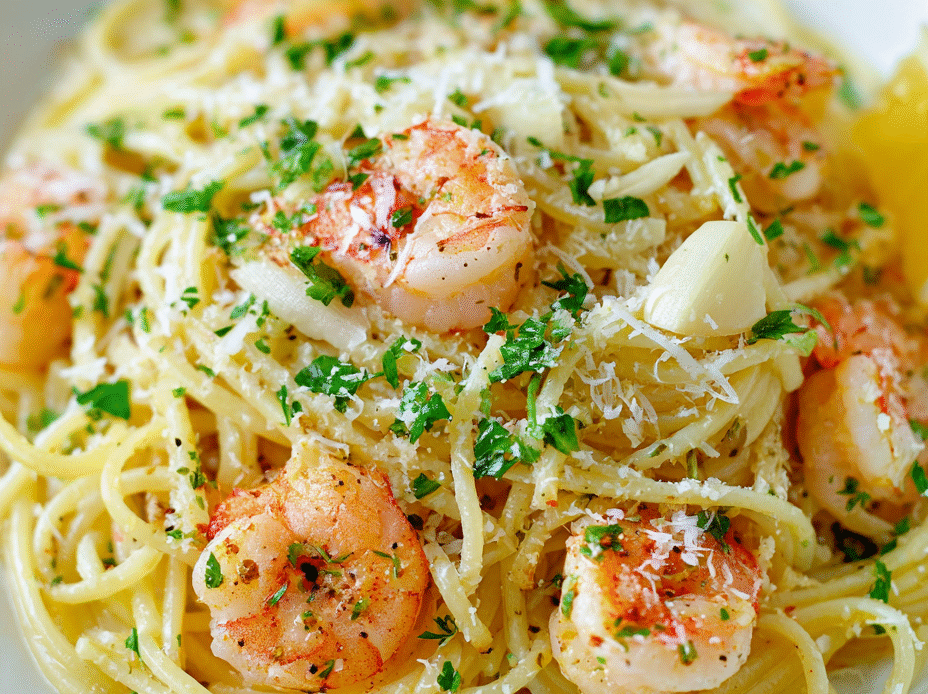
This shrimp garlic Parmesan pasta is a little dance of flavors I keep coming back to. It’s not about complicated techniques, but about balancing the richness of the cheese and shrimp with a bright garlic punch. I love how just a squeeze of lemon at the end transforms the whole plate from cozy to lively, almost like a little surprise in each bite.
What makes this dish special isn’t just the ingredients, but how I’ve learned to tweak them over time. Sometimes I add a pinch of red pepper flakes for heat, other times I toss in a handful of fresh herbs for freshness. It’s honest, unpolished comfort food, but with enough tweaks to keep it interesting, even after dozens of nights making it.
In the end, it’s about the small moments—how the garlic sizzles when it hits the hot pan, the way the Parmesan melts into the sauce, and the way the shrimp turn tender and juicy. It’s simple, but these little details make all the difference, turning a quick weeknight dinner into something I genuinely look forward to.
Focusing on the underappreciated art of balancing richness and brightness in a shrimp garlic Parmesan pasta, this dish highlights how a few simple tweaks can elevate comfort food into a vibrant, memorable meal.
Balancing Richness and Brightness
- This dish reminds me of summer nights by the coast, where fresh shrimp are a staple and simple flavors shine.
- Cooking this pasta always feels like a small victory, especially when the Parmesan melts just right into the sauce.
- There’s a nostalgic rush each time I squeeze lemon over the top—brighter, fresher, more alive.
- I love how a dash of red pepper flakes can turn this from comforting to unexpectedly fiery, sparking joy in the chaos.
- Sharing this meal with friends after a long week feels like a real reward, a moment of genuine connection.
The spark that made this dish
- This dish came about one busy evening when I realized I had a handful of shrimp and a fridge full of Parmesan. Instead of overthinking, I threw everything together with garlic and pasta, and it just clicked. The smell of garlic sizzling and melting Parmesan was an immediate reminder that simple ingredients can surprise you.
- I’ve made this recipe countless times, tweaking the garlic amount and adding a splash of lemon for brightness. It’s become my go-to when I want comfort but also a little zing of freshness. That moment when the shrimp are just cooked through and the sauce coats the pasta perfectly—that’s when I know I’ve nailed it.
- heading: ‘The spark that made this dish’
Historical and Personal Tidbits
- This dish evolved from my late-night craving for something bright yet cheesy, inspired by seaside towns where seafood and simple pasta reign.
- The combination of garlic and Parmesan in pasta dishes actually dates back centuries in Italian coastal regions, where quick, flavorful meals were essential for fishermen’s families.
- I discovered that adding a splash of lemon at the end lifts the heavy richness, a tip I picked up from a local chef during a summer trip to Italy.
Ingredient breakdown: key components
- Shrimp: I prefer large, fresh shrimp that are firm and slightly sweet; their juicy texture is key. Swap for scallops if you want a different seafood vibe, but keep an eye on cooking time to avoid rubbery bites.
- Garlic: I use a generous amount of fresh garlic for that pungent, aromatic punch. If you only have garlic powder, use half the amount and add it later to avoid burning. The smell should be fragrant and inviting.
- Parmesan: Freshly grated Parmesan melts beautifully into the sauce, giving it that salty, umami kick. If you don’t have Parmesan, Pecorino Romano is a good substitute, but skip pre-grated to avoid a grainy texture.
- Pasta: I usually pick a long, thin pasta like linguine or spaghetti. If you’re in a pinch, fettuccine works too. Cook it just shy of al dente—tender but still with a slight bite—because it will finish cooking in the sauce.
- Lemon: A splash of lemon juice brightens everything up—look for a lemon that’s heavy for its size, with a fragrant zest. If lemon’s not available, a splash of vinegar can add some acidity, but it’s not quite the same.
- Olive Oil: I like a good quality extra virgin olive oil for sautéing and drizzling. It adds depth and a fruity note. If you only have vegetable oil, use a little more to compensate for the flavor loss.
- Red Pepper Flakes: Just a pinch for a subtle heat that lingers on the tongue. Adjust based on your spice tolerance—remember, it’s easier to add more later than to tone down heat once it’s in.
Spotlight on key ingredients
Shrimp:
- I prefer large, fresh shrimp that are firm and slightly sweet; their juicy texture is key. Swap for scallops if you want a different seafood vibe, but keep an eye on cooking time to avoid rubbery bites.
- Garlic: I use a generous amount of fresh garlic for that pungent, aromatic punch. If you only have garlic powder, use half the amount and add it later to avoid burning. The smell should be fragrant and inviting.
Parmesan:
- Freshly grated Parmesan melts beautifully into the sauce, giving it that salty, umami kick. If you don’t have Parmesan, Pecorino Romano is a good substitute, but skip pre-grated to avoid a grainy texture.
- Lemon: A splash of lemon juice brightens everything up—look for a lemon that’s heavy for its size, with a fragrant zest. If lemon’s not available, a splash of vinegar can add some acidity, but it’s not quite the same.
Notes for ingredient swaps
- Dairy-Free: Swap Parmesan for nutritional yeast or dairy-free cheese shreds—less salty, slightly nuttier flavor.
- Gluten-Free: Use your favorite gluten-free pasta—most have a good texture, but cook a bit more to get tender.
- Seafood: Replace shrimp with scallops or firm white fish—adjust cooking time to avoid overcooking.
- Vegan: Omit seafood and cheese, add sautéed mushrooms and a splash of nut-based Parmesan alternative for depth.
- Lemon: If fresh lemon isn’t available, a teaspoon of white vinegar or apple cider vinegar can brighten the dish—less zing, more tang.
- Oil: Use avocado oil or light vegetable oil—neutral flavor, good heat tolerance, keeps the sauce smooth.
- Spice Level: Skip red pepper flakes or substitute with smoked paprika for a smoky undertone—less heat, more depth.
Equipment & Tools
- Large skillet or sauté pan: For cooking shrimp, garlic, and sauce in a single pan.
- Colander: To drain the cooked pasta efficiently.
- Sharp knife: To mince garlic and prepare shrimp or other ingredients.
- Wooden spoon or spatula: For stirring and tossing ingredients without scratching the pan.
- Lemon zester or microplane: To add fresh lemon zest or juice for brightness.
Step-by-step guide to Shrimp Garlic Parmesan Pasta
- Equipment & Tools: Use a large, deep skillet or sauté pan (about 30cm/12-inch) with a good non-stick surface—this helps prevent sticking and makes tossing easier. Have a colander for pasta, a sharp knife, and a wooden spoon or spatula ready for stirring. Keep a lemon zester or microplane nearby for finishing touches.
- Cook pasta: Bring a large pot of salted water to a rolling boil (about 100°C/212°F). Add spaghetti or linguine, cook for 8-10 minutes until just shy of al dente—still a slight bite. Reserve ½ cup pasta water before draining, then set aside.
- Sauté garlic: While pasta cooks, heat 2 tbsp olive oil over medium heat (about 160°C/320°F). Add 4-5 minced garlic cloves, sauté for 30-40 seconds until fragrant—don’t let it brown or it turns bitter. If it sizzles loudly or turns dark, lower the heat.
- Cook shrimp: Push garlic aside and add 1 lb (450g) large peeled shrimp. Cook for 2-3 minutes per side, until pink and opaque with a slight curl. They should be firm but juicy. If overcooked, they turn rubbery—remove immediately.
- Build sauce: Lower heat slightly. Add ½ cup grated Parmesan and 1 tbsp lemon juice to the pan, stirring constantly until cheese melts into a creamy sauce—about 1 minute. If sauce seems too thick, add a splash of reserved pasta water to loosen it. Adjust seasoning with salt and pepper.
- Combine pasta and shrimp: Toss drained pasta into the skillet, coating evenly with sauce. Cook together for 1-2 minutes to marry flavors. If the sauce is too thin, cook a bit longer to thicken; if too thick, stir in more reserved pasta water.
- Final touch: Turn off heat. Squeeze fresh lemon over the dish, sprinkle with extra Parmesan if desired, and toss gently. The aroma should be bright, cheesy, with a hint of garlic and citrus. Taste and adjust salt or lemon if needed.
- Resting & Finishing: Serve immediately with a drizzle of olive oil or fresh herbs if you like. No need for long resting—just plate hot and enjoy the contrast of tender shrimp, creamy sauce, and al dente pasta.
Serve immediately on warm plates, garnished with extra Parmesan or fresh herbs if desired. The dish is best enjoyed hot, with the sauce still silky and the shrimp tender.
How to Know It’s Done
- Shrimp are opaque and firm, with a slight curl and no translucency.
- Pasta is tender yet maintains a slight bite, not mushy or underdone.
- Sauce is smooth, cheesy, and coats the pasta evenly, with no separation or clumping.
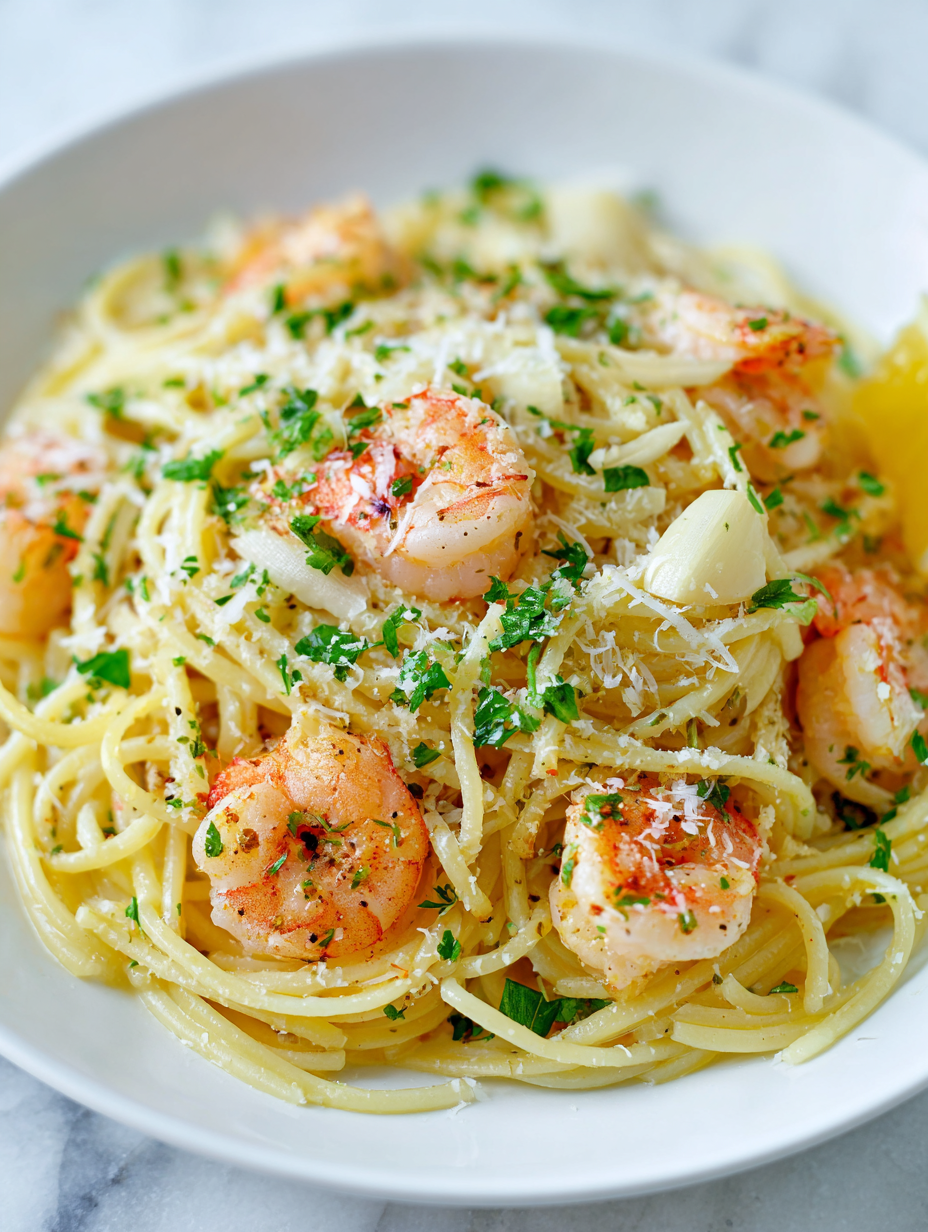
Shrimp Garlic Parmesan Pasta
Ingredients
Equipment
Method
- Bring a large pot of salted water to a rolling boil, then add the pasta and cook for 8-10 minutes until just shy of al dente. Drain, reserving about ½ cup of pasta water, and set aside.
- While the pasta cooks, heat olive oil in a large skillet over medium heat. Once shimmering, add the minced garlic and sauté for about 30 seconds until fragrant, the smell should be pungent and inviting, and the garlic should turn lightly golden.
- Add the shrimp to the skillet in a single layer. Cook for 2-3 minutes per side until they turn pink, opaque, and have a slight curl. They should be juicy and firm—avoid overcooking to prevent rubberiness. Remove the shrimp from the pan and set aside.
- Reduce the heat to low. Stir in the grated Parmesan cheese and lemon juice, stirring continuously until the cheese melts into a smooth, creamy sauce that coats the pan. If the sauce seems too thick, add a splash of the reserved pasta water to loosen it and bring it to a silky consistency.
- Add the drained pasta to the skillet, tossing gently to coat it evenly with the cheesy sauce. Cook together for 1-2 minutes, allowing the flavors to meld and the pasta to absorb some of the sauce. If needed, stir in more reserved pasta water to loosen the sauce.
- Return the cooked shrimp to the skillet, gently tossing everything together. Sprinkle with red pepper flakes if you like a bit of heat, and season with salt and pepper to taste. Squeeze fresh lemon over the dish for brightness, then give it a final toss.
- Serve the pasta hot, garnished with additional Parmesan and a drizzle of olive oil if desired. The sauce should be silky, the shrimp juicy, and the pasta perfectly al dente—ready to enjoy immediately.
Pro tips for perfect shrimp pasta
- Use high heat when sautéing garlic to release its fragrant oils without burning—fragrance should be pungent and inviting.
- Toss the shrimp gently but quickly—overcrowding causes steaming, not searing, so cook in batches if needed.
- Add Parmesan off heat or just below—this prevents clumping and ensures a smooth, cheesy sauce.
- Reserve pasta water before draining—starchy and salty, it helps loosen the sauce and improves adhesion.
- Finish with a squeeze of lemon—brightens the dish instantly and balances the richness of Parmesan and shrimp.
- Don’t overcook the shrimp—just until they turn opaque and firm, about 2-3 minutes per side—avoid rubbery bites.
- Keep an eye on garlic—sauté until fragrant, about 30 seconds, to avoid bitterness from over-toasting.
Common mistakes and how to fix them
- FORGOT to pat shrimp dry, causing excess water and splattering when cooking.
- DUMPED in cold oil, which slowed down shrimp searing and made them rubbery.
- OVER-TORCHED garlic, turning bitter—lower heat immediately and add more oil if needed.
- UNDERSALTED pasta water, resulting in bland seasoning—salt generously for flavor.
Quick fixes and pantry swaps
- When sauce is too thick, splash in warm pasta water and stir until silky.
- If shrimp stick or overcook, remove early and toss in the sauce later.
- Splash lemon juice before serving to brighten dull flavors instantly.
- Patch over-seasoned sauce with a bit of cream or extra Parmesan for balance.
- Shield garlic from burning by lowering heat as soon as it turns fragrant.
Prep, store, and reheat tips
- Prep the shrimp: peel and devein ahead of time; keep refrigerated for up to 24 hours for freshness and easy assembly.
- Cook the pasta al dente: drain and toss with a little oil, then store in an airtight container in the fridge for up to 2 days—reheat with a splash of water or broth to revive texture.
- Make the garlic Parmesan sauce: assemble and store in a jar or container in the fridge for up to 1 day; rewarm gently on low heat, stirring often until silky and fragrant.
- Reheating tips: microwave in short bursts, stirring in between, until hot and bubbling—expect the sauce to thicken; add a splash of pasta water or lemon juice to loosen and freshen the flavor.
- Sensory note: reheated pasta may lose some brightness; a squeeze of fresh lemon or a sprinkle of Parmesan helps bring back vibrancy and balance.
Top questions about shrimp pasta
1. Can I use frozen shrimp?
Use fresh, large shrimp for the best texture—firm and juicy. Frozen can work if properly thawed, but fresh is better.
2. Can I make this vegan?
Yes, use dairy-free Parmesan alternatives like nutritional yeast, but expect a different, nuttier flavor.
3. Is lemon necessary?
Add a splash of lemon juice right at the end for brightness and to cut through the richness of the cheese.
4. How long should I cook the pasta?
Cook the pasta al dente, about 8 minutes, so it finishes cooking in the sauce without turning mushy.
5. When should I add the Parmesan?
Stir the Parmesan into the hot sauce off the heat to prevent clumping and get a smooth, cheesy coating.
6. What equipment do I need?
Use a large, deep skillet to give enough room for tossing ingredients and preventing overcrowding.
7. What if the sauce gets too thick?
If the sauce thickens too much, stir in reserved pasta water or a little lemon juice to loosen it up.
8. Can I make it spicy?
Add a pinch of red pepper flakes for subtle heat or skip for a milder dish—adjust to your spice preference.
9. How should I serve it?
Serve immediately while the shrimp are tender, and the sauce is still silky—don’t wait too long.
10. How do I reheat leftovers?
Reheat gently on low heat, stirring often. Add a splash of water or lemon to restore moisture and brightness.
This dish isn’t just about quick comfort; it’s about that perfect balance of salty, bright, and savory that keeps me coming back. The way the garlic, Parmesan, and lemon play together makes each bite feel like a small celebration of simple ingredients.
Whenever I make this, I’m reminded that some of the best meals come from just a handful of good ingredients and a little attention. It’s honest food that feels like a little victory, no matter how many times I’ve cooked it before.

Hi, I’m Jonny Andrew Miller, the cook, taster, and slightly messy mind behind Bite & Boom. I live in Austin, Texas, a city that smells like barbecue smoke, fresh tortillas, and late-night tacos if you wander long enough. It suits me.